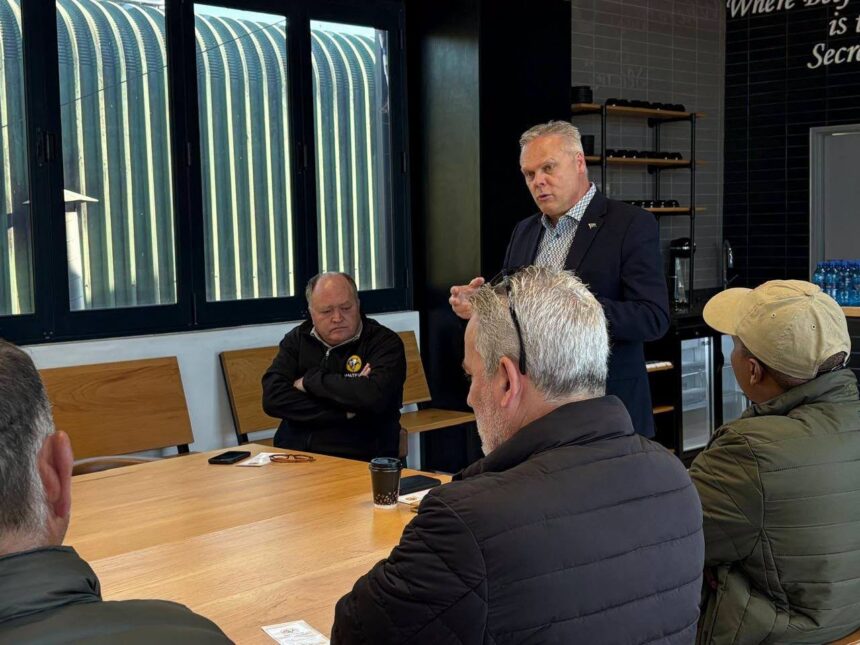
Minister Willie Aucamp engaged with agricultural leaders, mega-farmers and Sampada in Modimolle, Limpopo, yesterday as part of efforts to strengthen South Africa’s agricultural sector and expand opportunities across the value chain. The engagement placed a strong focus on the importance of building an agricultural economy that creates value from primary production through to processing, manufacturing and export. Aucamp commended Sampada for supporting more than 1,000 local livelihoods, highlighting the wider economic impact that successful agricultural enterprises can have on communities. His message emphasised that sustainable agricultural development requires more than producing food on farms. It also requires investment, infrastructure, market access and value addition that can create employment and economic opportunities at every stage of the agricultural process.
The engagement in Modimolle provided an opportunity for the Minister to interact directly with agricultural leaders and major farming operations in Limpopo. These engagements are important because farmers and agricultural businesses face challenges that can affect production, profitability and long-term investment. Issues such as access to markets, infrastructure, processing capacity, logistics and export opportunities all influence the competitiveness of South African agriculture. By engaging with agricultural stakeholders on the ground, government can gain a clearer understanding of the opportunities and constraints affecting different parts of the sector. Collaboration between government, farmers and private agricultural enterprises remains important for building a more productive and resilient agricultural economy.
Aucamp highlighted the importance of strengthening every link in South Africa’s agricultural value chain. His message focused on the need to move beyond a narrow approach that concentrates only on primary agricultural production. Farmers need reliable markets, processors need consistent supplies, manufacturers need efficient logistics and exporters need access to competitive international markets. Each stage of this process contributes to the overall value of agricultural products and can create additional employment opportunities. When more value is retained within the country, agriculture can have a broader economic impact while supporting businesses and communities connected to the sector.
The Minister’s reference to the journey from farm to factory illustrates the importance of value addition in agriculture. Producing agricultural commodities is only one part of the economic process, while processing those commodities can create additional opportunities for investment and employment. Facilities that process, package or prepare agricultural products for local and international markets can help farmers access more valuable markets. They can also support a wider network of businesses involved in transport, equipment, maintenance, packaging and distribution. Strengthening these connections can therefore help agriculture contribute more significantly to South Africa’s industrial development and economic growth.
Sampada was specifically recognised for supporting more than 1,000 local livelihoods. This achievement demonstrates how agricultural enterprises can contribute to communities through employment and related economic activity. The livelihoods supported by a major agricultural operation can include direct workers as well as people involved in services and businesses connected to the broader value chain. Sustaining these opportunities requires productive businesses that can compete effectively, access markets and continue investing in their operations. The recognition of Sampada therefore underlines the importance of supporting agricultural enterprises that have a measurable impact on local communities.
Aucamp also toured the Waltkon slaughtering and export facility during his visit. The facility provided an opportunity to highlight the role that processing and export infrastructure can play in strengthening the agricultural value chain. Slaughtering facilities allow livestock production to connect directly with processing and distribution systems, while export capabilities can provide access to markets beyond South Africa. Efficient facilities and reliable market access can help agricultural producers expand their customer base and improve the commercial sustainability of their operations. The visit reinforced the idea that agricultural development depends on creating strong connections between producers, processors and markets.
Export growth is particularly important for an agricultural sector seeking to expand its economic contribution. South African farmers produce a wide range of agricultural products with potential demand in domestic and international markets. However, reaching those markets requires more than production capacity, as businesses also need appropriate infrastructure, quality standards, logistics and reliable supply chains. Investment in processing and export facilities can help bridge the gap between agricultural production and consumers in different markets. By strengthening these systems, South Africa can improve its ability to compete while creating additional opportunities for businesses operating throughout the value chain.
The focus on value addition also has implications for rural and regional economic development. Agricultural production often takes place outside major urban centres, meaning successful farming and processing businesses can contribute directly to economic activity in rural communities. Jobs created through agriculture can support household incomes while local businesses benefit from increased demand for goods and services. Investment in agricultural infrastructure can also encourage further economic activity around farming communities. A stronger value chain can therefore help agriculture serve as an important driver of inclusive economic development.
The engagement also highlighted the need for continued cooperation between government and the agricultural sector. Farmers and agricultural businesses require an environment that supports investment, productivity and access to markets. Government, in turn, benefits from working with industry stakeholders who understand the practical realities of agricultural production and commercial operations. Constructive engagement can help identify areas where policy, infrastructure and market development can support growth. Building stronger partnerships can also help ensure that agricultural development creates opportunities across different parts of the value chain rather than concentrating benefits in only one area.
Minister Willie Aucamp’s visit to Modimolle placed a clear emphasis on the connection between agricultural production, value addition, investment and livelihoods. His engagement with agricultural leaders, mega-farmers and Sampada, together with his tour of the Waltkon slaughtering and export facility, demonstrated the importance of strengthening the full agricultural value chain. Supporting more than 1,000 local livelihoods shows the potential that well-developed agricultural enterprises have to create meaningful economic opportunities. The message from the engagement was clear: South Africa needs stronger connections from farm to factory, from production to processing and from local markets to export destinations. A stronger agricultural value chain can support stronger businesses, expand investment, create employment and ultimately contribute to stronger livelihoods across the country.
Join 'Farmers Mag' WhatsApp Channel
Get the latest Farming news and tips delivered straight to your WhatsApp
CLICK HERE TO JOIN