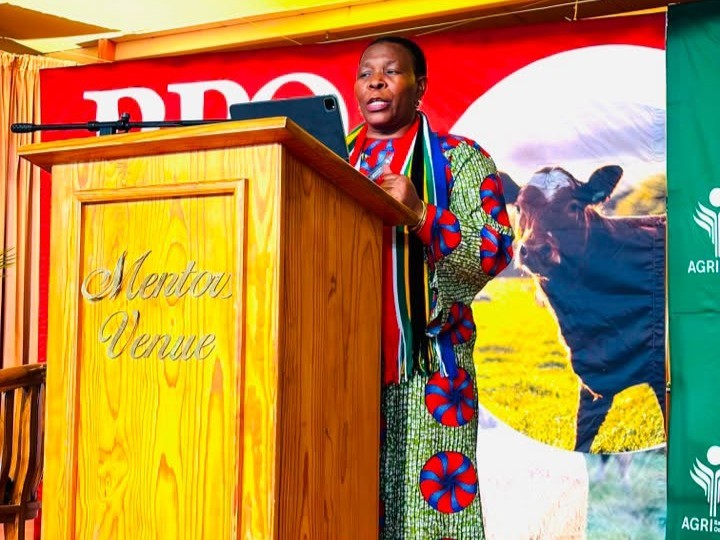
Agriculture remains one of South Africa’s most important economic sectors, contributing to food security, rural development and national economic growth. However, while the industry has shown resilience and continued expansion in many areas, questions remain about whether its success is benefiting enough people. Speaking at the Agri EC Congress, Eastern Cape MEC Kontsiwe challenged agricultural stakeholders to reflect on the sector’s progress and address the persistent gap between economic growth and meaningful employment. Her address focused on the urgent need to ensure that agricultural development creates opportunities for more South Africans, particularly those living in rural communities. The speech highlighted the importance of building a farming sector that is not only productive and competitive but also inclusive and capable of transforming lives.
During her address, MEC Kontsiwe acknowledged that South Africa’s agricultural sector has experienced growth over recent years. Advances in technology, improved farming practices and increased productivity have strengthened many agricultural enterprises across the country. Despite these positive developments, she pointed out that employment has not increased at the pace required to address the country’s high levels of unemployment. This imbalance presents a significant challenge because economic growth alone cannot solve social and economic inequalities if it does not create sufficient jobs. According to the MEC, this contradiction between agricultural success and limited inclusion must become a central focus of future development efforts.
The MEC stressed that too many rural South Africans continue to remain excluded from meaningful economic participation despite the sector’s progress. Rural communities often depend heavily on agriculture as their primary source of employment and income, making inclusive growth particularly important. When economic opportunities remain concentrated among a limited number of participants, the broader benefits of agricultural development are not fully realised. Expanding participation within the sector can strengthen rural economies while improving household incomes and reducing poverty. Creating more inclusive agricultural systems also supports greater social stability and long-term economic resilience.
A key message from the MEC’s address was the importance of honest and constructive engagement among everyone involved in agriculture. She encouraged farmers, agribusinesses, industry organisations, government institutions and development partners to examine whether current strategies are creating enough opportunities for those who have historically faced barriers to participation. Rather than avoiding difficult conversations, she called on stakeholders to work together in identifying practical solutions. Open dialogue allows different sectors to share experiences, recognise challenges and develop coordinated responses that benefit the entire agricultural industry. Meaningful progress depends on collaboration built on trust, shared responsibility and a willingness to embrace change.
Young people were identified as one of the groups that require greater attention if agriculture is to achieve inclusive growth. Youth unemployment remains one of South Africa’s most pressing economic challenges, particularly in rural areas where employment opportunities are often limited. Agriculture has the potential to offer meaningful careers in farming, agribusiness, technology, research and value-added processing. However, young people need improved access to land, skills development, finance, mentorship and modern agricultural technologies to participate successfully. Encouraging youth involvement will help ensure that the agricultural sector remains innovative, productive and sustainable for future generations.
The MEC also emphasised the importance of increasing opportunities for women within the agricultural sector. Women already make significant contributions to farming, food production and rural economies, yet many continue to face challenges in accessing resources, finance and commercial opportunities. Supporting women farmers strengthens food security while promoting more inclusive economic development. Greater investment in women-led agricultural enterprises can create employment, improve household incomes and stimulate local economic growth. Building an agricultural sector that values equal participation allows communities to benefit from the talents and leadership of all its members.
Communal farmers and emerging producers were another important focus of the MEC’s remarks. These farmers often possess significant agricultural potential but may face obstacles related to infrastructure, financing, market access and technical support. Addressing these challenges requires targeted programmes that provide practical assistance while helping producers transition into commercially sustainable farming operations. Expanding opportunities for emerging farmers strengthens local food systems while increasing agricultural production across the province. Supporting these producers also contributes to broader land reform and rural development objectives by promoting greater participation in the agricultural economy.
Throughout her address, MEC Kontsiwe encouraged stakeholders to focus on practical action rather than simply recognising the challenges. She asked whether enough opportunities are currently being created for young people, women, communal farmers and emerging producers. More importantly, she challenged the sector to identify the concrete steps required to change the current reality. Practical solutions may include improving access to finance, expanding agricultural training, strengthening mentorship programmes, investing in rural infrastructure and creating better market opportunities for smaller producers. Collective commitment to these actions can help ensure that agricultural growth benefits a much wider section of society.
The MEC concluded her message by drawing on a well-known African proverb that captures the spirit of collaboration. She reminded delegates that, “If you want to go fast, go alone. If you want to go far, go together.” This message reflects the belief that lasting agricultural development depends on cooperation between government, farmers, agribusinesses, researchers and rural communities. No single organisation or individual can address the complex challenges facing the agricultural sector alone. By working together with a shared commitment to inclusion, innovation and sustainable growth, stakeholders can build a stronger agricultural future.
MEC Kontsiwe’s address at the Agri EC Congress served as a timely reminder that agricultural success should be measured not only by production and economic growth but also by the opportunities it creates for people. While the sector has made significant progress, expanding meaningful participation remains essential for reducing unemployment and strengthening rural communities. Her call for greater inclusion of young people, women, communal farmers and emerging producers highlights the need for practical collaboration across the agricultural value chain. By embracing partnerships, investing in people and implementing solutions that promote equal opportunity, the industry can achieve growth that benefits all South Africans. A more inclusive agricultural sector will not only strengthen food security and economic resilience but also create lasting prosperity for rural communities and future generations.
Join 'Farmers Mag' WhatsApp Channel
Get the latest Farming news and tips delivered straight to your WhatsApp
CLICK HERE TO JOIN