

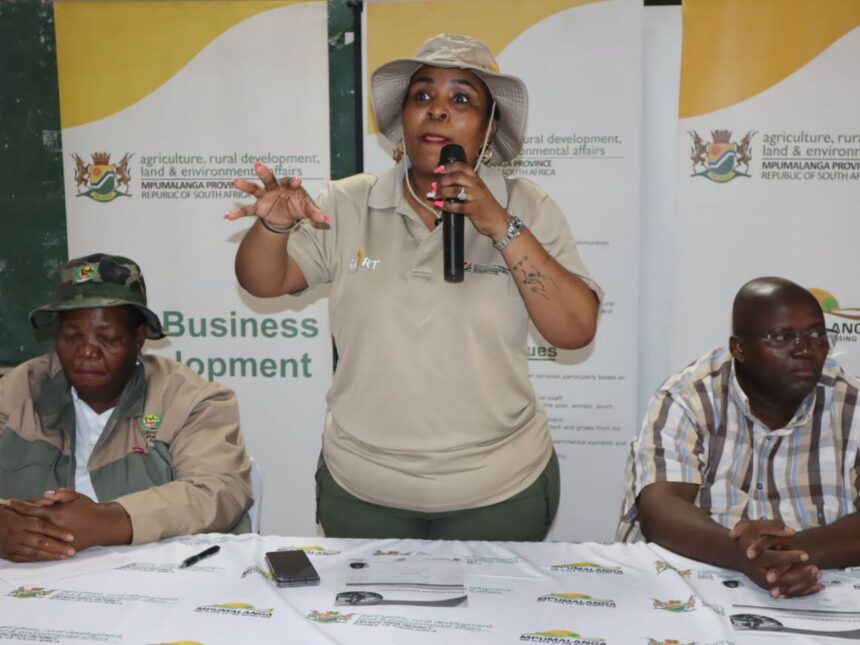
Mpumalanga farmers have been urged to take advantage of new funding opportunities aimed at strengthening agricultural production, expanding businesses and creating sustainable rural livelihoods. MEC Khethiwe Moeketsi made the call while addressing more than 100 farmers who gathered at the Mzinti Training Centre in Nkomazi as part of the three-day EXCO Outreach Programme. The engagement provided farmers with an opportunity to raise concerns affecting agricultural development and to seek practical support from the provincial government. Moeketsi announced that applications are open for the 2027/28 Comprehensive Agricultural Support Programme (CASP), National Empowerment Fund (NEF) and Blended Finance opportunities. Farmers interested in accessing the available funding have until 11 September 2026 to submit their applications.
The funding announcement is significant for farmers who require financial support to expand production, purchase equipment, improve infrastructure and develop commercially sustainable agricultural enterprises. Programmes such as CASP and blended finance can help address some of the financial barriers that farmers face when trying to grow their operations. Access to appropriate funding can also allow farmers to invest in irrigation, livestock, crops, processing facilities and other agricultural activities that can generate income and employment. Farmers are therefore encouraged to understand the requirements of each funding programme and submit their applications before the deadline. The 11 September 2026 closing date gives farmers a clear timeframe to prepare the necessary documentation and seek assistance where they need help with the application process.
The announcement was made during the EXCO Outreach Programme in Nkomazi, which created an important platform for government officials to engage directly with communities and understand the challenges affecting farmers. More than 100 farmers attended the session at Mzinti Training Centre, allowing a broad range of concerns to be placed before the provincial leadership. Farmers raised several issues that continue to affect their ability to produce, expand their businesses and participate more effectively in agricultural markets. Their concerns included the revival of the Fortune 40 programme, the establishment of a chicken abattoir and the refurbishment of the water canal in Block B. Farmers also called for accredited agricultural skills programmes for young people, better access to markets, support for SA GAP compliance and assistance for aquaculture farmers.
The call to revive the Fortune 40 programme reflects the continued importance of initiatives that help emerging farmers develop commercially viable agricultural enterprises. Farmer development programmes can provide beneficiaries with access to training, infrastructure, production resources and business support that may otherwise be difficult to obtain. For farmers who have already completed development programmes, continued support can be important as they move from training and establishment into expansion and commercial production. A strong pipeline of support can help farmers improve productivity while creating opportunities for employment and local economic development. The concerns raised by farmers therefore point to the need for agricultural programmes to provide consistent support throughout different stages of a farming business.
The proposed chicken abattoir was another major issue raised during the engagement, highlighting the need for stronger agricultural value chains in Nkomazi. Farmers who produce poultry need reliable processing facilities if they are to increase production and access larger markets. Without suitable local processing infrastructure, farmers can face additional costs and logistical challenges when preparing products for sale. A chicken abattoir could potentially support local poultry producers by creating closer access to processing services while contributing to the development of related businesses. It could also support job creation and strengthen the broader poultry value chain if developed alongside appropriate market and production support.
Water infrastructure also remains a critical concern for agricultural producers, making the request for the refurbishment of the Block B water canal particularly important. Reliable water access can directly affect crop production, livestock management and the overall productivity of farming operations. When canals and other irrigation infrastructure deteriorate, farmers can experience disruptions that reduce their ability to plan production and maintain consistent yields. Addressing infrastructure challenges can therefore have a direct impact on the sustainability of farming businesses. The request from farmers demonstrates why agricultural development requires more than funding alone, as infrastructure, water security and technical support must also form part of a coordinated approach.
Farmers also highlighted the need for accredited agricultural skills for young people, pointing to the importance of developing the next generation of agricultural professionals and entrepreneurs. Young people need practical and recognised training that can equip them with skills in crop production, livestock management, agribusiness, agricultural technology and other areas of the sector. Accredited programmes can also improve the ability of young people to pursue employment opportunities or establish their own agricultural enterprises. Building these skills can help address the challenge of youth unemployment while ensuring that agricultural knowledge continues to grow within rural communities. Investment in agricultural education and training can therefore contribute to both economic development and the long-term sustainability of the provincial farming sector.
Market access was another important concern raised by farmers during the engagement. Producing quality agricultural goods does not guarantee commercial success if farmers struggle to find reliable buyers or meet the requirements of formal markets. Farmers need support with market information, product standards, packaging, logistics, compliance and business development to compete effectively. SA GAP, which refers to South African Good Agricultural Practices, is particularly relevant for farmers seeking access to formal retail and other markets that require recognised production and food safety standards. Assistance with compliance can help farmers improve their production systems while creating opportunities to supply more demanding markets.
Aquaculture farmers also used the engagement to highlight the need for targeted assistance within the sector. Aquaculture can contribute to food production, income generation and rural economic development when farmers have access to suitable infrastructure, technical expertise, finance and markets. However, fish farmers can face challenges that differ from those experienced by crop and livestock producers, including water quality management, feed costs, production systems and specialised technical requirements. Support programmes therefore need to recognise the different needs of aquaculture enterprises rather than applying a single approach to all agricultural businesses. Addressing these challenges could help more farmers participate in a sector with potential to diversify agricultural production in Mpumalanga.
MEC Moeketsi acknowledged the concerns raised by farmers and reaffirmed the Department’s commitment to supporting farmers through its various programmes. Her response indicates that the concerns raised during the outreach programme will need to be considered as part of broader efforts to strengthen agricultural support in the province. Effective farmer support requires government departments to engage directly with producers, understand their operational challenges and connect them with relevant programmes and resources. The funding opportunities announced during the meeting provide one immediate avenue through which eligible farmers can seek assistance for their agricultural enterprises. Farmers should therefore use the available period to establish which programme best matches their needs and ensure that their applications meet all requirements before submission.
Earlier in the day, Moeketsi visited Zithomuhle’s Nursery, an agricultural enterprise owned by Fortune 40 graduates, where she handed over production inputs and other resources. The support included garden tools, seedling trays and fruit trees, providing practical assistance to the farmers as they continue developing their nursery operation. The visit demonstrated how agricultural support can combine production inputs with skills development and enterprise development. Providing farmers with tools and planting materials can help them increase production capacity while creating opportunities to generate income from their agricultural activities. The handover also reinforced the importance of supporting farmers after they complete development programmes so that they can build sustainable businesses.
The engagement in Nkomazi comes at an important time for farmers preparing for the next funding cycle. The 2027/28 CASP, NEF and Blended Finance opportunities could provide eligible farmers with resources to address some of the financial constraints affecting their enterprises. However, farmers should not wait until the final days before 11 September 2026 to prepare their applications, particularly if they need supporting documents or assistance with completing the required information. Early preparation can give applicants more time to identify missing documents, clarify eligibility requirements and correct errors before submission. Farmers should also seek information from the relevant agricultural support offices about the specific requirements attached to each funding opportunity.
The issues raised at the Mzinti Training Centre demonstrate that Mpumalanga farmers need a coordinated support system that addresses finance, infrastructure, skills, production inputs and market access. Funding can help farmers expand their businesses, but its impact becomes stronger when it is combined with reliable water infrastructure, appropriate training, access to markets and technical assistance. The concerns about the Fortune 40 programme, chicken abattoir, Block B water canal, agricultural skills, SA GAP and aquaculture support show the range of challenges facing producers in Nkomazi. Continued engagement between farmers and government can help ensure that these challenges remain part of the provincial agricultural development agenda. The EXCO Outreach Programme has provided an important platform for farmers to communicate their needs directly and for government to identify areas where further intervention may be required.
The funding opportunities announced by MEC Khethiwe Moeketsi give Mpumalanga farmers an opportunity to seek support for their agricultural ambitions ahead of the 2027/28 financial year. With the application deadline set for 11 September 2026, farmers should begin preparing their applications and supporting documents without delay. The concerns raised during the Nkomazi engagement also show that farmers require more than financial assistance to build resilient and competitive businesses. Stronger infrastructure, accredited skills development, market access, production support and targeted assistance for sectors such as aquaculture will remain important to the province’s agricultural growth. The support provided to Zithomuhle’s Nursery further demonstrates the value of combining funding and production inputs with practical farmer development. Continued government engagement, timely access to support and active participation from farmers can help strengthen agricultural enterprises, create rural economic opportunities and contribute to a more sustainable farming sector in Mpumalanga.
Join 'Farmers Mag' WhatsApp Channel
Get the latest Farming news and tips delivered straight to your WhatsApp
CLICK HERE TO JOIN




