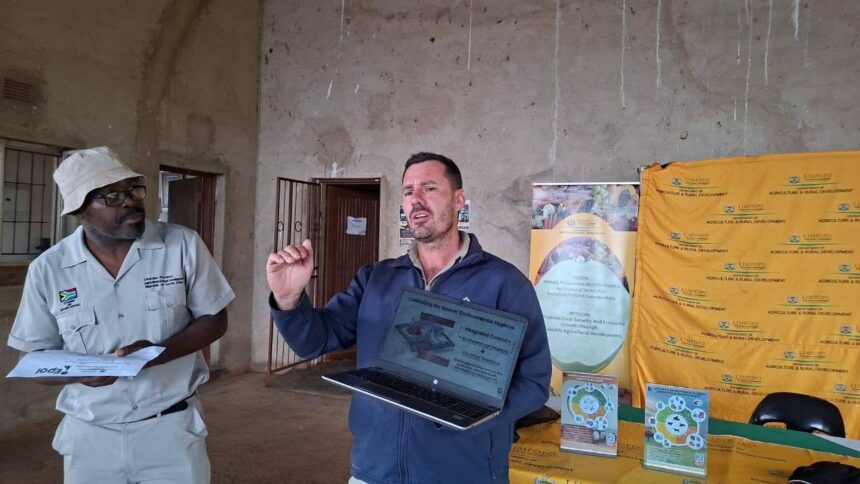
The Limpopo Department of Agriculture and Rural Development has strengthened its support for livestock farmers in the Mopani North Agro-Ecological Zone through a successful Farmers’ Day held at the Hlaniki Service Centre under the Greater Giyani Local Municipality. The event brought together livestock farmers, agricultural experts and representatives from various institutions to share practical knowledge on improving livestock management. Discussions focused on animal health, nutrition, livestock identification, kraal management and the use of technology to strengthen farming practices. The gathering also provided farmers with an opportunity to engage directly with specialists and raise concerns affecting their daily operations. By bringing technical expertise closer to rural farming communities, the department is helping farmers build healthier herds and develop more sustainable livestock enterprises.
The Farmers’ Day highlighted the importance of adopting sound livestock management practices across every stage of production. Healthy animals are more likely to grow well, reproduce successfully and perform better when they reach the market, making animal health an important part of farm profitability. Farmers were encouraged to look beyond immediate production concerns and consider how proper identification, nutrition, disease prevention and hygiene can affect the long-term performance of their herds. The presence of experts from different agricultural and animal health institutions allowed participants to receive information covering several aspects of livestock production in one setting. This type of engagement can help farmers make more informed decisions while adapting their practices to challenges affecting livestock farming in the Greater Giyani area.
Representing the department’s national office, Makabulane Makoko emphasised the importance of complying with the Animal Identification Act 6 of 2002. He explained that proper livestock identification plays an important role in protecting animals and assisting farmers in the fight against stock theft. Livestock branding provides a way of establishing ownership and can help authorities and farmers identify animals when ownership needs to be verified. Farmers were urged to ensure that their animals are properly identified and that they comply with the relevant legal requirements governing livestock identification. Stronger identification practices can contribute to improved traceability while giving farmers an additional tool to protect their livestock and safeguard their agricultural investments.
Livestock identification also has wider benefits for the management of agricultural businesses because accurate records can help farmers keep track of their animals. Knowing which animals belong to a particular farmer can assist with managing breeding programmes, sales, animal movements and herd development. Proper identification becomes particularly important when livestock move between farms, markets or other locations because traceability can help establish where animals came from and where they have been. Compliance with the Animal Identification Act therefore forms part of responsible livestock ownership rather than being viewed only as a legal obligation. For farmers dealing with the persistent threat of stock theft, effective identification can also strengthen their ability to establish ownership and support efforts to recover stolen animals.
Nutrition was another important focus of the Farmers’ Day, with technical adviser Ngwako Rammetse from Expol encouraging farmers to pay close attention to the condition of their livestock. He emphasised that the physical condition of animals can influence their market value and the financial returns farmers receive when selling livestock. Well-maintained animals can command better prices, giving farmers stronger bargaining positions when negotiating with buyers. Maintaining good livestock condition can also contribute to the reputation of a farming business because buyers are more likely to value producers who consistently supply healthy and well-managed animals. Farmers were therefore encouraged to treat nutrition as an investment in the overall productivity and commercial potential of their herds.
Good nutrition requires farmers to understand the needs of their animals and respond appropriately to factors such as age, production stage, environmental conditions and available grazing. Livestock that receive inadequate nutrition may experience poor growth, reduced productivity and increased vulnerability to health problems. Farmers can improve herd performance by monitoring body condition and ensuring that animals have access to appropriate feed and sufficient clean water. Nutrition should also form part of a broader management strategy that includes disease prevention, proper housing and regular monitoring. The information shared at the Farmers’ Day gave local livestock owners practical guidance on why maintaining animal condition should remain a priority throughout the production cycle.
Animal health received further attention through an in-depth presentation by Jan Slabert from Antrovet, who discussed heartwater and lumpy skin disease. He explained the causes of these diseases and outlined measures farmers can take to prevent and manage them. Understanding common livestock diseases can help farmers recognise potential warning signs and seek veterinary assistance before health problems become more serious. Disease prevention also reduces the risk of production losses and can support the overall health and resilience of a herd. Slabert’s presentation reinforced the message that farmers need to combine good daily management with appropriate veterinary guidance to protect their livestock.
Heartwater and lumpy skin disease can create serious challenges for livestock producers when prevention and early management are not taken seriously. Farmers need to remain alert to changes in animal health and should consult qualified animal health professionals when they suspect disease. Regular observation of livestock can help farmers identify changes in behaviour, physical condition or other signs that require attention. Maintaining appropriate disease prevention practices can also reduce the likelihood of health problems affecting an entire herd. The presentation therefore placed animal health at the centre of sustainable livestock production and encouraged farmers to take preventative action rather than waiting until problems become severe.
Kraal hygiene was another important issue discussed during the event, with Kevin Peterson from Kyron urging farmers to keep livestock kraals clean, particularly as they prepare for the spring season. Poorly maintained kraals can create conditions where bacteria and other contaminants accumulate in soil and surrounding areas. These conditions may negatively affect animal health and could contribute to problems that reduce the longevity and productivity of livestock. Peterson encouraged farmers to pay particular attention to hygiene and to ensure that animals have access to clean water through properly maintained basins. Maintaining clean facilities is a practical management measure that can support healthier livestock while reducing avoidable environmental risks.
Clean water is essential for livestock because animals need reliable access to safe drinking water to maintain normal health and performance. Dirty or poorly maintained water basins can become contaminated and may expose animals to harmful organisms. Farmers should therefore inspect drinking facilities regularly, remove accumulated dirt and waste and ensure that water remains clean and readily available. Kraal maintenance should form part of a routine rather than being addressed only when a visible problem develops. By combining clean kraals with proper nutrition, disease prevention and good animal identification, farmers can establish a stronger foundation for effective livestock management.
The Farmers’ Day also created an important opportunity for young women in agriculture to connect with local livestock farmers and learn from their experiences. Masana Mitileni, a Giyani-born female student from Nelson Mandela University, participated in the event as part of her research into livestock farming. Her interaction with farmers allowed her to engage directly with people who have practical experience of managing livestock in the local environment. These conversations can provide valuable insights into the challenges farmers face, including production constraints, animal health concerns, market conditions and other factors affecting rural agriculture. Her participation also demonstrated the value of connecting academic research with the experiences and knowledge of farming communities.
Mitileni plans to continue engaging with local farmers to gather their perspectives on the everyday challenges associated with livestock production. Direct engagement with farmers can help researchers develop a clearer understanding of the realities of rural agriculture and ensure that research addresses issues that matter to farming communities. Her involvement was particularly significant during Women’s Month because it highlighted the growing contribution of young women to agricultural research and rural development. Agriculture offers opportunities for women to contribute as farmers, researchers, entrepreneurs, technicians and professionals across the value chain. Supporting young women in these areas can help strengthen the future skills base of the agricultural sector and encourage greater participation in rural development.
The Farmers’ Day at Hlaniki Service Centre demonstrated the value of bringing farmers and agricultural specialists together to exchange knowledge and address practical challenges. The discussions on livestock identification, nutrition, animal diseases, kraal hygiene and research gave farmers information that can support better decision-making on their farms. The event also showed that sustainable livestock production requires more than simply maintaining animals because farmers must manage health, nutrition, hygiene, identification and business considerations together. Continued engagement between the Limpopo Department of Agriculture and Rural Development, farmers, researchers and industry specialists can help strengthen local livestock production. By applying the lessons shared at the event and continuing to work with agricultural experts, livestock farmers in Greater Giyani can improve animal health, protect their herds, strengthen market opportunities and contribute to the long-term development of rural agriculture in Limpopo.
Join 'Farmers Mag' WhatsApp Channel
Get the latest Farming news and tips delivered straight to your WhatsApp
CLICK HERE TO JOIN