

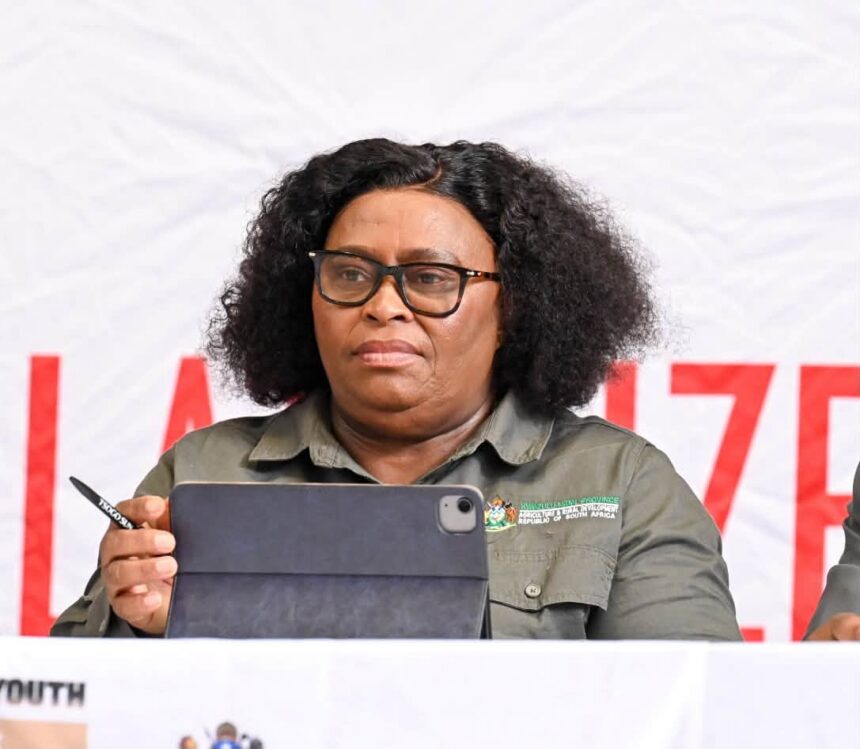
KwaZulu-Natal MEC for Agriculture and Rural Development, Hon. Thembeni KaMadlopha-Mthethwa, will engage with farmers from uMtubatuba and surrounding areas on Tuesday, 18 August 2026, as part of efforts to strengthen livestock production and advance agricultural development in the region. The engagement will be held together with the Mayor of Inkosi uMthubatuba Local Municipality, Hon. Cllr. Mxolisi Mthethwa. The meeting is expected to provide an important platform for government and farmers to discuss the challenges affecting livestock producers and identify practical strategies for improving agricultural productivity. Livestock farming remains an important economic activity in rural communities, providing households with income, food and opportunities to participate in the agricultural value chain. Direct engagement with farmers can help government better understand conditions on the ground and develop support that responds to their specific needs.
The meeting comes at a time when improving livestock production remains an important priority for rural agricultural development in KwaZulu-Natal. Farmers require access to reliable veterinary services, appropriate animal health information, grazing resources, infrastructure and markets to maintain productive livestock enterprises. Challenges in any of these areas can affect production levels and the financial sustainability of farming operations. Bringing farmers and government representatives together creates an opportunity to discuss these issues directly and consider solutions that can be implemented at local level. The engagement can also help strengthen communication between producers and agricultural authorities, ensuring that farmers have a clearer channel through which to raise concerns and access support.
The participation of MEC KaMadlopha-Mthethwa highlights the provincial government’s focus on working directly with agricultural producers and rural communities. Government agricultural programmes can have greater impact when they are informed by the experiences and priorities of the farmers they are intended to support. Discussions with producers can help identify barriers to growth, including challenges related to animal health, production costs, infrastructure and market access. They can also provide an opportunity to discuss opportunities for farmers to expand their enterprises and increase their participation in formal agricultural markets. A stronger connection between policymakers, agricultural officials and farmers can contribute to more targeted and effective support.
The involvement of Mayor Mxolisi Mthethwa is also significant because local government plays an important role in supporting rural economic development. Municipalities work closely with communities and can provide insight into local conditions that influence agricultural activity. Cooperation between provincial and local government can help align agricultural initiatives with broader municipal development priorities. This can be particularly important in rural areas where farming is closely connected to household livelihoods and local economic activity. A coordinated approach can help ensure that farmers are not dealing with government programmes in isolation but instead benefit from stronger cooperation between different levels of government.
Livestock production can contribute significantly to rural economies when farmers have the resources and knowledge required to operate sustainable enterprises. Healthy animals can provide farmers with income through the sale of livestock, meat, breeding stock and other agricultural products. Livestock can also serve as an important household asset, particularly for rural families that depend on agriculture as part of their livelihoods. Improving production therefore has the potential to create benefits that extend beyond individual farms and into surrounding communities. Stronger livestock enterprises can support local businesses involved in animal feed, veterinary services, transportation, equipment and other agricultural inputs.
Animal health is likely to remain an important consideration in discussions about improving livestock production. Disease prevention, vaccination, access to veterinary services and proper livestock management practices all influence the productivity of herds. Farmers need timely information and accessible technical support to identify and address animal health risks before they cause serious losses. Effective extension and veterinary services can help producers adopt better management practices and improve herd performance. Strengthening these services can therefore form an important part of broader efforts to build a more resilient livestock sector in uMtubatuba and surrounding areas.
Market access is another issue that can influence the ability of livestock farmers to turn production into sustainable income. Producing healthy and marketable livestock is only one part of a successful agricultural business, as farmers also need reliable channels through which they can sell their products at fair prices. Better connections to formal markets can create opportunities for producers to increase revenue and expand their operations. Farmers can also benefit from business knowledge that helps them understand pricing, record keeping, production planning and market requirements. Discussions between farmers and government can help identify practical ways to strengthen these connections and improve participation in the agricultural value chain.
The meeting can also provide an opportunity to consider how small-scale and emerging farmers can increase their production capacity. Many farmers begin with limited resources and gradually expand as they gain access to infrastructure, technical knowledge and markets. Appropriate government support can help remove some of the barriers that prevent promising agricultural enterprises from growing. Training, extension services, infrastructure development and access to agricultural programmes can all contribute to stronger farming operations. Supporting farmers to become more productive and commercially sustainable can help strengthen rural economies while contributing to food production in the province.
The engagement in uMtubatuba also demonstrates the importance of listening to farmers when developing agricultural strategies. Farmers understand the conditions affecting their operations because they experience these challenges every day. Their input can help officials distinguish between problems that require immediate intervention and those that require longer-term planning and investment. Open discussions can also encourage farmers to share successful practices that could benefit other producers in the area. By combining local knowledge with technical expertise and government resources, stakeholders can work towards solutions that are more practical and relevant to the realities of rural farming.
The engagement between MEC KaMadlopha-Mthethwa, Mayor Mxolisi Mthethwa and farmers from uMtubatuba and surrounding communities is expected to strengthen the focus on practical agricultural development. Improving livestock production will require continued cooperation between farmers, government departments, municipalities and other agricultural stakeholders. Addressing animal health, infrastructure, technical support, production capacity and market access can help create stronger foundations for sustainable farming. The discussions on Tuesday, 18 August 2026, provide an opportunity to identify priorities directly with producers and explore strategies that can support the sector’s long-term growth. By placing farmers at the centre of these discussions, the engagement can help advance a more productive, resilient and sustainable agricultural sector in uMtubatuba and across KwaZulu-Natal.
Join 'Farmers Mag' WhatsApp Channel
Get the latest Farming news and tips delivered straight to your WhatsApp
CLICK HERE TO JOIN




