

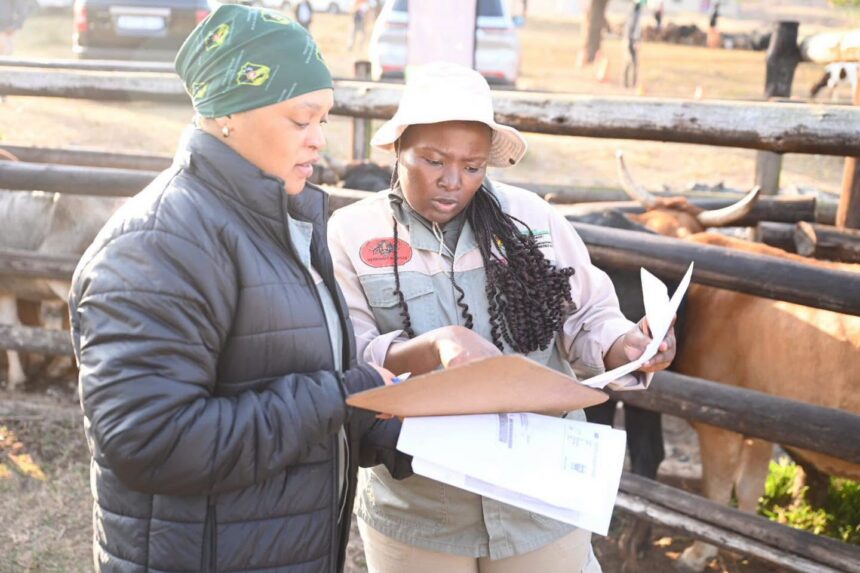
KwaZulu-Natal is making significant progress in its campaign to control Foot-and-Mouth Disease (FMD), with nine of the province’s 11 districts having completed the first round of vaccination. The progress comes after FMD was declared a national disaster earlier this year, with KwaZulu-Natal emerging as one of the major centres of the outbreak. In response, the provincial government launched a large-scale vaccination programme targeting an estimated 2.5 million cattle across the province. The campaign aims to build herd immunity of more than 80 percent, while ensuring that as many cattle as possible receive protection against the highly contagious livestock disease. The latest vaccination figures indicate that KwaZulu-Natal is moving closer to this target, although work remains in the two districts that have not yet completed the first phase.
The vaccination campaign represents one of the largest coordinated efforts to protect cattle from FMD in the province. The disease can have serious consequences for livestock farmers because outbreaks can lead to restrictions on animal movement, disruptions to markets and significant financial losses. These impacts can affect individual farmers as well as communities and businesses that depend on livestock production. The mass vaccination drive has therefore been aimed at reducing disease transmission while strengthening the resilience of the province’s cattle population. Veterinary teams have been working across districts to reach cattle owners and ensure that vaccination coverage is sufficiently high to provide stronger protection across herds.
King Cetshwayo and iLembe are among the latest districts to complete their first-round vaccination programmes. King Cetshwayo recorded 90,400 vaccinations, while iLembe completed 36,400 vaccinations as part of the provincial campaign. These figures represent a substantial contribution to the province’s overall vaccination target and demonstrate the scale of the work undertaken by veterinary teams. Completing the first round in nine districts also puts the province in a stronger position to focus resources on the remaining areas. The progress provides encouragement for farmers and authorities as KwaZulu-Natal works towards achieving vaccination coverage capable of reducing the impact of FMD.
Mop-up vaccination campaigns are currently underway in some districts to ensure that cattle are not missed during the first round. These campaigns are important because achieving high vaccination coverage requires authorities to reach animals that may not have been available during earlier visits or whose owners may have been unable to participate at the scheduled time. Leaving significant numbers of cattle unvaccinated can create gaps in protection and make it more difficult to achieve the desired level of herd immunity. Veterinary teams therefore need to continue identifying unvaccinated animals and encouraging farmers to make them available for vaccination. The mop-up operations form an important part of the province’s broader strategy to achieve more than 80 percent herd immunity.
The remaining vaccination work is focused on uMzinyathi and Amajuba districts. KwaZulu-Natal MEC for Agriculture and Rural Development Thembeni kaMadlopha-Mthethwa said she remains satisfied with the progress made during the campaign. Speaking on the sidelines of the Women’s Day Commemoration event at Jeffrey Zungu Sports Ground in Ixopo, the MEC expressed confidence that veterinary-led teams would complete the first phase within the planned six-month period. The first phase began in late February 2026, giving veterinary teams a clear timeframe within which to reach the province’s cattle population. Her comments reflect confidence that the remaining districts can make sufficient progress to bring the first phase towards completion by the end of August.
The MEC said only two districts remained at the time of her remarks and expressed confidence that most cattle in KwaZulu-Natal would have been vaccinated by the end of August. Completing the first phase would represent an important milestone in the province’s response to the FMD outbreak. However, vaccination efforts will not simply end once the first round has been completed. The province plans to move into a second phase of vaccinations to maintain protection and strengthen the overall disease control programme. Continued participation by farmers will therefore remain important as authorities work to sustain high levels of immunity across the cattle population.
The vaccination programme has also produced benefits beyond disease prevention by providing government with a clearer picture of the province’s cattle population. The campaign has helped officials improve their understanding of the number and distribution of cattle across different areas. An accurate cattle census can support future planning, disease surveillance and the allocation of veterinary resources. Reliable livestock data is particularly valuable during disease outbreaks because authorities need to understand where animals are located and how populations may move between areas. The information collected through the vaccination programme can therefore contribute to stronger livestock management long after the current campaign has ended.
The MEC also highlighted the opportunity to conduct dip tank assessments following the vaccination campaign. Dip tanks play an important role in livestock management and animal health in many rural communities, making their condition and functionality important considerations for farmers and veterinary services. Assessing these facilities can help government identify infrastructure challenges that may affect livestock management and disease control. The assessments could also provide useful information for determining where maintenance, rehabilitation or other interventions may be required. Combining vaccination efforts with assessments of livestock infrastructure can therefore provide a broader understanding of the challenges facing cattle farmers in KwaZulu-Natal.
For farmers, the vaccination campaign has highlighted the importance of cooperation with veterinary authorities and participation in disease control measures. FMD can spread rapidly among susceptible livestock, which means that individual actions can have consequences beyond a single farm or herd. Farmers who make their cattle available for vaccination contribute to wider efforts to reduce disease transmission across communities. Accurate livestock information and compliance with disease control measures can also help authorities respond more effectively when outbreaks occur. Strong cooperation between farmers and veterinary teams will remain essential during both the current mop-up campaigns and the planned second phase of vaccinations.
The progress made in KwaZulu-Natal also demonstrates the importance of sustained veterinary capacity during a major livestock disease emergency. Veterinary teams have had to coordinate vaccination activities across a large province while reaching cattle in different communities and farming environments. Completing the first round in nine districts reflects considerable operational progress, but the remaining work requires continued attention to ensure that vaccination gaps are addressed. Mop-up campaigns can help authorities identify cattle that were missed and bring coverage closer to the province’s target. Maintaining this momentum will be important as KwaZulu-Natal moves from the first phase of emergency vaccination towards longer-term disease management.
The province’s goal of achieving herd immunity above 80 percent remains central to the vaccination strategy. High vaccination coverage can reduce the number of susceptible animals within the population and help limit the spread of disease. Reaching the target requires more than completing district-level campaigns, as authorities must also identify areas where coverage remains below the desired level. Continued monitoring, accurate livestock records and follow-up vaccination will therefore remain important components of the response. The planned second phase provides an opportunity to strengthen protection further and ensure that vaccination becomes part of a sustained approach to managing FMD risks.
KwaZulu-Natal’s progress towards completing the first round of Foot-and-Mouth Disease vaccinations marks an important development in the province’s response to the national livestock health emergency. With nine of 11 districts having completed the first round, recent vaccinations in King Cetshwayo and iLembe and mop-up campaigns continuing elsewhere, the province is moving closer to its target of protecting more than 80 percent of its cattle. The remaining focus on uMzinyathi and Amajuba will be critical to completing the first phase within the planned timeframe. The campaign has also generated valuable information about the province’s cattle population and created an opportunity to assess the condition of dip tank facilities. As KwaZulu-Natal prepares for the second phase of vaccinations, continued cooperation between farmers, veterinary teams and government will be essential to protecting livestock, supporting farmers and strengthening the province’s long-term response to Foot-and-Mouth Disease.
Join 'Farmers Mag' WhatsApp Channel
Get the latest Farming news and tips delivered straight to your WhatsApp
CLICK HERE TO JOIN




