

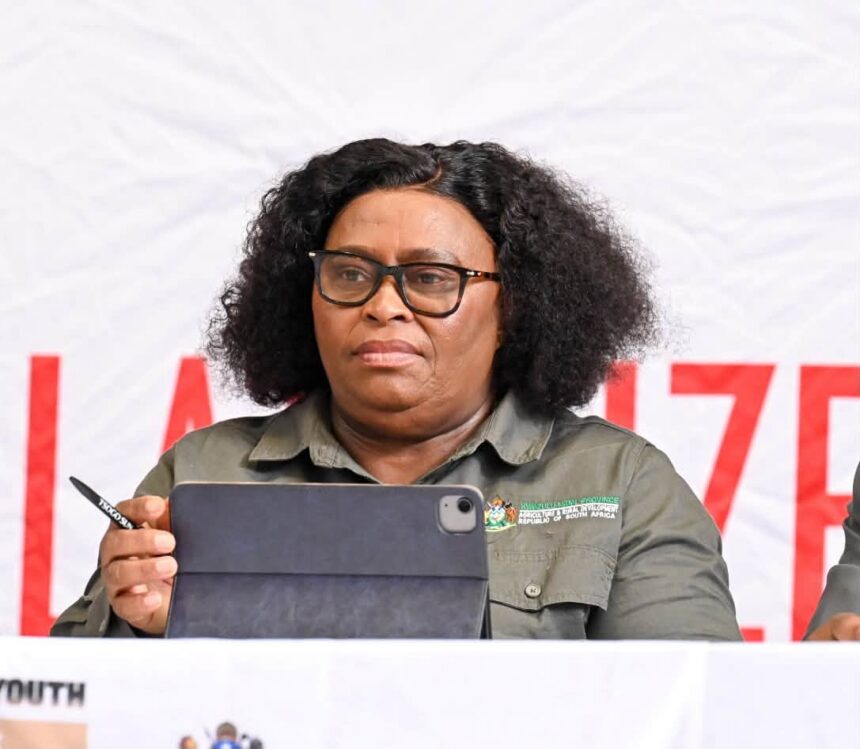
The KwaZulu-Natal Department of Agriculture and Rural Development, led by Hon. MEC Thembeni KaMadlopha-Mthethwa, has arrived at the iNkosi Mtubatuba Council Chamber for an important briefing session ahead of a stakeholder engagement focused on agriculture in the province. The meeting brings government representatives and agricultural stakeholders together to discuss challenges affecting farmers and farming communities. The engagement comes at a time when livestock production remains an important part of rural livelihoods and local food systems across KwaZulu-Natal. By creating a platform for direct discussions with stakeholders, the department aims to better understand challenges experienced on the ground and identify practical solutions. The session also highlights the department’s continued focus on supporting farmers, strengthening agricultural production and improving food security across the province.
The stakeholder engagement provides an opportunity for farmers and agricultural representatives to raise concerns affecting livestock production and farming activities in their communities. These challenges can include access to agricultural inputs, animal health services, infrastructure, markets, water resources and technical support. Addressing these issues requires cooperation between government, farmers, traditional leadership, agricultural organisations and other relevant stakeholders. The briefing session therefore serves as an important step towards ensuring that concerns raised by farming communities receive proper attention and are connected to practical interventions. Meaningful engagement can also help government officials understand the different conditions facing farmers in rural areas and develop responses that are better suited to local needs.
Livestock farming plays an important economic and social role in many communities across KwaZulu-Natal. Cattle, goats, sheep and other livestock provide households with sources of income, food and assets while also contributing to local economic activity. However, farmers can face several obstacles that limit their ability to expand production and maintain healthy herds. Animal diseases, limited veterinary services, inadequate infrastructure, theft, high input costs and difficulties accessing reliable markets can place significant pressure on livestock farmers. Strengthening support in these areas can help farmers protect their livestock, improve productivity and build more sustainable agricultural businesses.
Animal health is particularly important to the success of livestock production because disease outbreaks can have serious consequences for individual farmers and the wider agricultural sector. Effective vaccination programmes, veterinary services, disease monitoring and farmer education can help reduce the risks associated with livestock diseases. Farmers also need access to accurate information about animal health, biosecurity and appropriate livestock management practices. Collaboration between government officials, veterinarians, agricultural extension officers and farming communities can improve the flow of information and strengthen responses to emerging problems. Investment in these areas can help protect livestock assets while supporting the long-term stability of rural farming communities.
Access to agricultural infrastructure is another issue that can influence livestock production and the ability of farmers to participate effectively in the agricultural economy. Farmers may require suitable handling facilities, grazing infrastructure, water systems, fencing, dipping facilities, storage facilities and reliable roads to manage their operations efficiently. Where infrastructure is inadequate, farmers can experience higher costs and greater difficulties transporting livestock and accessing services and markets. Government support programmes can play a role in addressing infrastructure gaps while partnerships with communities and agricultural organisations can help ensure that projects respond to actual needs. Improving rural agricultural infrastructure can therefore contribute to stronger production systems and create better conditions for farmers to grow their operations.
Market access also remains an important consideration for farmers seeking to turn agricultural production into sustainable sources of income. Producing livestock is only one part of the agricultural value chain, as farmers also need opportunities to sell animals and products at fair and competitive prices. Limited access to formal markets, transportation challenges and a lack of market information can prevent some farmers from reaching better commercial opportunities. Strengthening links between emerging farmers, established agricultural businesses, cooperatives and markets can help create more opportunities for participation in the agricultural economy. Practical support in areas such as production planning, quality standards, record keeping and market information can further help farmers improve their commercial readiness.
The stakeholder engagement in Mtubatuba also provides an opportunity to consider how agricultural development can contribute to food security in KwaZulu-Natal. Food security depends on reliable access to sufficient, safe and nutritious food, and productive farming communities form an important part of that system. Supporting livestock farmers can increase the availability of animal products while also helping households generate income that can be used to meet other basic needs. Stronger local agricultural production can reduce vulnerability to disruptions and help rural communities build more resilient livelihoods. For this reason, interventions that strengthen farming operations can have benefits that extend beyond individual farmers and contribute to wider community development.
The involvement of the KwaZulu-Natal Department of Agriculture and Rural Development reflects the importance of government working directly with agricultural stakeholders when developing and implementing support measures. Farmers have practical knowledge of the conditions affecting their operations, while government departments have access to programmes, technical expertise and public resources that can help address identified challenges. Bringing these perspectives together can improve communication and make it easier to prioritise issues requiring immediate attention. The success of such engagements will ultimately depend on whether discussions lead to clear actions, appropriate support and continued monitoring of progress. Stakeholders can also play an important role by providing accurate information about their challenges and participating constructively in the development of solutions.
Hon. MEC Thembeni KaMadlopha-Mthethwa’s leadership during the engagement places attention on the need to strengthen agricultural development and respond to the concerns of farming communities. Leadership at provincial level can help coordinate agricultural priorities and ensure that stakeholder concerns are considered when programmes and interventions are developed. The engagement also creates space for government to assess where existing support mechanisms may need to be strengthened or adjusted. Continued interaction with farmers can help build trust and improve accountability as agricultural programmes are implemented. This approach is important for ensuring that government support reaches communities and contributes to measurable improvements in farming conditions.
The Mtubatuba engagement is therefore more than a briefing session, as it represents an opportunity to build stronger cooperation between government and the agricultural sector. Discussions around livestock production, farmer support and food security can help identify barriers that require coordinated responses. Practical interventions may involve improving access to animal health services, strengthening infrastructure, supporting market access and expanding agricultural extension services. The effectiveness of these measures will depend on proper planning, adequate resources and regular engagement with the communities they are intended to support. Keeping farmers involved throughout the process can help ensure that interventions remain relevant and responsive to changing conditions.
As the KwaZulu-Natal Department of Agriculture and Rural Development continues its engagement with agricultural stakeholders, the focus on livestock production and food security remains important for the province’s rural economy. Farmers need practical support that addresses the challenges they face while creating opportunities for sustainable growth and improved market participation. The arrival of Hon. MEC Thembeni KaMadlopha-Mthethwa and the department at the iNkosi Mtubatuba Council Chamber signals the importance of listening to stakeholders and working towards solutions that can strengthen farming communities. Effective collaboration can help protect livestock, improve agricultural productivity and support rural livelihoods. By turning stakeholder concerns into practical interventions, KwaZulu-Natal can continue working towards a stronger agricultural sector and improved food security for communities across the province.
Join 'Farmers Mag' WhatsApp Channel
Get the latest Farming news and tips delivered straight to your WhatsApp
CLICK HERE TO JOIN




