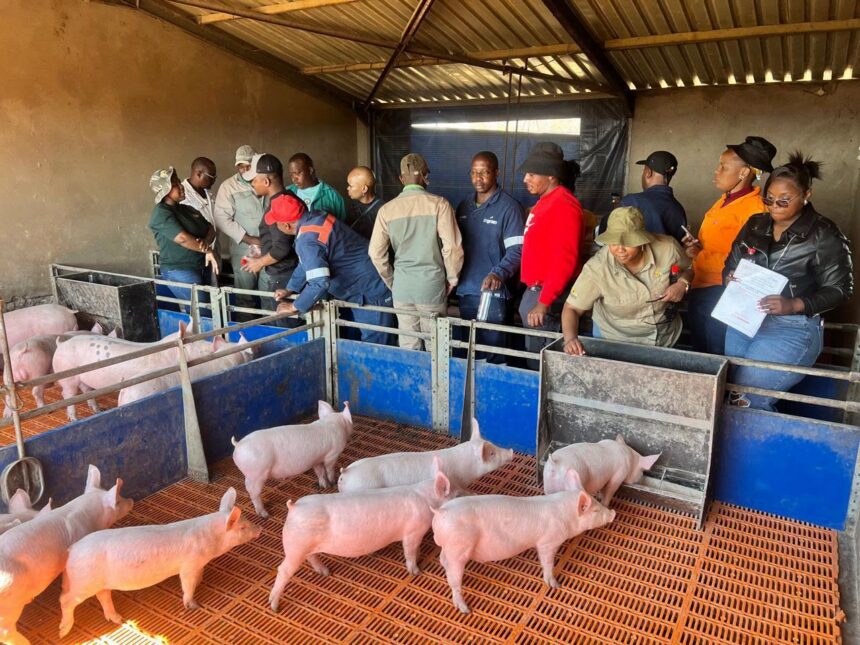
About 30 smallholder pig farmers from municipalities across Gert Sibande District have completed an accredited five-day Piggery Management training programme in Ermelo aimed at strengthening their technical knowledge and improving the performance of their farming operations. The intensive programme combined classroom-based learning with practical activities designed to help farmers apply modern pig production principles in their own businesses. Participants also visited the Optimist Agri Farming project, giving them an opportunity to connect the lessons discussed during training with conditions on an operational farm. The training focused on important areas including animal health, vaccination, disease identification, biosecurity, nutrition and feed management. By combining theory with practical experience, the programme provided farmers with skills that can support healthier herds, more efficient production and stronger agricultural businesses.
The participation of farmers from different municipalities across Gert Sibande District created an opportunity for knowledge sharing between producers operating in different environments. Smallholder pig farmers often face challenges related to animal health, production costs, access to technical information and effective farm management. Accredited training can help address these challenges by providing structured instruction based on recognised production practices. Farmers can also benefit from learning alongside other producers because discussions often reveal different approaches to common farming problems. The programme therefore supported both individual skills development and broader knowledge exchange within the district’s pig farming community.
Animal health formed a major part of the five-day training because disease prevention and early intervention are essential to successful pig production. Farmers were introduced to proactive health management and vaccination protocols designed to help them protect their herds and reduce preventable losses. The training also covered disease identification, giving participants information that can help them recognise warning signs and respond appropriately when health problems arise. Early identification can be important because some diseases can spread quickly through a herd and cause serious production and financial consequences. Strengthening farmers’ understanding of animal health can therefore contribute to improved herd performance and greater business stability.
Biosecurity was another key focus, with farmers learning about measures that can help reduce the risk of introducing and spreading diseases on their farms. Particular attention was given to major threats such as African Swine Fever, Foot and Mouth Disease and Porcine Reproductive and Respiratory Syndrome. These diseases can have serious consequences for pig producers and can affect livestock health, production and market opportunities. Effective biosecurity requires farmers to manage factors such as animal movement, visitors, equipment, hygiene and contact with potentially infected animals or materials. Giving smallholder farmers practical knowledge in this area can help strengthen disease prevention at farm level and contribute to wider efforts to protect the livestock sector.
African Swine Fever remains a particularly important concern for pig farmers because of the serious impact outbreaks can have on pig populations and farming businesses. Farmers need to understand the importance of preventing the introduction of infection and responding quickly when suspicious symptoms occur. The training’s focus on disease identification and biosecurity can help producers develop better routines for protecting their herds. Foot and Mouth Disease was also included among the major risks discussed, reinforcing the need for farmers to understand livestock disease control and responsible movement practices. By improving knowledge of these threats, the programme equips farmers to take more informed steps towards protecting their animals and reducing risks to neighbouring farms.
The training also placed strong emphasis on precision feeding and feed cost optimisation, which are critical areas for the profitability of pig farming. Feed represents a major cost for many pig producers, making efficient use of every kilogram important to the financial performance of a farming operation. Farmers were introduced to approaches aimed at improving Feed Conversion Ratios while reducing unnecessary wastage. A strong Feed Conversion Ratio means that animals can convert feed into body weight more efficiently, helping producers manage costs while supporting healthy growth. Better feeding practices can therefore improve both production efficiency and profitability when they are matched with appropriate animal health and management systems.
Reducing feed wastage can also make a significant difference to smallholder farmers operating with limited resources. Wasted feed represents money spent without contributing to animal growth or production, which can place unnecessary pressure on already tight farm budgets. Farmers who understand feeding requirements, feed handling and efficient management can make better decisions about how resources are allocated. Precision feeding can also support more consistent growth when pigs receive nutrition appropriate to their stage of development. The combination of better nutrition and improved feed management can help farmers build more efficient production systems over time.
The visit to Optimist Agri Farming project added an important practical dimension to the training programme. Seeing farming practices in an operational environment allowed participants to connect classroom discussions with real-world production conditions. Field visits can help farmers understand how management principles are implemented and give them an opportunity to observe systems that may be adapted to their own operations. They also create opportunities for practical questions and discussions that can strengthen understanding of technical concepts. For the participants, the farm visit helped turn the training from a purely theoretical exercise into a learning experience grounded in actual pig production.
The next stage of the programme will involve an assessment of the participants’ knowledge and skills. Farmers who successfully complete the assessment will receive certificates recognising their participation and achievement in the accredited training programme. Certification can provide formal recognition of the knowledge gained while encouraging farmers to continue developing their professional skills. It can also strengthen confidence among producers as they apply improved management practices to their farms. The assessment will provide an opportunity to determine how effectively participants have understood the key principles covered during the five-day programme.
Training programmes of this nature can contribute to the development of a stronger smallholder pig farming sector in Gert Sibande District. Farmers who improve their knowledge of animal health, biosecurity, nutrition and production management are better positioned to reduce avoidable losses and improve the efficiency of their operations. The benefits can extend beyond individual farms because improved disease prevention can contribute to better livestock health across farming communities. More efficient feed management can also help producers control costs and strengthen the commercial sustainability of their businesses. Continued access to accredited training, practical mentorship and technical support can therefore play an important role in helping smallholder farmers progress towards more productive and resilient enterprises.
The five-day Piggery Management training in Ermelo provided about 30 smallholder farmers with an opportunity to strengthen practical skills that can directly influence the performance of their pig enterprises. From proactive health management and vaccination to disease identification, biosecurity and precision feeding, the programme addressed some of the most important challenges facing modern pig producers. The visit to Optimist Agri Farming project further reinforced the lessons by allowing participants to see how farming principles work in practice. With an assessment and certification process still ahead, the programme gives farmers an opportunity to formalise the knowledge they have gained and continue improving their operations. By applying these skills consistently, Gert Sibande’s smallholder pig farmers can strengthen herd health, control production costs and build more sustainable agricultural businesses.
Join 'Farmers Mag' WhatsApp Channel
Get the latest Farming news and tips delivered straight to your WhatsApp
CLICK HERE TO JOIN