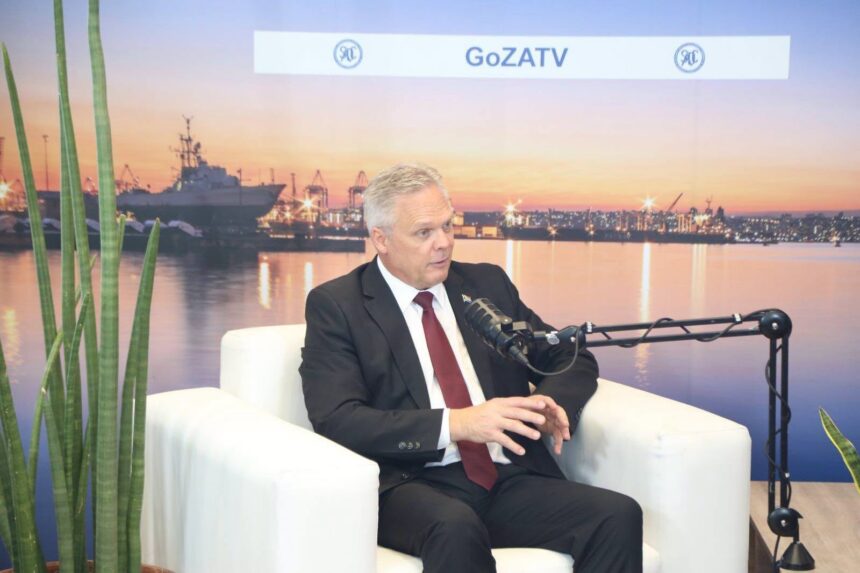
Foot-and-mouth disease (FMD) remains a serious threat to livestock production, food security and agricultural trade across Southern Africa, making regional cooperation increasingly important. The need for countries to work together was highlighted during the 46th Ordinary SADC Summit of Heads of State and Government, held in Durban on 17 August 2026. On the sidelines of the summit, Minister Willie Aucamp spoke to GoZA TV about the importance of SADC Member States collaborating to address the spread and impact of FMD. His message reinforced the need for stronger cooperation, stronger biosecurity measures and stronger agricultural systems across the region. The SADC Summit itself noted ongoing regional efforts to control and prevent FMD outbreaks and agreed on measures aimed at strengthening the collective response.
FMD is a highly contagious viral disease that affects cloven-hoofed animals such as cattle, pigs, sheep and goats. An outbreak can have consequences far beyond individual farms because infected animals and contaminated materials can contribute to the movement of the disease between farms, communities and countries. Restrictions introduced to contain outbreaks can also affect livestock movement, agricultural markets and trade, creating economic pressure for farmers and other businesses that depend on the sector. This makes effective disease control an issue that requires more than action from individual farmers or a single government department. It requires coordinated surveillance, rapid reporting, effective biosecurity and cooperation between neighbouring countries.
The regional nature of livestock production and trade makes cooperation between SADC Member States particularly important. Animals, animal products, vehicles, people and equipment can move across borders, creating opportunities for diseases to spread when adequate controls are not in place. A coordinated approach allows countries to share information, strengthen disease surveillance and respond more quickly when new cases are detected. The 46th SADC Summit specifically urged Member States to strengthen disease surveillance and preparedness through timely information sharing and coordinated regional action. These measures can help countries identify threats earlier and improve their ability to contain outbreaks before they cause wider disruption.
The summit also recognised the importance of strengthening access to vaccines as part of the regional response. SADC designated the Botswana Vaccine Institute as a regional FMD antigen and vaccine bank, creating an important mechanism to support prevention and control efforts when outbreaks occur. A regional vaccine resource can help Member States improve preparedness and strengthen their ability to respond when vaccination is required. This decision also reflects the reality that disease control requires shared resources and coordinated planning rather than isolated national responses. Strong regional systems can provide countries with additional capacity when individual outbreaks place pressure on national veterinary services and agricultural authorities.
Biosecurity remains another critical part of the fight against FMD. Farmers, livestock owners, traders, transporters, abattoirs and other people involved in the agricultural value chain all have a role to play in reducing opportunities for disease transmission. Basic measures such as controlling access to livestock areas, maintaining clean equipment, monitoring animals for signs of illness and following official movement restrictions can help reduce risks. Early reporting also matters because veterinary authorities need accurate information to investigate suspected infections and implement appropriate control measures. Strong biosecurity therefore depends not only on government policies but also on consistent action at farm and community level.
The economic importance of controlling FMD also cannot be underestimated. Livestock supports the livelihoods of farmers, farm workers, traders, processors and many other businesses across Southern Africa. When disease outbreaks disrupt livestock movement and trade, the consequences can spread through the wider agricultural economy. Reduced market access can affect producers while restrictions can create additional costs for farmers and businesses trying to comply with disease control measures. Protecting animal health therefore supports both agricultural production and economic stability, particularly in communities where livestock plays a major role in household income and food security.
South Africa’s position within the SADC region makes regional coordination especially relevant. The country has extensive agricultural and livestock networks and maintains strong economic links with neighbouring countries. Protecting livestock health requires cooperation across borders because disease risks do not stop at national boundaries. The 46th SADC Summit’s focus on agricultural transformation and regional integration provides an opportunity for Member States to strengthen systems that protect farmers while supporting the movement of agricultural products under appropriate health and safety controls. The summit’s adopted theme places agriculture among the key drivers of industrialisation, resilience and inclusive development in the region.
The fight against FMD also requires clear communication between governments, veterinary authorities and agricultural communities. Farmers need reliable information about outbreaks, movement controls, vaccination programmes and reporting procedures. Authorities, in turn, need farmers and other industry participants to report suspected cases quickly and comply with disease control measures. Delayed reporting or failure to follow biosecurity requirements can make containment more difficult and increase the potential for further transmission. Building trust and maintaining open communication can therefore strengthen the practical response to outbreaks.
Minister Willie Aucamp’s message from the SADC Summit highlights a broader principle for agricultural disease management across Southern Africa. No country can treat FMD as an isolated national problem when livestock and agricultural products move across regional borders. Countries need to share information, coordinate veterinary responses, strengthen biosecurity and maintain access to resources that support disease prevention and control. The SADC decision to establish a regional FMD antigen and vaccine bank shows how collective action can translate into practical support for Member States.
Fighting FMD will require sustained commitment from governments, farmers, industry organisations, veterinary professionals and communities. Stronger cooperation can improve regional preparedness, while stronger biosecurity can reduce the opportunities for the disease to spread. Stronger agricultural systems can then protect livelihoods, support food security and help maintain confidence in livestock production and trade. The message from Durban is clear: controlling foot-and-mouth disease is a shared responsibility that requires action at every level. Fighting FMD takes all of us, and coordinated regional action will remain essential to building a healthier, more resilient agricultural sector across SADC.
Join 'Farmers Mag' WhatsApp Channel
Get the latest Farming news and tips delivered straight to your WhatsApp
CLICK HERE TO JOIN