Feed efficiency has become one of the most important factors determining the profitability and sustainability of modern livestock farming. Whether you raise broilers, layers, sheep or dairy cattle, feed represents one of the largest operating costs on any farm. Every kilogram of feed that is wasted or poorly utilised directly affects production costs and reduces profit margins. Improving feed efficiency does not always require major investments or expensive technology because small management changes can produce significant financial benefits over time. Understanding how animals convert feed into meat, eggs or milk allows farmers to make better decisions that improve productivity while protecting their bottom line.
Feed efficiency refers to an animal’s ability to convert feed into the desired product, whether that is body weight, eggs, milk or wool. Animals with better feed efficiency require less feed to produce the same level of output compared with less efficient animals. For example, a broiler that reaches market weight using less feed than another bird is considered more feed efficient. The same principle applies to dairy cows that produce more milk from the same quantity of feed or sheep that gain weight more efficiently. Improving feed conversion means farmers spend less on feed while maintaining or increasing production, making it one of the most effective ways to improve farm profitability.
For broiler producers, feed efficiency is often measured using the Feed Conversion Ratio, commonly known as FCR. This figure compares the amount of feed consumed with the weight gained by the birds. A lower FCR indicates better feed efficiency because less feed is required to produce each kilogram of live weight. Achieving good feed conversion depends on several factors, including genetics, feed quality, housing conditions, disease prevention and proper flock management. Maintaining the correct temperature, providing clean water and reducing stress can significantly improve feed utilisation. Healthy birds are more likely to convert nutrients into growth rather than using energy to fight illness or recover from environmental stress.
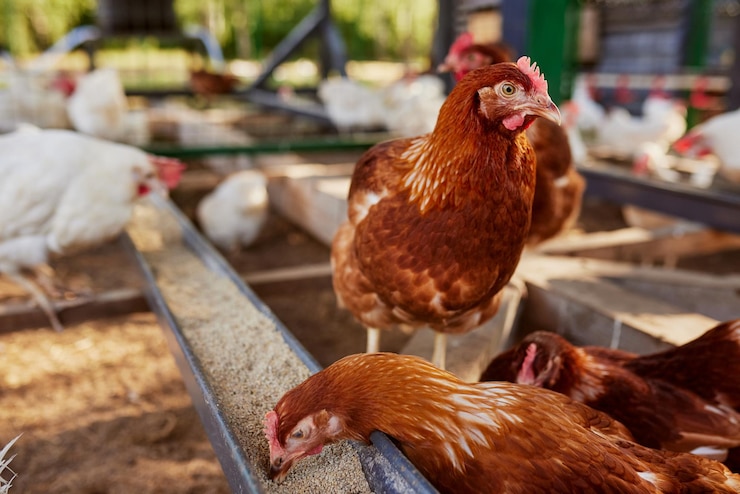
Layer producers also benefit greatly from improved feed efficiency because feed costs account for a substantial portion of egg production expenses. Efficient laying hens convert nutrients into consistent egg production while maintaining good body condition throughout the laying cycle. Proper nutrition, balanced diets and access to clean drinking water are essential for maintaining high production levels. Farmers should regularly monitor feed intake and egg production to identify any sudden changes that may indicate nutritional deficiencies or health problems. Preventing feed wastage through well-designed feeders and proper storage also helps reduce unnecessary costs while improving overall efficiency.
Sheep farmers can improve feed efficiency by matching nutrition to the specific needs of different production stages. Growing lambs, pregnant ewes and breeding rams each require different nutritional programmes to achieve optimal performance. Overfeeding wastes valuable feed resources, while underfeeding can reduce growth rates, reproductive performance and overall flock health. High quality grazing, supplementary feeding during critical periods and careful pasture management all contribute to better feed utilisation. Regular monitoring of body condition scores allows farmers to adjust feeding programmes before nutritional problems begin affecting productivity.
In dairy farming, feed efficiency plays a direct role in milk production and farm profitability. Dairy cows require carefully balanced diets containing adequate energy, protein, minerals and fibre to maintain high milk yields while supporting overall health. Poor quality forage, inconsistent feeding schedules or nutritional imbalances can reduce milk production and increase feed costs. Farmers who regularly test forage quality and work with animal nutrition specialists can develop rations that maximise nutrient utilisation. Comfortable housing, good cow health and unrestricted access to fresh water also support efficient feed conversion by reducing stress and encouraging consistent feed intake.
Feed quality itself remains one of the most important factors affecting efficiency across all livestock enterprises. High quality feed contains the nutrients animals need in forms that are easily digested and absorbed. Poor quality ingredients, mould contamination or incorrect feed formulations reduce nutrient availability and limit animal performance. Proper feed storage is equally important because exposure to moisture, pests and heat can reduce nutritional value before feed even reaches the animals. Investing in quality feed and protecting it from spoilage often delivers better returns than attempting to reduce costs by purchasing lower quality products.
Reducing feed wastage offers another practical way to improve efficiency without increasing feed purchases. Feed that spills onto the ground, becomes contaminated or remains uneaten represents a direct financial loss. Farmers should regularly inspect feeders, adjust feeding equipment and avoid overfilling feed troughs. Clean feeding areas encourage animals to consume feed efficiently while reducing contamination from manure and dirt. Even small reductions in daily feed wastage can result in significant savings over the course of a production cycle.
Animal health also has a major influence on feed efficiency because sick animals divert nutrients away from production and toward fighting disease. Effective vaccination programmes, parasite control, biosecurity measures and routine veterinary care help maintain healthy livestock that can convert feed more efficiently. Early detection and treatment of health problems minimise production losses while reducing unnecessary feed consumption. Good hygiene, clean housing and proper ventilation further contribute to stronger animal health and improved performance. Preventative health management remains one of the most cost effective investments livestock farmers can make.
Technology is increasingly helping farmers monitor and improve feed efficiency through better data collection and analysis. Automated feeding systems, electronic identification, weighing equipment and production management software allow producers to monitor animal performance more accurately than ever before. These technologies make it easier to identify underperforming animals, adjust feeding programmes and evaluate the financial impact of management decisions. While advanced systems may not be practical for every farm, even basic record keeping can provide valuable information for improving feed efficiency. Measuring feed use alongside production results helps farmers identify opportunities to reduce costs while increasing output.
Feed efficiency is ultimately about making every bag of feed work harder for the farm. Small improvements in nutrition, animal health, housing, feed management and record keeping can combine to produce substantial gains in profitability over time. Whether producing broilers, eggs, lamb, wool or milk, efficient feed utilisation allows farmers to maximise production while controlling one of their largest operating expenses. As feed prices continue to fluctuate and production costs remain under pressure, improving feed efficiency has become more important than ever. By focusing on practical management improvements and making informed nutritional decisions, livestock producers can protect their margins, strengthen business sustainability and achieve better performance from every kilogram of feed they purchase.
Join 'Farmers Mag' WhatsApp Channel
Get the latest Farming news and tips delivered straight to your WhatsApp
CLICK HERE TO JOIN