Eggsellent By Lebo Layer Project in Kwaggafontein is showing how strong biosecurity practices can play a central role in producing quality and healthy eggs while protecting a valuable poultry operation. The state-of-the-art project recently received attention during its official handover, where Lebo Mashigo demonstrated a firm commitment to protecting her flock from disease and unnecessary exposure. Her approach reflects an important principle in modern poultry farming: keeping chickens healthy starts with controlling what enters their environment. For Mashigo, the approximately 30,000 laying hens are more than a business investment, as she passionately referred to them as her “babies” while explaining the importance of protecting them. Her strict approach to biosecurity offered a practical demonstration of why poultry farmers must take disease prevention seriously at every stage of production.
During the official handover on Tuesday, an entourage that included MEC Khethiwe Moeketsi, Head of Department Mr Chunda, Thembisile Hani Municipality Executive Mayor, National Empowerment Fund executives, Bukhosi Baka Ndzundza Somphalali and other key stakeholders visited the Eggsellent By Lebo Layer Project. The visit provided an opportunity to see the infrastructure and operations behind a major poultry farming investment in Kwaggafontein. However, one of the strongest messages from the occasion came from Mashigo herself, who made it clear that protecting the flock requires discipline from everyone who enters the farm. She explained the risks associated with allowing unnecessary visitors into the chicken houses and urged people not to approach the birds without following the required procedures. Her firm position highlighted how biosecurity is not simply a recommendation but a daily responsibility that can determine the health and productivity of a poultry enterprise.
Biosecurity refers to the measures used to prevent diseases and harmful organisms from entering, spreading within or leaving a poultry operation. These measures can include controlling farm access, maintaining clean facilities, disinfecting equipment, using dedicated clothing and footwear and ensuring that visitors follow strict hygiene procedures. For a layer project with thousands of birds housed within a controlled production environment, even a seemingly minor breach can create serious consequences. Poultry diseases can spread through people, clothing, footwear, equipment, vehicles and other forms of contact, which makes visitor management particularly important. Eggsellent By Lebo’s approach demonstrates that effective biosecurity requires farmers to identify potential risks and establish clear rules that everyone must follow.
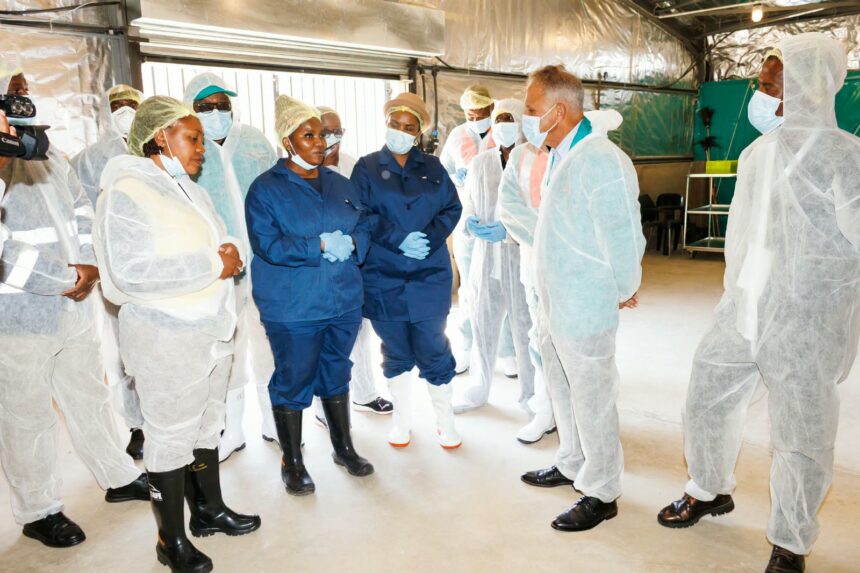
Mashigo’s interaction with visitors during the site visit showed that she was prepared to enforce those rules, even when the visitors included senior government officials and important stakeholders. She passionately explained why allowing people to move freely around the chicken houses could expose her flock to unnecessary risks. Those who were permitted to move closer to certain areas, including the pack house, still had to follow strict hygiene requirements before entering. They were required to wear dedicated shoes and clothing and use footbaths as part of the site’s biosecurity procedures. This level of discipline sends an important message to other poultry farmers that biosecurity measures only work when they are consistently applied, regardless of who is visiting the farm.
The emphasis on footbaths and dedicated protective clothing also demonstrates the importance of preventing contamination from being carried into poultry production areas. Footwear can come into contact with contaminated surfaces before a person arrives at a poultry facility, creating a potential pathway for disease transmission. Dedicated footwear and properly managed footbaths can help reduce that risk when farmers maintain them correctly and ensure that everyone follows the procedure. Clothing also matters because pathogens can potentially be carried on fabric from one environment to another. By controlling what people wear and how they enter sensitive production areas, farmers can create additional barriers between their chickens and potential sources of infection.
For a layer farming operation, protecting bird health has a direct connection to production and business sustainability. Healthy hens are essential for maintaining consistent egg production, while disease outbreaks can result in losses through mortality, reduced production, treatment costs, movement restrictions and damage to the reputation of the farm. Good biosecurity therefore supports both animal welfare and the economic performance of the operation. It also helps protect the wider poultry sector because diseases can spread from one farm to another when proper precautions are ignored. The strict standards demonstrated at Eggsellent By Lebo therefore have significance beyond the project’s own 30,000 hens.
The pack house is another important part of the operation because it plays a role in handling eggs after they leave the production environment. Maintaining hygiene in areas where eggs are collected, handled, packed and prepared for distribution is essential for protecting product quality. The separation between poultry houses and other operational areas also needs to be managed carefully to reduce opportunities for contamination. Visitors entering these spaces must understand that their movement can affect the farm’s hygiene controls. The procedures followed at Eggsellent By Lebo show that biosecurity needs to cover the entire production chain rather than focusing only on the chicken houses.
The official handover also highlighted the broader significance of the Eggsellent By Lebo Layer Project as an agricultural development initiative in Kwaggafontein. Investments in modern farming infrastructure can create opportunities for local economic participation while contributing to food production and the poultry value chain. A successful layer project can support employment, skills development, supply chains and local business activity. However, infrastructure alone cannot guarantee success, because daily management and operational discipline remain critical. Mashigo’s focus on biosecurity shows that sustainable agricultural businesses require both investment in facilities and consistent attention to the practices that keep those facilities productive.
The presence of government representatives, municipal leadership, National Empowerment Fund executives and other stakeholders at the handover further reflects the importance of supporting agricultural enterprises with the potential to contribute to local development. Projects such as Eggsellent By Lebo can demonstrate how investment in agriculture can translate into productive assets and opportunities when strong management accompanies financial and institutional support. The project’s focus on egg production also places it within an important part of the food supply chain. Poultry products form a significant part of everyday food consumption, making reliable production important for communities and markets. Ensuring that farms operate responsibly and maintain strong animal health practices helps strengthen the foundations of that supply chain.
Mashigo’s message to visitors ultimately captured one of the most important lessons from the project. Biosecurity cannot be treated as an occasional exercise that happens only when there is a known disease outbreak. It must become part of the farm’s everyday culture, from controlling visitors to maintaining clean equipment and enforcing protective measures. Farmers must also be willing to say no when a proposed activity could put their animals or production at unnecessary risk. At Eggsellent By Lebo, Mashigo’s willingness to enforce these standards demonstrates that protecting the flock takes priority over convenience.
The Eggsellent By Lebo Layer Project in Kwaggafontein provides a strong example of how responsible poultry farming combines modern infrastructure with strict operational discipline. The protection of approximately 30,000 laying hens requires more than good facilities, as it depends on daily decisions that reduce disease risks and maintain a clean production environment. Lebo Mashigo’s firm approach to visitor control and biosecurity shows that successful poultry farming requires clear standards and the courage to enforce them consistently. As the project continues to develop, its commitment to bird health, egg quality and responsible farm management can serve as an example for other agricultural enterprises. The central lesson is simple: when farmers take biosecurity seriously and protect their chickens from preventable risks, they create stronger conditions for healthy birds, quality eggs and a sustainable farming business.
Join 'Farmers Mag' WhatsApp Channel
Get the latest Farming news and tips delivered straight to your WhatsApp
CLICK HERE TO JOIN