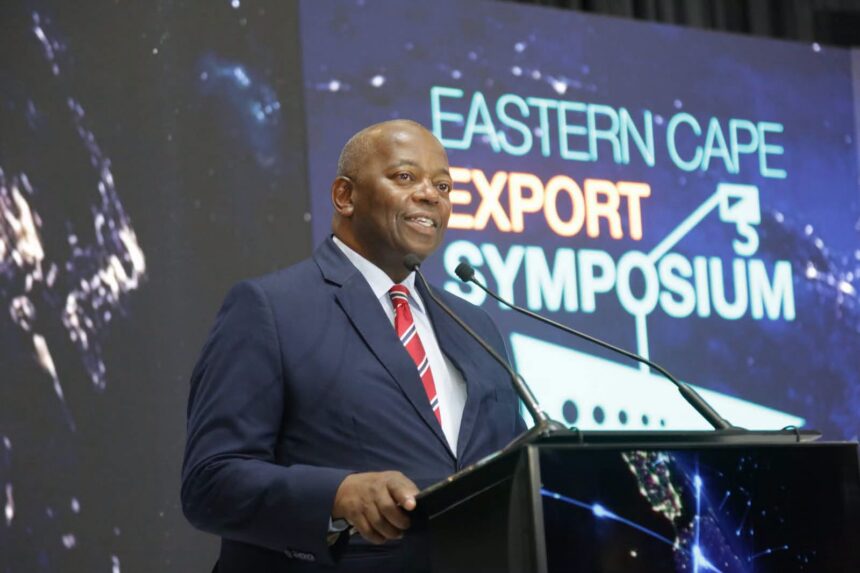
The Eastern Cape Department of Agriculture has been commended for its investment in rural farmers and its efforts to strengthen their participation in agricultural value chains. The recognition came during a panel discussion on Day 2 of the 7th Eastern Cape Export Symposium, where industry stakeholders examined ways to improve global trade and create greater opportunities for emerging agricultural producers. The discussion highlighted the importance of ensuring that rural farmers are not left behind as South Africa expands its participation in international markets. Panelists stressed that farmers need practical support, stronger market connections and access to opportunities that can help them move from small-scale production into sustainable commercial enterprises. The discussions also reinforced the need for government, industry and farmers to work together to unlock the export potential of the Eastern Cape agricultural sector.
The panel discussion focused on measures that could improve global trade while integrating emerging farmers more effectively into agricultural value chains. For many rural farmers, producing quality agricultural products is only one part of building a successful business, as access to reliable markets can determine whether increased production translates into sustainable income. Farmers also need to understand market requirements, quality standards, logistics, pricing and export processes if they are to compete beyond local markets. Integrating emerging producers into established value chains can give them access to buyers and create opportunities for them to increase production over time. The discussions at the symposium therefore placed market access alongside agricultural production as a key component of rural economic development.
Panelists called on governments to make better use of existing global trade agreements to create greater market access for farmers. Trade agreements can provide opportunities for agricultural products to reach international markets, but farmers and agricultural businesses need the capacity to meet the requirements of those markets. This includes producing consistent quality, meeting food safety standards, maintaining reliable supply and understanding the regulations that apply in different destinations. Government support can help emerging farmers navigate some of these requirements through training, technical assistance and market development initiatives. Making better use of existing trade arrangements could therefore help connect more Eastern Cape farmers to international demand.
The emphasis on rural farmers is particularly important because agricultural production is closely linked to livelihoods and economic activity in many communities across the Eastern Cape. Rural farmers contribute to food production while supporting local businesses involved in inputs, transport, processing, storage and marketing. When these farmers gain access to stronger markets, the benefits can extend across the broader rural economy. Increased agricultural activity can create opportunities for employment and encourage investment in infrastructure and value-adding enterprises. Supporting rural producers should therefore be viewed as part of a wider strategy to strengthen local economies while increasing the province’s contribution to national and international agricultural trade.
Investment in emerging farmers can also help address some of the barriers that prevent smaller producers from participating in formal value chains. Farmers may have the land and production capacity but lack access to appropriate infrastructure, finance, equipment, technology or reliable buyers. These constraints can make it difficult for producers to scale up and meet the volumes or standards required by larger markets. Coordinated government support can help address some of these gaps while creating stronger links between farmers, processors, exporters and retailers. The commendation received by the Eastern Cape Department of Agriculture reflects the importance of investing in farmers as part of efforts to build a more inclusive agricultural economy.
The Eastern Cape Export Symposium provides an important platform for discussing how the province can increase its participation in global trade. Bringing together government representatives, agricultural stakeholders, exporters and other industry participants creates opportunities to identify barriers and explore practical solutions. For farmers, these discussions can help place agricultural exports within the broader conversation about economic development and international trade. Emerging producers need to be included in these conversations because their participation can help broaden the base of businesses benefiting from export opportunities. Greater collaboration between stakeholders can also help ensure that trade strategies translate into practical opportunities for farmers.
For emerging farmers to benefit from global trade, however, market access must be supported by improvements in production capacity. Farmers need access to appropriate agricultural inputs, extension services and technical knowledge to maintain consistent production. They also need support to understand certification requirements and other standards that may apply when supplying formal or international markets. Building this capacity takes time and requires sustained cooperation between government and the private sector. The goal should be to develop farming enterprises that can consistently produce market-ready products while meeting the expectations of buyers.
The call to leverage existing global trade agreements also highlights the importance of connecting policy with practical implementation. Trade agreements can create opportunities, but those opportunities only become meaningful when farmers can access the markets created by them. This requires stronger communication about available export opportunities and support for farmers seeking to participate in them. It may also require investment in logistics, aggregation and processing so that products can move efficiently from farms to domestic and international buyers. Creating these connections can help emerging farmers become more competitive while allowing the Eastern Cape to capture greater value from its agricultural production.
The statement that “We are working with speed” reflects the urgency surrounding efforts to expand opportunities for farmers and improve the province’s participation in global markets. Rural producers operate in an environment where delays in accessing finance, infrastructure, markets and technical support can affect their ability to grow. Accelerating support while maintaining proper planning and accountability can help farmers respond more effectively to market opportunities. The focus should remain on delivering practical interventions that increase production, improve market access and strengthen the long-term sustainability of agricultural enterprises. Speed must ultimately be matched by effective implementation so that commitments made through discussions and policy processes result in measurable benefits for farmers.
The discussions at the 7th Eastern Cape Export Symposium have highlighted the important connection between rural agricultural development and international trade. The commendation of the Eastern Cape Department of Agriculture for its investment in rural farmers shows growing recognition of the need to support emerging producers as the province seeks to expand its export potential. Greater use of trade agreements, improved market access and stronger integration into value chains could open new opportunities for farmers who have traditionally struggled to reach larger markets. With continued investment, technical support and cooperation between government and industry, Eastern Cape farmers can become more active participants in domestic and global agricultural trade. Ensuring that rural producers are included in these opportunities will be critical to building a more competitive, inclusive and sustainable agricultural sector.
Join 'Farmers Mag' WhatsApp Channel
Get the latest Farming news and tips delivered straight to your WhatsApp
CLICK HERE TO JOIN