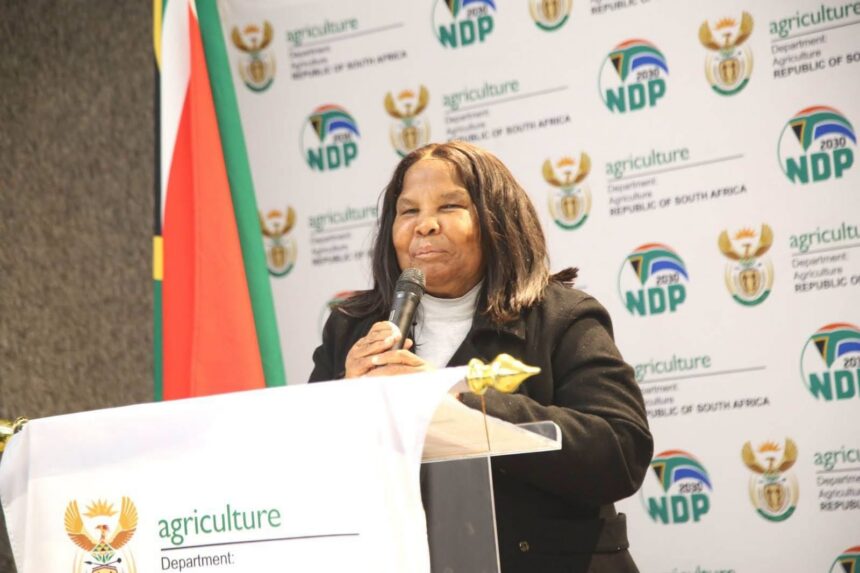
Deputy Minister Nokuzola Capa, together with Eastern Cape Department of Agriculture MEC Ms Nonceba Kontsiwe, is engaging with students at the Tsolo Agriculture and Rural Development Institute (TARDI) as part of efforts to understand the experiences of young people preparing for careers in agriculture. The engagement gives students a platform to speak openly about their education, raise concerns and discuss the opportunities available to them within the agricultural sector. Direct interaction between government leaders and students can help bring the realities faced by young people into policy discussions and development programmes. It also highlights the importance of investing in agricultural education as South Africa works to strengthen rural economies and create sustainable opportunities for the next generation. The visit places young agricultural students at the centre of conversations about the future of farming, animal health and rural development.
The engagement at TARDI provides an important opportunity for students to share their experiences beyond the classroom. Students can raise issues affecting their studies, campus experience and preparation for employment or further education. Discussions of this nature can help government officials gain a clearer understanding of the practical challenges faced by young people pursuing agricultural qualifications. They also create space to explore opportunities that could support students as they transition from education into the workplace and agricultural enterprises. For students who want to build careers in agriculture, access to relevant training, professional guidance and practical opportunities can play an important role in shaping their future. The interaction therefore connects education with broader questions about employment, skills development and rural economic growth.
With more than 188 students, the Tsolo Agriculture and Rural Development Institute has an important role in developing agricultural skills in the Eastern Cape. The institution is accredited to offer the Diploma in Animal Health at NQF Level 6, giving students specialised training that can contribute to animal health services and agricultural development. Animal health remains an important part of a productive agricultural sector because healthy livestock support food production, farmer livelihoods and rural economic activity. Training students in this field can help develop a skilled workforce capable of supporting livestock owners and communities across rural areas. TARDI’s wider focus on agriculture and rural development also gives students an opportunity to understand the connection between technical agricultural knowledge and the needs of rural communities.
Agricultural education has a significant role to play in addressing some of the challenges facing rural communities. Young people with appropriate skills can contribute to farming enterprises, animal health services, agricultural businesses and rural development initiatives. They can also bring new approaches to traditional agricultural practices by using technology, improved production methods and stronger business management skills. This makes institutions such as TARDI important not only as places of learning but also as potential drivers of local economic development. Supporting agricultural students can create benefits that extend beyond individual graduates because their knowledge and expertise can eventually serve farmers, livestock owners and communities. The continued development of agricultural skills is therefore closely linked to the long-term strength and resilience of the rural economy.
The presence of Deputy Minister Nokuzola Capa and MEC Nonceba Kontsiwe also underlines the importance of listening to young people who are preparing to enter the agricultural sector. Students have first-hand knowledge of the opportunities and difficulties they encounter during their education, making their views valuable when government considers future interventions. Their concerns can provide insight into areas where additional support, resources, career guidance or industry connections may be needed. At the same time, engagements can help students better understand the opportunities available within government programmes and the wider agricultural economy. Meaningful dialogue between students and public officials can strengthen communication and help ensure that agricultural development policies remain connected to the needs of young people.
The future of agriculture in the Eastern Cape will depend heavily on the skills, determination and innovation of its young people. Students currently studying agriculture and animal health have the potential to become farmers, animal health practitioners, agricultural entrepreneurs, researchers, managers and rural development professionals. Their education can provide a foundation for careers that contribute to food security, livestock production and economic activity in rural areas. However, qualifications must be supported by practical experience, access to opportunities and an environment that allows young professionals to apply what they have learned. Engagements such as the one at TARDI can help bring these issues into focus while encouraging students to see themselves as active participants in the future of agriculture.
TARDI’s contribution is particularly significant because agricultural development requires people who understand both the technical and social realities of rural communities. Agriculture is not limited to crop production or livestock farming, as it also involves animal health, environmental management, entrepreneurship, markets, technology and community development. Students who receive broad and relevant training can be better positioned to respond to changing conditions within the agricultural sector. Their knowledge can support farmers and rural communities while also creating opportunities for young people to establish their own careers and businesses. Continued investment in agricultural education can therefore help develop a stronger skills base for the Eastern Cape and contribute to a more sustainable rural economy.
The engagement with TARDI students sends a clear message about the importance of creating opportunities for young people in agriculture. More than 188 students are currently building knowledge and skills that could influence the future of rural communities across the province. Their concerns and ambitions deserve attention because today’s agricultural students will eventually become part of the workforce and leadership that drives the sector forward. By creating platforms where students can speak directly with government representatives, institutions can strengthen the connection between education, policy and real-world agricultural needs. The participation of Deputy Minister Nokuzola Capa and MEC Nonceba Kontsiwe reflects the value of engaging directly with the next generation and recognising their role in shaping South Africa’s agricultural future.
Join 'Farmers Mag' WhatsApp Channel
Get the latest Farming news and tips delivered straight to your WhatsApp
CLICK HERE TO JOIN