

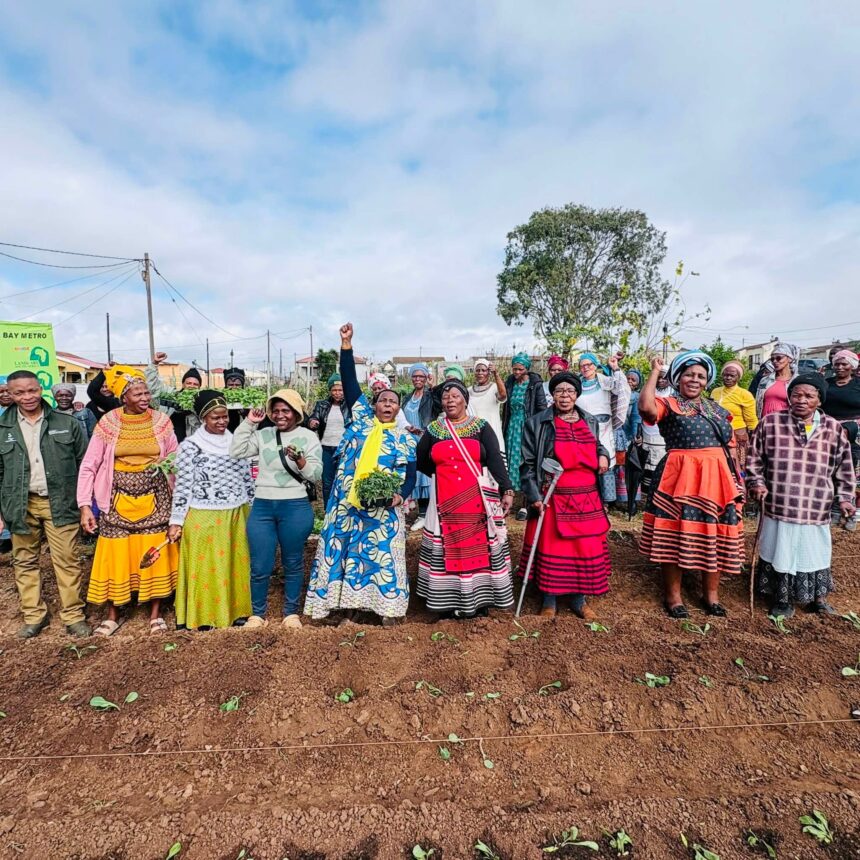
A community project in Joe Slovo, Kwa Dwesi near Despatch, is showing how neglected spaces can be transformed into productive food gardens that support local households and help address unemployment and crime. As part of the Women’s Month build-up programmes, the Department of Agriculture, led by MEC Kontsiwe, delivered agricultural resources to the community to strengthen its efforts. The support included a hand-held tiller, gardening tools, 1,000 seedlings and fertilisers. The initiative builds on the community’s successful work to convert illegal dumping sites into productive areas for growing food. By turning spaces that were once associated with waste and environmental degradation into food-producing gardens, residents are creating a practical example of community-led development.
Illegal dumping can create serious problems for communities, particularly when waste accumulates in areas close to homes and public spaces. Dumping sites can become environmental hazards, attract pests and contribute to unpleasant living conditions. They can also create spaces where criminal activity becomes easier to conceal, particularly when neglected areas are poorly maintained. Transforming these sites into food gardens changes how the spaces are used and gives residents a direct role in improving their surroundings. The Joe Slovo project demonstrates how agricultural activity can become part of a broader community response to environmental challenges, unemployment and crime.
Food gardens can provide households with access to fresh vegetables while reducing some of the pressure caused by rising food costs. Growing food locally gives communities an opportunity to produce part of what they consume rather than relying entirely on purchased produce. Surplus vegetables can potentially be shared among households or sold within the community, creating opportunities for additional income. Food gardens can also improve access to nutritious foods in areas where fresh produce may not always be readily available or affordable. When communities organise around food production, agriculture becomes both a food security intervention and a potential source of economic activity.
The support delivered by the Department of Agriculture can help the Joe Slovo community increase the scale and efficiency of its food garden activities. A hand-held tiller can make soil preparation easier and reduce the physical effort required to cultivate garden areas. Gardening tools can support planting, maintenance, harvesting and other routine activities needed to keep food gardens productive. The 1,000 seedlings provide the community with a significant number of plants that can be established and cultivated, while fertilisers can support plant growth when used correctly. Together, these resources provide practical assistance that can help residents strengthen an initiative they have already started.
The project also highlights the role of women in community development and agricultural activities. Its inclusion in the Women’s Month build-up programmes provides an opportunity to recognise the contribution women make to food production, household livelihoods and local economic development. Women often play important roles in managing household food resources and participating in community initiatives that improve living conditions. Providing women and communities with agricultural resources can help them turn these activities into more organised and productive projects. The initiative therefore connects Women’s Month with practical economic and community empowerment rather than recognition alone.
The transformation of dumping sites into food gardens also creates an alternative way of using land that might otherwise remain neglected. Communities do not always have access to large areas of agricultural land, particularly in densely populated settlements. Identifying suitable spaces and converting them into productive gardens can help residents make better use of available land. Such projects can also encourage residents to take greater responsibility for keeping their neighbourhoods clean and productive. Once a former dumping site becomes a food-producing space, community members have a stronger incentive to protect it from further dumping and maintain its condition.
Unemployment remains a major challenge for many communities, making initiatives that combine food production and economic opportunities particularly important. A community garden cannot solve unemployment on its own, but it can create practical opportunities for people to develop agricultural skills and generate some income. As production increases, there may also be opportunities for selling vegetables, supplying local households or participating in small-scale markets. Community members can gain experience in cultivation, garden management, harvesting and basic agricultural enterprise development. These skills can provide a foundation for people who want to explore further opportunities in farming, horticulture or related businesses.
The project can also contribute to crime prevention by encouraging productive use of community spaces. Areas that are abandoned or used for illegal dumping can become associated with disorder and may create conditions that make residents feel unsafe. When community members collectively reclaim such spaces and use them for productive activities, they can increase local ownership and visibility. Regular activity in a community garden can bring residents together and create stronger social connections. This does not replace formal crime prevention measures, but it can contribute to creating cleaner, more active and better-managed public environments.
Community participation is one of the most important factors behind the success of projects of this nature. Government support can provide equipment, seedlings, fertilisers and technical assistance, but local residents must remain actively involved in maintaining the gardens. Community ownership can help ensure that resources are used responsibly and that the project continues after the initial support has been delivered. Residents can also identify additional needs and develop practical ways to manage the garden according to local conditions. The Joe Slovo example shows how government intervention can build on work that communities have already initiated rather than replacing local effort.
Agricultural projects can also support environmental improvement when they are managed responsibly. Reclaiming illegal dumping areas can reduce the amount of waste in the surrounding environment and create cleaner spaces for residents. Food gardens can contribute to greener neighbourhoods while providing productive uses for land that was previously associated with waste. Proper waste management, soil preparation and responsible use of fertilisers remain important to ensure that reclaimed areas are safe and suitable for food production. Environmental rehabilitation and food production can therefore work together when communities receive appropriate support and guidance.
The delivery of the hand-held tiller, gardening tools, seedlings and fertilisers represents an investment in the community’s ability to expand its food production activities. The resources can help residents move from simply reclaiming land towards maintaining productive and sustainable gardens. Continued support through agricultural advice, training and access to markets could further strengthen the project’s long-term potential. If production increases, the community could explore opportunities to sell surplus produce and generate income that can be reinvested into the gardens. This would help create a cycle in which agricultural production supports both food security and the ongoing development of the community project.
The Joe Slovo food garden initiative demonstrates that community development can begin with practical action at local level. By transforming illegal dumping sites into productive food gardens, residents have addressed an environmental problem while creating opportunities to grow food and develop agricultural skills. The support from the Department of Agriculture, led by MEC Kontsiwe, provides additional resources that can help strengthen this work and increase its impact. The project also shows how food production can form part of broader efforts to address unemployment, improve neighbourhood conditions and reduce opportunities for crime. With continued community participation, agricultural support and responsible management, the reclaimed spaces in Kwa Dwesi can become lasting examples of how communities can turn neglected areas into productive assets that support food security, livelihoods and local development.
Join 'Farmers Mag' WhatsApp Channel
Get the latest Farming news and tips delivered straight to your WhatsApp
CLICK HERE TO JOIN




