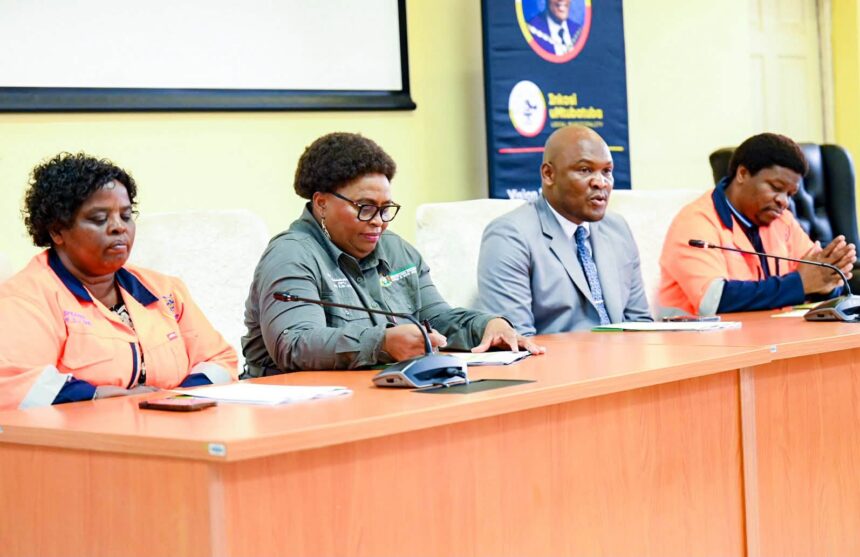
The stakeholder engagement briefing is currently underway at the iNkosi Mtubatuba Chamber, where KwaZulu-Natal MEC for Agriculture and Rural Development Hon. Thembeni KaMadlopha-Mthethwa is engaging agricultural stakeholders on issues affecting farmers and rural communities. The meeting provides a platform for farmers and other agricultural representatives to discuss challenges directly with provincial government leadership. The discussions are focused on practical measures that can strengthen farming activities and improve conditions for agricultural communities. Particular attention is being given to animal husbandry, farmer challenges and food security in uMtubatuba and surrounding areas. The engagement highlights the importance of direct communication between government and farming communities when developing interventions that respond to local conditions.
Animal husbandry is a central focus of the discussions because healthy and productive livestock can contribute significantly to household incomes, food supplies and rural economic activity. Farmers depend on effective livestock management practices to maintain healthy herds and improve production outcomes. Issues such as animal health, access to veterinary services, livestock nutrition, breeding practices, water availability and appropriate infrastructure can all influence productivity. Addressing these areas requires farmers to have access to technical knowledge, agricultural extension services and reliable support systems. Strengthening animal husbandry can therefore help farmers protect their livestock assets while creating opportunities to improve agricultural production in uMtubatuba.
The stakeholder engagement also creates an opportunity for farmers to explain the practical difficulties they experience in their daily operations. Farmers in rural areas can face challenges related to access to agricultural inputs, markets, infrastructure, water, veterinary services and production resources. These challenges can affect both emerging farmers and established agricultural producers, although their circumstances and support requirements may differ. Listening directly to farmers allows government officials to gain a clearer understanding of which issues require urgent attention and which interventions could deliver the greatest benefit. Meaningful engagement can also help ensure that agricultural programmes are designed around actual conditions rather than relying only on broad provincial priorities.
Livestock farming remains an important part of many rural economies, particularly in communities where cattle, goats and other animals provide both food and income. Livestock can serve as an important household asset while supporting local trade and contributing to broader agricultural value chains. However, farmers can face significant losses when livestock diseases, theft, inadequate infrastructure or poor access to markets affect production. Improving livestock management therefore requires a coordinated approach that considers animal health, security, nutrition, breeding, infrastructure and market opportunities. Stakeholder discussions around these issues can help identify practical steps that can strengthen livestock production while reducing risks for farming communities.
Food security is another important priority linked to the engagement because stronger agricultural production can contribute to the availability and affordability of food in local communities. Food security depends on farmers being able to produce consistently and access the resources needed to maintain their operations. When farmers face production challenges, the effects can extend beyond individual farms and influence household incomes, local food supplies and rural economic activity. Supporting agricultural production in uMtubatuba and surrounding areas can therefore contribute to broader efforts to strengthen community resilience. Practical interventions should focus on helping farmers produce sustainably while improving their ability to participate in local and formal agricultural markets.
Government support can make a meaningful difference when it responds to the specific needs identified by farmers and agricultural stakeholders. Extension officers, veterinary professionals and agricultural specialists can provide technical support that helps farmers improve production practices and manage risks. Government programmes can also assist with infrastructure, training, livestock health interventions and other forms of agricultural development support. However, the effectiveness of these programmes depends on strong communication between officials and the communities they serve. Stakeholder engagements such as the Mtubatuba briefing can help create that communication channel and provide a space for farmers to raise concerns, share experiences and contribute to the development of solutions.
The role of agricultural stakeholders is equally important in ensuring that the discussions produce useful outcomes. Farmers bring practical experience and first-hand knowledge of the conditions affecting their operations and communities. Agricultural organisations, traditional leadership structures and other stakeholders can provide additional perspectives on local development priorities. When these different groups participate constructively, they can help identify solutions that are realistic and capable of being implemented. Continued engagement after the briefing will also be important because solutions to agricultural challenges often require sustained cooperation rather than one-time interventions.
The focus on uMtubatuba and surrounding communities reflects the importance of developing agricultural solutions that recognise local circumstances. Rural communities can have different production systems, environmental conditions and economic opportunities, meaning that a solution that works in one area may not necessarily work in another. Local stakeholder input can help identify these differences and ensure that agricultural interventions are appropriately targeted. It can also help officials understand which existing programmes are working and where additional support may be needed. A locally informed approach can improve the chances of achieving sustainable improvements in livestock production and food security.
The engagement led by MEC Thembeni KaMadlopha-Mthethwa demonstrates the importance of bringing agricultural leadership closer to farming communities. Direct interaction provides an opportunity to discuss challenges openly and consider interventions that can produce practical benefits for farmers. The focus on animal husbandry also recognises the role that livestock can play in supporting rural livelihoods and strengthening local food systems. At the same time, addressing wider farming challenges can help create an environment where agricultural producers have better opportunities to grow and become more sustainable. Continued leadership, coordination and follow-through will be important in turning the issues raised during the engagement into measurable action.
The stakeholder engagement at the iNkosi Mtubatuba Chamber comes at an important time for farmers seeking practical support and stronger agricultural development in the area. Discussions around animal husbandry, farmer challenges and food security provide a foundation for identifying interventions that can benefit both producers and rural communities. The success of the engagement will depend on the ability of stakeholders to translate the concerns raised into clear priorities, practical programmes and continued support. Strengthening livestock production can help protect farmer livelihoods while contributing to local food availability and economic activity. By maintaining direct engagement with farmers and focusing on workable solutions, KwaZulu-Natal can strengthen its agricultural sector and support greater food security in uMtubatuba and surrounding communities.
Join 'Farmers Mag' WhatsApp Channel
Get the latest Farming news and tips delivered straight to your WhatsApp
CLICK HERE TO JOIN