

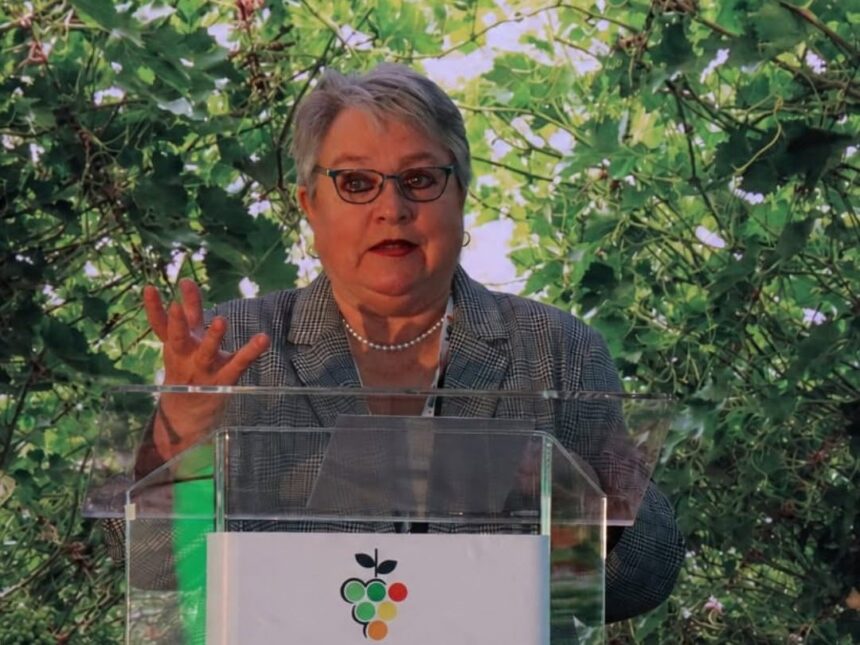
The 2026 Table Grape Conference has marked a significant milestone for South Africa’s table grape industry by bringing together researchers, producers, agronomists and industry leaders to explore the future of grape production. Co-hosted by the South African Society for Enology and Viticulture (SASEV) and the South African Table Grape Industry (SATI), the event is the first conference of its kind dedicated to grapevine research and technology transfer. The gathering created an important platform for sharing knowledge, encouraging innovation and strengthening collaboration across the agricultural value chain. Throughout the conference, speakers emphasised that the industry’s future depends on strong partnerships, scientific research and practical solutions that directly benefit producers. As climate challenges, market demands and technological advancements continue to shape agriculture, the conference demonstrated how collaboration remains essential for building a resilient and competitive table grape sector.
Opening the conference, industry leader Ilse Trautmann set the tone by highlighting the importance of meaningful partnerships in driving long-term success. She encouraged delegates to connect ideas across organisations and disciplines to create solutions that benefit the entire industry. According to Trautmann, the strongest partnerships are built on transparency, shared goals, mutual respect and a long-term commitment to working together. She explained that sustainable progress is rarely achieved in isolation and that collaboration between researchers, growers and industry organisations creates stronger outcomes for everyone involved. Her message reinforced the idea that cooperation is one of the industry’s greatest competitive advantages.
Trautmann also introduced the concept of Agricultural Intelligence, which she described as even more valuable than artificial intelligence when applied to farming. While acknowledging the growing role of artificial intelligence in agriculture, she argued that the industry’s greatest strength lies in combining technology with the practical knowledge, experience and collaboration of people working throughout the agricultural sector. She referred to this combination as “A(g)I” or Agricultural Intelligence, emphasising that collective expertise remains the foundation of successful farming. Rather than viewing artificial intelligence as a replacement for human decision-making, she encouraged the industry to use both forms of intelligence to complement one another. This balanced approach has the potential to improve productivity, innovation and long-term sustainability.
A recurring message throughout the conference was the need to ensure that research findings reach the people who need them most. Researchers were encouraged to move valuable information beyond laboratories and academic institutions by sharing practical knowledge directly with producers and agribusinesses. Keeping farmers at the centre of research ensures that scientific discoveries translate into meaningful improvements on commercial farms. Technology transfer remains a critical part of agricultural development because innovations only deliver value when they are successfully implemented in the field. Strengthening communication between researchers and producers helps accelerate the adoption of better farming practices and improves industry-wide performance.
SATI Chief Executive Officer Mecia Petersen provided delegates with an overview of the future direction of South Africa’s table grape industry. She explained that the next decade will require producers and industry stakeholders to remain flexible while adapting to changing market conditions, climate pressures and consumer expectations. According to Petersen, agility, data-driven decision-making and strong partnerships will become increasingly important as the industry navigates future challenges. Access to reliable information allows producers to make more informed management decisions while improving operational efficiency and profitability. Her presentation highlighted the importance of combining strategic planning with continuous innovation to ensure the industry’s continued growth.
Following technical discussions on grape breeding, attention shifted to one of the industry’s most valuable natural resources, water. A panel discussion sponsored by Netafim Southern and East Africa explored practical strategies for improving water management in vineyards. Before the discussion, #TeamNetafim Agronomist Christo van der Westhuizen presented an economic comparison of irrigation systems commonly used in table grape production. His analysis examined the many factors that influence irrigation system selection, including installation costs, operating expenses, water efficiency and long-term financial returns. The presentation provided producers with valuable information to support future investment decisions.
Van der Westhuizen’s findings demonstrated that while drip irrigation systems generally require slightly higher initial capital investment than micro-sprinkler systems, they offer stronger financial performance over time. According to his analysis, drip irrigation provides better net present value, higher return on investment and lower operational costs throughout the lifespan of the system. In addition to financial benefits, drip irrigation also delivers improved water-use efficiency by applying water more precisely where crops need it most. This allows farmers to maximise limited water resources while maintaining productivity and crop quality. As water becomes an increasingly scarce resource, efficient irrigation systems will play a central role in the long-term sustainability of table grape farming.
The panel discussion, themed “Managing Water, Optimising Quality,” brought together experts who shared practical recommendations for improving vineyard irrigation practices. Panellists encouraged producers to move away from reactive irrigation scheduling and instead adopt smarter, data-driven approaches. They highlighted the importance of using soil moisture monitoring, crop-specific information and local weather station data to make more accurate irrigation decisions. These technologies enable growers to supply water according to actual crop requirements rather than relying on fixed schedules. Such precision helps improve fruit quality while reducing unnecessary water consumption.
Experts also stressed that effective irrigation extends beyond technology and depends on proper system maintenance and careful planning. Regular inspections, leak prevention and accurate water budgeting were identified as essential practices for improving irrigation efficiency. Even the most advanced irrigation systems cannot deliver optimal results if maintenance is neglected or water losses occur through damaged infrastructure. Careful management ensures that every available litre of water contributes to productive crop growth while reducing unnecessary operating costs. These practical recommendations provide farmers with achievable strategies for improving both profitability and environmental sustainability.
The conference concluded with a shared understanding that water security is a responsibility that extends across the entire agricultural sector. Panellists agreed that no single organisation or individual can address climate challenges alone, making collaboration more important than ever. By combining scientific research, advanced technology, practical farming experience and proactive water management, the table grape industry can strengthen its resilience against future environmental pressures. The 2026 Table Grape Conference successfully demonstrated that innovation is driven not only by technology but also by the willingness of people to work together toward common goals. Through stronger partnerships, greater knowledge sharing, smarter irrigation practices and the effective use of Agricultural Intelligence alongside artificial intelligence, South Africa’s table grape industry is positioning itself for a more sustainable, productive and competitive future.
Join 'Farmers Mag' WhatsApp Channel
Get the latest Farming news and tips delivered straight to your WhatsApp
CLICK HERE TO JOIN




