

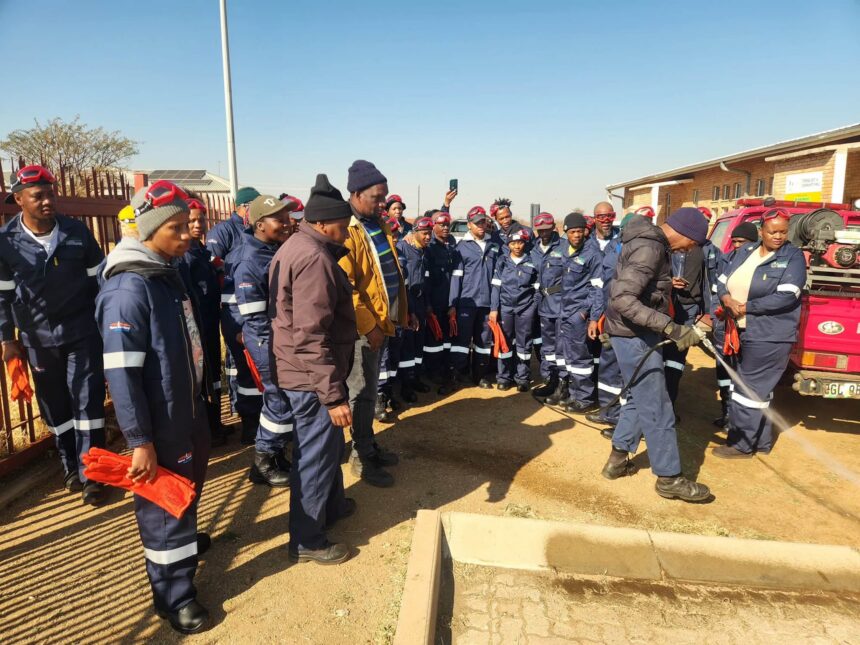
The Department’s Sustainable Resource Use and Management Unit has successfully concluded the final day of its wildfire management training programme, marking another important milestone in strengthening disaster preparedness within the agricultural sector. The training brought together farmers to develop practical skills that will help them prevent, manage and respond to wildfires more effectively. As veld and wildfires continue to pose serious risks to farming communities, investing in hands on training has become increasingly important for protecting agricultural livelihoods and the environment. The programme focused on practical demonstrations that gave participants the confidence to respond safely and efficiently during fire emergencies. By combining technical knowledge with real world exercises, the initiative reinforced the importance of preparedness in reducing the devastating impact of uncontrolled fires.
Wildfires remain one of the most significant natural hazards affecting agricultural production in many parts of South Africa. Dry weather conditions, strong winds and high temperatures can quickly turn small fires into large scale disasters that destroy grazing land, crops, livestock and farming infrastructure. Beyond the immediate financial losses, wildfires can also damage ecosystems, reduce soil quality and disrupt rural economies for extended periods. Effective wildfire management therefore depends on both prevention and rapid response when fires occur. Training programmes that equip farmers with practical firefighting skills play a critical role in reducing these risks and improving community resilience.
A major highlight of the final day was the practical demonstration on how to safely extinguish fires under controlled conditions. Participants were given the opportunity to apply the knowledge they had gained throughout the programme by working through realistic firefighting scenarios. Experienced instructors demonstrated the correct techniques for approaching fires, using firefighting equipment safely and protecting themselves while responding to emergencies. Farmers learned the importance of assessing fire behaviour before taking action and understanding how changing weather conditions can influence the spread of flames. These practical exercises provided valuable experience that cannot be gained through classroom instruction alone.
The training also introduced participants to the operation of a skid unit, an important piece of firefighting equipment commonly used in agricultural and rural environments. A skid unit consists of a water tank, pump and hose system mounted on a vehicle, allowing firefighters to respond quickly to veld fires in difficult terrain. Farmers received practical instruction on operating the equipment correctly, maintaining safety standards and ensuring the unit remains ready for emergency use. Understanding how to use this equipment effectively can significantly improve response times and increase the chances of containing fires before they spread further. Access to practical training on specialised equipment strengthens farmers’ ability to protect their own properties while assisting neighbouring communities when required.
Fire prevention formed another essential component of the training programme. Participants were reminded that preventing wildfires is often more effective and less costly than responding after a fire has already started. Farmers learned about reducing fire hazards through proper land management, maintaining firebreaks, monitoring weather conditions and safely handling activities that could accidentally ignite fires. They also discussed the importance of developing emergency response plans and ensuring that farm workers understand basic fire safety procedures. These preventative measures contribute to safer farming environments while reducing the likelihood of devastating wildfire incidents.
The knowledge gained during the programme extends beyond individual farms and benefits entire rural communities. When more farmers are equipped with firefighting skills, communities become better prepared to respond collectively during wildfire emergencies. Cooperation between neighbouring landowners often plays a crucial role in containing fires before they spread across large areas. Well trained farmers can also assist emergency services by providing early reports, supporting response efforts and implementing coordinated fire management strategies. This collaborative approach strengthens overall disaster preparedness while protecting valuable agricultural resources and natural ecosystems.
The programme was officially concluded by Dr Mushia and Mr Malala, who delivered the closing remarks on behalf of the Department. They thanked all participants for their active involvement throughout the training and acknowledged the contribution of partners who helped make the programme successful. Their remarks emphasised that effective wildfire management depends on continued cooperation between government institutions, farming communities and other stakeholders. They encouraged participants to apply the skills they had learned and to share this knowledge with fellow farmers to strengthen wildfire preparedness across their communities. Their message reinforced the department’s ongoing commitment to building safer and more resilient agricultural landscapes.
The successful completion of the wildfire management training highlights the importance of practical education in protecting South Africa’s farming sector from the growing threat of wildfires. Through hands on demonstrations, participants gained valuable experience in safely extinguishing fires, operating skid units and implementing effective fire prevention strategies. These practical skills will help farmers safeguard lives, livestock, property and natural resources while improving their ability to respond during emergencies. The programme also demonstrated the value of collaboration between government, agricultural stakeholders and rural communities in strengthening disaster preparedness. As wildfire risks continue to challenge the agricultural sector, ongoing training and knowledge sharing will remain essential for building resilient farming communities and ensuring the sustainable management of South Africa’s natural resources.
Join 'Farmers Mag' WhatsApp Channel
Get the latest Farming news and tips delivered straight to your WhatsApp
CLICK HERE TO JOIN




