Shoprite has reached a significant milestone in its long-standing commitment to improving food security and supporting sustainable communities across South Africa. The retailer’s network of community food gardens has officially grown to 300 projects, with the Zero Organic Waste to Landfill Project outside Bredasdorp becoming the latest addition to the programme. Located within the Cape Agulhas Municipality Materials Recovery Facility, the project demonstrates how environmental sustainability, food production and community development can work together to create lasting benefits. What began as a waste management initiative has evolved into a thriving community food garden that transforms household organic waste into healthy food for local residents. The achievement highlights the growing importance of circular economy practices in strengthening food security while reducing environmental impact.
The Bredasdorp garden operates through a partnership between the Cape Agulhas Municipality and the Zero Waste Association of South Africa (ZWASA). This collaboration brings together local government, environmental organisations and the private sector to address multiple community challenges through a single integrated project. Since its launch in 2021, the initiative has focused on diverting biodegradable waste away from landfill sites and converting it into nutrient-rich compost. Building on that success, food production was introduced in 2024, allowing the project to extend its environmental benefits into agricultural production. Today, the site stands as an example of how strategic partnerships can create practical solutions that benefit both people and the environment.
At the heart of the project is a circular system that ensures organic waste remains a valuable resource rather than becoming landfill material. Food waste collected from approximately 800 households in the local community is transported to the facility, where it is carefully sorted and composted. The finished compost is then returned directly to the soil, enriching planting beds that produce fresh vegetables only a short distance away. This continuous cycle reduces waste, improves soil fertility and supports sustainable food production without relying heavily on synthetic fertilisers. By keeping valuable organic matter within the local ecosystem, the project demonstrates the practical benefits of regenerative agriculture and responsible waste management.
The location of the community garden provides additional advantages for local residents. Situated close to a large informal settlement, the garden allows freshly harvested organic vegetables to reach consumers quickly, reducing transportation costs and maintaining product freshness. Short supply chains also help improve access to nutritious produce for households that may otherwise face limited food choices. Locally produced vegetables support healthier diets while strengthening food security within the surrounding community. The project’s proximity to consumers also reduces the environmental impact associated with transporting food over long distances.
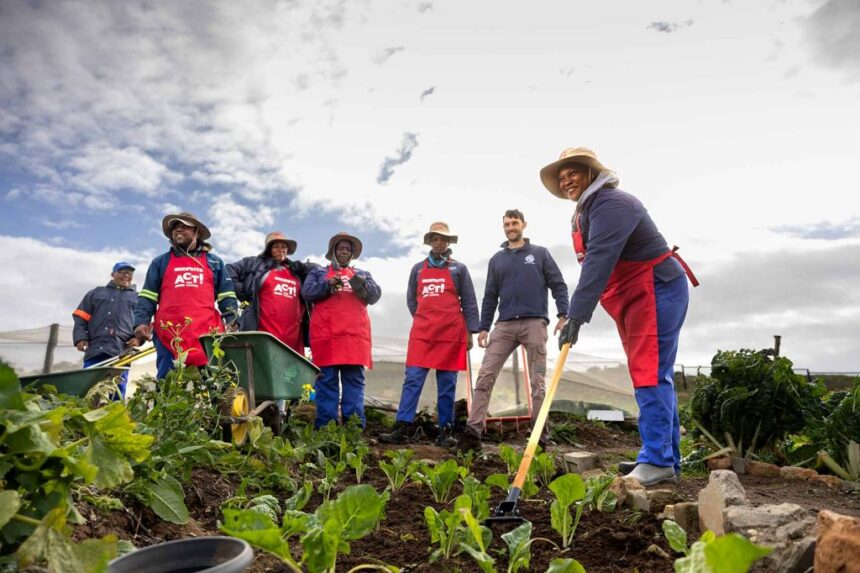
The community food garden is managed throughout the week by a dedicated team of eight people under the leadership of ZWASA Farm Manager Anine Swart. Together, they maintain approximately 700 square metres of actively cultivated land within a larger five-hectare site. Their daily work includes compost production, soil preparation, planting, irrigation, harvesting and ongoing crop management. Careful attention to soil health ensures that vegetables grow under favourable conditions supported by nutrient-rich organic compost. The team’s commitment has played a major role in transforming the site into a productive and sustainable agricultural enterprise.
For Anine Swart, healthy soil forms the foundation of healthy communities. She explains that the project takes food waste discarded from household kitchens and returns it to the soil in the form of compost, creating the conditions necessary for growing nutritious vegetables. Her belief that feeding people well begins with building healthy soil reflects the project’s broader environmental philosophy. Rather than viewing organic waste as a disposal problem, the initiative recognises it as a valuable agricultural resource capable of supporting long-term food production. Swart also believes that expanding similar gardens into more communities could improve public health by increasing access to fresh, nutritious food.
The project extends beyond food production by investing in education and community development. Monthly workshops provide local residents with practical farming knowledge, helping participants develop skills in composting, vegetable production and sustainable agricultural practices. These training sessions encourage greater community involvement while building capacity for future food production initiatives. Sharing practical agricultural knowledge empowers individuals to establish home gardens or participate in similar community projects. Education therefore becomes an important tool for strengthening household food security and promoting environmental awareness.
Future development plans aim to increase both productivity and long-term sustainability. Planned improvements include establishing a nursery that will support seedling production and reduce dependence on external plant suppliers. Better-designed planting beds will also help protect crops and soil from erosion while improving resilience against extreme weather conditions. These upgrades will allow the garden to expand production while maintaining healthy growing conditions throughout the year. Continued investment in infrastructure ensures that the project remains productive and adaptable as community needs evolve.
The recognition of the Bredasdorp project as Shoprite’s 300th community food garden also reflects the retailer’s long-term investment in sustainable community development. For more than a decade, Shoprite has supported community gardens across South Africa through agricultural training, mentorship, irrigation systems, tools and water-harvesting infrastructure. These resources help participating gardens increase food production while using water more efficiently and reducing pressure on municipal water supplies. Rather than applying a single model to every location, Shoprite tailors its support to the specific environmental conditions and community needs of each project. This flexible approach allows every garden to develop solutions that are appropriate for its local circumstances.
According to Shoprite Group Chief Sustainability Officer Sanjeev Raghubir, reaching the milestone of 300 community food gardens represents an important achievement in the company’s sustainability journey. He emphasised that the retailer remains committed to investing in communities through programmes that strengthen food security and create lasting local impact. In Bredasdorp, the combination of local collaboration and regenerative agricultural practices demonstrates how materials once considered waste can become valuable resources that support both environmental sustainability and community wellbeing. The project illustrates how thoughtful investment and partnership can produce meaningful long-term results. Its success provides a model that other communities can adapt to address similar challenges.
Cape Agulhas Municipality also views the initiative as an excellent example of how underutilised land can be transformed into productive community assets while solving environmental challenges. Municipal Manager Wessel Rabbets highlighted the value of partnerships that convert complex problems into practical solutions benefiting both residents and the environment. By integrating waste management, compost production and food cultivation, the project demonstrates how municipalities can make better use of available resources while supporting local development. This integrated approach strengthens environmental sustainability while contributing to economic opportunity and improved community wellbeing. It also highlights the important role that local government can play in supporting innovative agricultural initiatives.
The recognition of the Zero Organic Waste to Landfill Project as Shoprite’s 300th community food garden marks an important milestone for sustainable agriculture, food security and environmental stewardship in South Africa. By transforming household food waste into compost and using it to produce fresh vegetables, the project creates a practical example of the circular economy in action. Strong partnerships between Shoprite, ZWASA and the Cape Agulhas Municipality have shown how collaboration can deliver lasting benefits for communities while protecting the environment. Through continued investment in community gardens, agricultural education and regenerative farming practices, Shoprite is helping strengthen local food systems and create healthier communities. The Bredasdorp project demonstrates that innovative thinking, local cooperation and sustainable agriculture can work together to build a more food-secure and environmentally responsible future.
Join 'Farmers Mag' WhatsApp Channel
Get the latest Farming news and tips delivered straight to your WhatsApp
CLICK HERE TO JOIN