

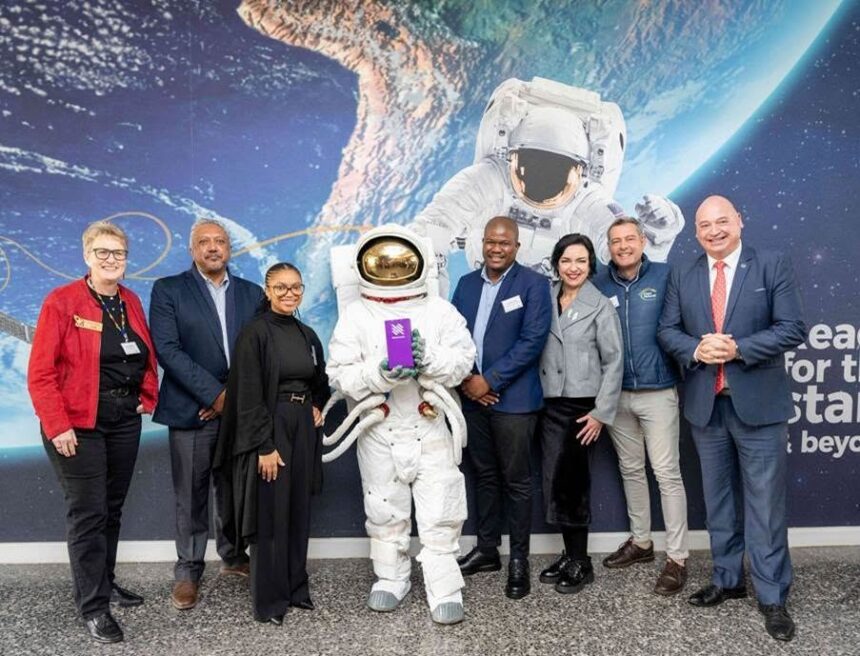
South Africa’s agricultural sector is preparing for a remarkable scientific achievement that could reshape the future of one of its most iconic indigenous crops. A groundbreaking initiative launched in Cape Town will see Rooibos seeds travel beyond Earth’s atmosphere to the International Space Station (ISS) in October 2026. This historic mission will mark the first time that seeds from an indigenous South African plant have been sent into orbit. While the idea of Rooibos in space has captured global attention, the programme is about far more than creating headlines. It represents an ambitious scientific project designed to unlock new knowledge about crop resilience, climate adaptation, education and agricultural innovation that could benefit farmers for generations to come.
Known as the Rooibos in Space programme, the initiative is a collaboration between the South African Rooibos Council (SARC), MaxIQ Space and the South African National Space Agency (SANSA). Together, these organisations aim to explore how the extreme conditions of space influence the genetic behaviour of Rooibos seeds. The research combines expertise from agriculture, plant science and space technology to answer questions that cannot be explored under normal conditions on Earth. By exposing seeds to the unique environment of space, scientists hope to discover new insights into how plants respond to severe stress. These findings could help strengthen agricultural resilience as climate change continues to affect farming across South Africa.
Rooibos, scientifically known as Aspalathus linearis, is one of South Africa’s most distinctive agricultural products. The plant grows naturally only in the rugged Cederberg Mountains and surrounding regions of the Western and Northern Cape, where it has adapted to survive under exceptionally harsh environmental conditions. High summer temperatures, acidic soils and limited rainfall have shaped Rooibos into a naturally resilient crop capable of thriving where many other plants struggle. This remarkable ability to withstand environmental stress makes it an ideal candidate for advanced scientific research. Its unique characteristics have made Rooibos famous around the world as both a premium herbal tea and an important part of South Africa’s agricultural heritage.
Once the seeds arrive at the International Space Station, they will spend several weeks exposed to microgravity and cosmic radiation before returning to Earth in late 2026 or early 2027. These conditions create levels of biological stress that cannot be replicated under normal farming environments. After their return, the space-exposed seeds will be planted alongside identical control seeds that remained on Earth throughout the experiment. Researchers will carefully compare their growth, development and genetic responses to determine how exposure to space affected the plants. This scientific comparison will provide valuable information about how Rooibos responds to extreme environmental conditions at the cellular level.
For farmers, the implications of this research could be significant. Space environments trigger complex stress responses within plant genetics, offering researchers a unique opportunity to observe how plants activate natural defence mechanisms. By understanding these biological processes, agricultural scientists may identify traits that contribute to stronger drought tolerance, improved resilience and greater adaptability. These discoveries are especially important as climate change continues to bring higher temperatures, shifting rainfall patterns and more frequent droughts to Rooibos growing regions. The knowledge gained from this programme could ultimately contribute to the development of even more resilient Rooibos varieties capable of thriving under increasingly challenging environmental conditions.
Climate resilience has become one of the defining priorities for modern agriculture. Farmers across South Africa are adapting to unpredictable weather patterns that place increasing pressure on crop production and water resources. Scientific research that strengthens crop performance under stressful conditions provides valuable tools for maintaining productivity while protecting natural resources. Although the Rooibos in Space programme focuses on a single indigenous crop, the scientific methods and discoveries may also contribute to broader plant research. Lessons learned from Rooibos could help inform future studies involving other drought tolerant crops and sustainable agricultural systems.
The initiative also places strong emphasis on education and developing the next generation of agricultural scientists. Seven schools located within the Cederberg region, the birthplace of Rooibos cultivation, will participate in the ground based comparative trials after the seeds return from space. Learners will work alongside local Rooibos farms, gaining direct experience in scientific research, plant observation and agricultural data collection. At the same time, a parallel control experiment will be conducted at the Innovation Centre of Parklands College in Cape Town. This practical involvement gives students a rare opportunity to participate in an internationally recognised scientific project while learning valuable agricultural and technological skills.
For South African farmers, investing in agricultural education is just as important as investing in scientific research. The future of farming depends on a steady supply of skilled agronomists, researchers, data analysts, engineers and technology driven producers. By involving young people in cutting edge agricultural science, the programme helps inspire future careers in agricultural science, technology, engineering and mathematics. Rural students gain exposure to opportunities that connect modern innovation with traditional farming communities. This strengthens the long term sustainability of the agricultural sector by preparing a highly skilled workforce capable of responding to future challenges.
The Rooibos in Space programme also enhances the international reputation of South African agriculture. Rooibos already enjoys Protected Geographical Indication status within the European Union, placing it among internationally recognised products whose authenticity depends on their unique geographic origin. This protection ensures that only Rooibos grown within its designated South African production region can legally be marketed under that name. Associating this world renowned crop with advanced space research further strengthens its global identity as both a heritage product and an innovative agricultural asset. Such international recognition can increase consumer interest while reinforcing confidence in the quality and uniqueness of South African agricultural exports.
The collaboration between agricultural organisations and space science agencies also demonstrates how innovation is transforming the future of farming. Agriculture increasingly relies on advanced technologies, scientific research and international partnerships to address food security, environmental sustainability and economic development. Projects like Rooibos in Space show that even traditional crops with centuries of history can benefit from the latest scientific advancements. They highlight South Africa’s ability to contribute meaningfully to global agricultural research while promoting indigenous knowledge and biodiversity. Innovation of this nature strengthens the country’s position as a leader in agricultural science and sustainable crop development.
The Rooibos in Space programme represents far more than an extraordinary scientific experiment. It marks a historic milestone for South African agriculture by combining indigenous knowledge, advanced plant science, education and international collaboration in a single groundbreaking initiative. The research has the potential to improve drought resilience, strengthen future crop development and inspire a new generation of agricultural scientists who will help shape the future of farming. At the same time, it elevates the global profile of Rooibos and reinforces South Africa’s reputation as a source of world class agricultural innovation. As the Rooibos seeds prepare for their historic journey to the International Space Station, they carry with them not only the hopes of researchers but also the promise of a stronger, more resilient future for South African agriculture.
Join 'Farmers Mag' WhatsApp Channel
Get the latest Farming news and tips delivered straight to your WhatsApp
CLICK HERE TO JOIN




