Developing practical skills remains one of the most important ways to strengthen South Africa’s livestock and wool industries. From 7 to 10 July 2026, the Carnarvon Experimental Farm became a hub of learning and collaboration as the National Wool Growers’ Association (NWGA), BKB and the Northern Cape Department of Agriculture joined forces to deliver specialized agricultural training. The week-long programme brought together industry participants who were eager to improve their knowledge, refine their practical abilities and enhance the quality of their farming operations. Through a combination of expert instruction and hands-on experience, participants gained valuable skills that can be applied directly on farms across the region. The initiative highlighted the importance of partnerships in supporting agricultural development while investing in the people who contribute to the long-term success of South Africa’s livestock sector.
The training programme was carefully designed to address key aspects of livestock and wool production that are essential for modern farming businesses. It began with an Animal Handling and Management course attended by 18 participants, providing practical instruction on the safe and effective handling of livestock. Proper animal handling plays a critical role in maintaining animal welfare, reducing stress and improving overall productivity on farms. Participants were introduced to techniques that promote safer working environments for both animals and handlers while supporting better farm management practices. These skills not only improve operational efficiency but also contribute to healthier livestock and stronger production outcomes.
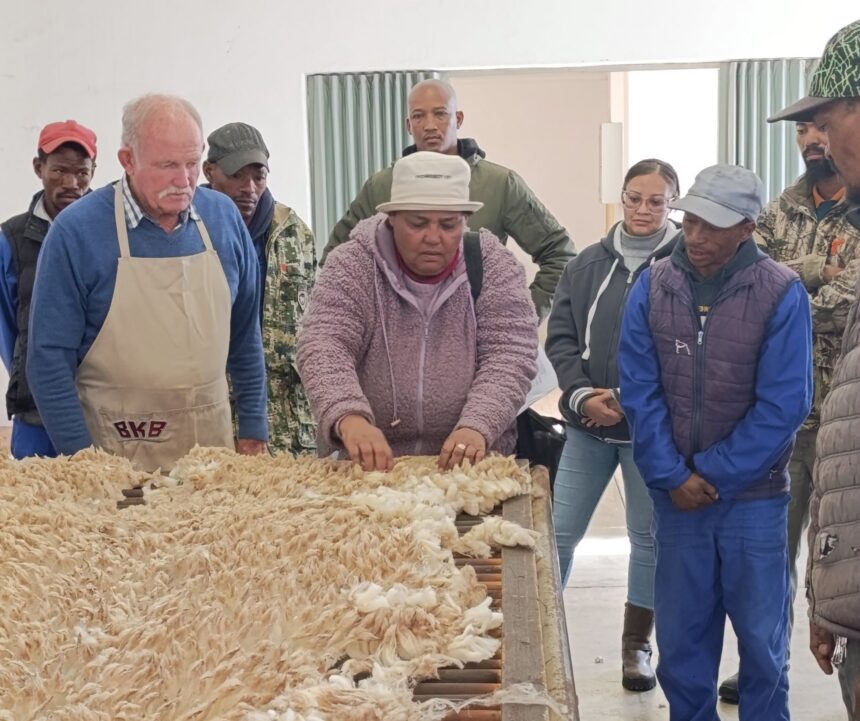
Following the animal management training, the programme continued with a three-day Wool Piece Picking course attended by 20 participants. Wool piece picking is an important stage in the wool production process because it helps improve the quality and value of wool before it reaches the market. Participants received practical instruction on identifying, sorting and separating different grades of wool to meet industry standards. Attention to detail during this process contributes to higher-quality wool clips, greater buyer confidence and improved financial returns for wool producers. By strengthening these technical skills, the programme supports the continued competitiveness of South Africa’s internationally respected wool industry.
The collaboration between the National Wool Growers’ Association, BKB and the Northern Cape Department of Agriculture demonstrated how partnerships can create meaningful opportunities for agricultural development. Each organization brought valuable expertise, resources and industry knowledge that enriched the learning experience for participants. Working together allowed the partners to provide comprehensive training that addressed both livestock management and wool production within a single programme. This collaborative approach also strengthens relationships between government, agricultural organizations and the farming community, ensuring that education remains aligned with the practical needs of producers. Such partnerships play an important role in supporting sustainable agricultural growth while encouraging continuous professional development.
Hands-on training formed the foundation of the programme, allowing participants to develop practical skills through direct experience rather than classroom learning alone. Practical instruction enables farmers and agricultural workers to build confidence while applying techniques under the guidance of experienced professionals. This approach helps participants understand how best practices can be implemented within their own farming operations to improve productivity and efficiency. It also encourages problem-solving and critical thinking when managing the daily challenges of livestock and wool production. Skills gained during practical training often have a lasting impact because participants can immediately transfer what they have learned to their workplaces.
Educational initiatives such as this also contribute to improving the long-term sustainability of South Africa’s agricultural sector. Well-trained livestock handlers and wool workers help maintain high standards of animal welfare, product quality and farm management. As producers continue to face challenges such as changing market conditions, rising production costs and climate variability, ongoing skills development becomes increasingly valuable. Training programmes provide opportunities for farmers and agricultural workers to remain informed about current industry practices while strengthening their ability to adapt to future demands. Investing in people ultimately strengthens farming businesses and supports the continued growth of rural economies.
The success of the training programme was made possible through the dedication and commitment of everyone involved in its planning and delivery. Special recognition was given to BKB’s Keith Coetzee for his valuable contribution and his important role in ensuring the programme’s success. Effective leadership, careful coordination and the willingness to share expertise all contributed to creating a productive learning environment for participants. The appreciation expressed toward those who supported the initiative reflects the collaborative spirit that continues to drive agricultural development in South Africa. Recognizing individual contributions also encourages continued participation in future educational programmes that benefit the wider farming community.
The successful week of training at the Carnarvon Experimental Farm demonstrated the value of practical education, industry collaboration and ongoing investment in agricultural skills. By equipping participants with knowledge in animal handling, livestock management and wool piece picking, the National Wool Growers’ Association, BKB and the Northern Cape Department of Agriculture have strengthened the capabilities of those working within the livestock and wool industries. These newly acquired skills will help improve production standards, support better animal welfare and contribute to higher-quality wool for local and international markets. Continued partnerships between agricultural organizations, government departments and industry leaders remain essential for building resilient farming businesses and competitive agricultural sectors. As South Africa’s livestock and wool industries continue to evolve, initiatives like this training programme will play an important role in preparing farmers and agricultural workers for future opportunities and challenges.
Join 'Farmers Mag' WhatsApp Channel
Get the latest Farming news and tips delivered straight to your WhatsApp
CLICK HERE TO JOIN