

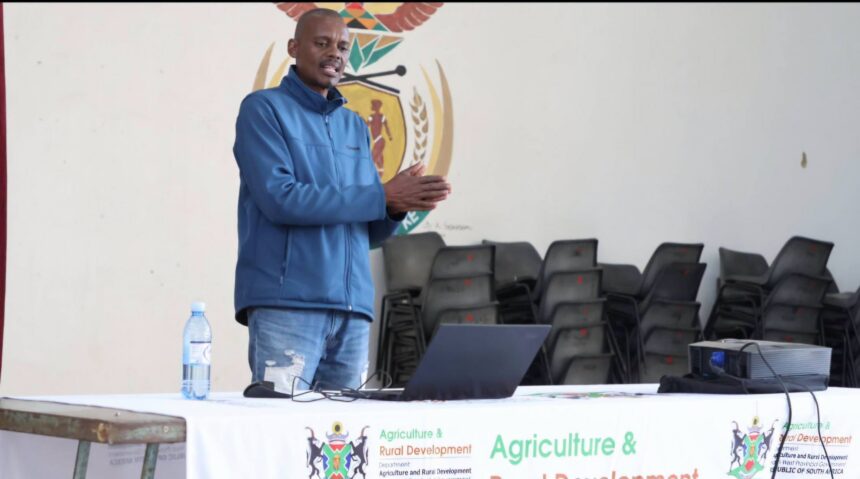
The Stella Community Hall was filled with energy and enthusiasm as community members gathered in large numbers for the Poultry Farmers’ Day hosted by the North West Department of Agriculture and Rural Development through the Naledi Local Agricultural Office. The strong turnout reflected the growing interest in poultry farming as a source of food, income and economic opportunity for households across the region. Farmers, aspiring poultry producers and agricultural stakeholders came together to learn practical skills that can improve poultry production and strengthen local farming enterprises. The event created an important platform for sharing knowledge while encouraging greater participation in sustainable agriculture. By focusing on education and hands on learning, Poultry Farmers’ Day demonstrated the department’s commitment to supporting rural communities and developing successful poultry businesses.
Poultry farming continues to play an important role in improving household food security and generating income for many families in South Africa. Backyard and subsistence poultry farmers often rely on chickens to provide a steady supply of meat and eggs while creating opportunities to sell surplus products within local markets. With relatively low start up costs compared to many other farming enterprises, poultry production remains an accessible option for emerging farmers looking to establish sustainable businesses. However, success depends on having the right knowledge, proper management practices and access to reliable technical information. The Poultry Farmers’ Day addressed these needs by providing practical training that farmers can immediately apply within their own production systems.
One of the key focus areas of the programme was indigenous and broiler chicken production. Participants received valuable guidance on the different management approaches required for each production system and how to maximise productivity while maintaining healthy birds. Indigenous chickens remain popular because of their adaptability, resilience and strong demand in many local markets. Broiler production, on the other hand, offers farmers the opportunity to produce larger quantities of meat within shorter production cycles. By understanding the strengths and requirements of each system, farmers are better equipped to choose production methods that match their available resources and business goals.
Poultry nutrition formed another important part of the training programme because proper feeding directly influences bird health, growth and productivity. Farmers learned about balanced feeding programmes, nutritional requirements at different stages of growth and the importance of providing clean water at all times. Good nutrition not only supports faster growth but also strengthens birds’ immune systems, reducing their vulnerability to disease. Participants were encouraged to manage feed efficiently to minimise waste while maintaining high production standards. These practical lessons help farmers improve profitability by increasing production efficiency and reducing unnecessary costs.
Biosecurity and disease prevention were also highlighted as essential components of successful poultry farming. Poultry diseases can spread rapidly if preventative measures are not followed, leading to significant losses for both small scale and commercial producers. Farmers received guidance on maintaining clean poultry houses, controlling visitor access, isolating sick birds and following good hygiene practices. They also learned how early detection and timely reporting of disease outbreaks can prevent widespread infections and protect neighbouring farms. Strengthening biosecurity helps ensure healthier flocks while contributing to the long term sustainability of poultry production across the region.
The programme also covered meat safety, an important topic for farmers who produce poultry for household consumption or local markets. Safe handling, processing and storage practices help reduce the risk of foodborne illnesses while ensuring consumers receive high quality products. Participants learned about hygiene standards that should be maintained during slaughtering, packaging and transportation. Understanding these principles improves consumer confidence and helps farmers meet food safety expectations within formal and informal markets. Meat safety remains a critical link between successful poultry production and public health, making this training valuable for producers seeking to expand their businesses.
Beyond the technical presentations, the Poultry Farmers’ Day encouraged networking and collaboration among participants. Farmers had the opportunity to exchange experiences, discuss production challenges and learn from one another’s successes. Building these relationships creates stronger farming communities where knowledge and practical solutions can continue to be shared long after the event has ended. The interaction between agricultural officials and community members also strengthens access to extension services and ongoing technical support. Such partnerships play an important role in helping emerging farmers overcome obstacles and continue improving their farming enterprises.
The Poultry Farmers’ Day hosted at Stella Community Hall successfully demonstrated the value of investing in agricultural education and community empowerment. Through practical training on indigenous and broiler production, poultry nutrition, biosecurity, disease prevention and meat safety, participants gained knowledge that can improve productivity and strengthen their farming operations. The event also reinforced the importance of supporting backyard and subsistence poultry farmers as contributors to food security, local economic development and rural livelihoods. By equipping farmers with practical skills and encouraging sustainable production practices, the North West Department of Agriculture and Rural Development continues to build stronger and more resilient farming communities. Initiatives such as this ensure that knowledge becomes a powerful tool for creating economic opportunities, improving household incomes and developing a thriving poultry sector, one farmer at a time.
Join 'Farmers Mag' WhatsApp Channel
Get the latest Farming news and tips delivered straight to your WhatsApp
CLICK HERE TO JOIN




