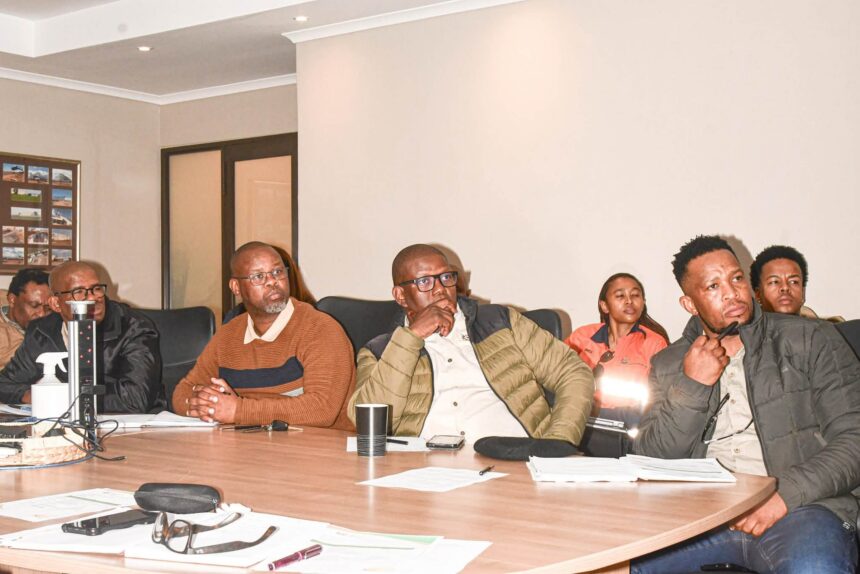
The Northern Cape Department of Agriculture, Environmental Affairs, Rural Development and Land Reform has reaffirmed its commitment to building stronger partnerships with the agricultural industry following a productive engagement with Pecan SA at its processing facility in Hartswater. MEC Motlhaping, accompanied by Head of Department Mr Monakali and the department’s Executive Management, met with representatives of Pecan SA to discuss opportunities that can strengthen the province’s agricultural sector. The engagement highlighted the importance of collaboration between government and organised agriculture in promoting sustainable growth, innovation and investment. By working together, both parties aim to create an environment that supports farmers, expands agricultural production and strengthens rural economies. The meeting also reflected the growing recognition that successful agricultural development depends on strong partnerships across the entire value chain.
Agriculture remains one of the most important economic drivers in the Northern Cape, contributing significantly to employment, exports and rural development. The province is well known for producing high-quality pecan nuts, grapes, raisins, citrus and a variety of other agricultural commodities that supply both local and international markets. Among these industries, the pecan sector has experienced remarkable growth over the past decade, making South Africa one of the world’s leading pecan-producing countries. Favourable climatic conditions, modern farming practices and increasing global demand have encouraged further investment in pecan production across the province. Strengthening cooperation between government and industry organisations such as Pecan SA is therefore essential for maintaining this positive growth trajectory.
The meeting at the Pecan SA processing facility provided an opportunity for government officials to gain valuable insight into the industry’s operations and future priorities. Processing facilities play an important role within the pecan value chain because they prepare harvested nuts for domestic and export markets through cleaning, grading, shelling, packaging and quality control. Visiting these facilities allows policymakers to better understand the practical challenges faced by producers and processors while identifying opportunities for greater collaboration. Such engagements also strengthen communication between government and industry leaders, creating a foundation for more informed policy development. Open dialogue helps ensure that agricultural programmes respond effectively to the evolving needs of the sector.
One of the key themes discussed during the engagement was the importance of expanding public-private partnerships. Collaboration between government and private industry creates opportunities to combine resources, technical expertise and investment for the benefit of the agricultural sector. Public institutions can provide policy support, research and development programmes, while private companies contribute industry knowledge, innovation and market access. These partnerships often accelerate agricultural development by improving infrastructure, expanding training opportunities and encouraging technology adoption. Strong cooperation also supports long-term sustainability by ensuring that agricultural initiatives are aligned with both public objectives and industry requirements.
Supporting the commercialisation of emerging and black farmers formed another important part of the discussions. Expanding participation within the commercial agricultural sector remains a national priority because it promotes inclusive economic growth and creates opportunities for historically disadvantaged producers. Many emerging farmers require support in areas such as technical training, financial management, production planning, market access and business development. Partnerships with established industry organisations can provide mentorship, practical experience and access to commercial networks that strengthen long-term business success. Creating pathways for emerging farmers to participate competitively within the pecan industry contributes to a more inclusive agricultural economy.
Strengthening agricultural value chains was also identified as a critical priority during the engagement. Agricultural value chains extend beyond production to include processing, packaging, transportation, marketing and distribution. Adding value to agricultural products within the province creates employment opportunities while increasing the economic benefits retained by local communities. Efficient value chains also improve product quality, reduce waste and enhance competitiveness in domestic and international markets. Continued investment in processing facilities and logistics infrastructure supports the growth of the pecan industry while encouraging additional investment across related sectors.
Research and innovation remain essential for maintaining the competitiveness of modern agriculture. New technologies, improved production methods and scientific research enable farmers to increase productivity while using natural resources more efficiently. Topics such as climate resilience, water management, pest control, soil health and improved cultivars continue to shape the future of agricultural production. Collaboration between government, research institutions and industry organisations accelerates the development and adoption of practical solutions that benefit farmers. Investment in innovation ensures that South African agriculture remains competitive in an increasingly demanding global marketplace.
An important focus of the discussions was the future development of the Vaalharts Research Station as a centre of excellence for agricultural research and technology transfer. Research stations play a vital role in generating scientific knowledge that supports improved farming practices and sustainable production systems. They also provide opportunities for field demonstrations, farmer training and testing of new agricultural technologies under local conditions. Developing the Vaalharts Research Station into a leading research hub could strengthen support services available to producers throughout the Northern Cape and beyond. Such an initiative would contribute to greater innovation while encouraging collaboration between researchers, extension officers and the farming community.
Technology transfer is equally important because research findings must reach farmers in practical and accessible ways. New production techniques, irrigation methods, disease management strategies and precision agriculture technologies only deliver value when they are successfully implemented on farms. Extension services and industry partnerships help bridge the gap between scientific research and commercial production by providing training and technical support. Effective knowledge sharing enables farmers of all sizes to improve efficiency, reduce costs and increase profitability. Continuous learning remains essential as agriculture adapts to changing environmental conditions and evolving market demands.
The engagement also demonstrated the value of regular communication between government leadership and organised agriculture. Meetings such as this provide opportunities to identify shared priorities, discuss emerging challenges and develop collaborative strategies for future growth. Industry organisations possess valuable practical knowledge that can inform government planning, while public institutions create policy environments that encourage investment and sustainable development. Strong relationships built on mutual trust and open communication contribute to more effective decision-making across the agricultural sector. Continued dialogue will remain important as the province works to strengthen its agricultural economy and expand opportunities for farmers.
The engagement between MEC Motlhaping, Head of Department Mr Monakali, the department’s Executive Management and Pecan SA represents an important step towards strengthening agriculture in the Northern Cape. By focusing on public-private collaboration, farmer commercialisation, value chain development, research and innovation, the discussions addressed several priorities that will shape the future of the province’s agricultural sector. The shared vision of developing the Vaalharts Research Station into a centre of excellence further demonstrates a commitment to building long-term agricultural capacity through science and technology. Strong partnerships between government and organised agriculture will continue to play a vital role in creating inclusive growth, attracting investment and supporting sustainable rural development. As the pecan industry and broader agricultural sector continue to expand, collaborative initiatives such as this will help position the Northern Cape as a leader in agricultural innovation, productivity and economic opportunity.
Join 'Farmers Mag' WhatsApp Channel
Get the latest Farming news and tips delivered straight to your WhatsApp
CLICK HERE TO JOIN