

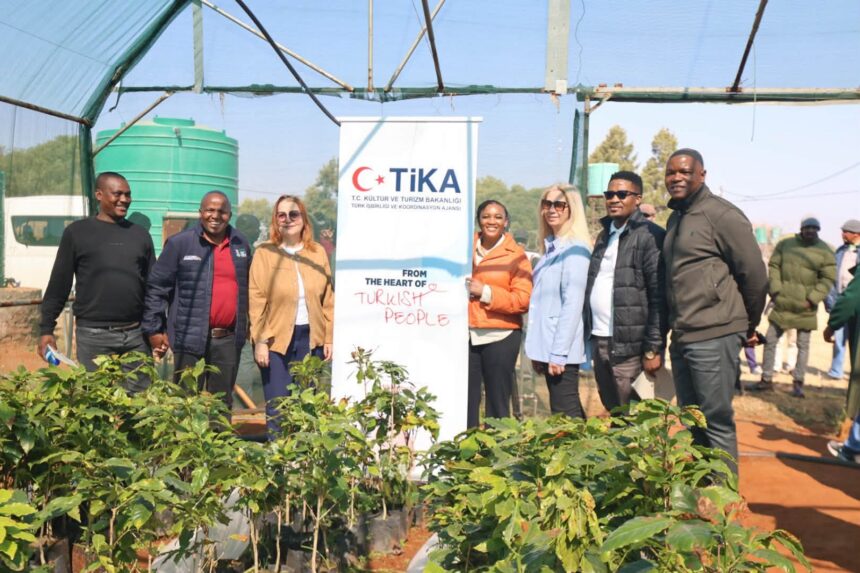
The North West Department of Agriculture and Rural Development has taken a significant step towards expanding the province’s agricultural sector through the official launch of a coffee bean production project at the state-owned Kgora Farmer Training Centre near Ramatlabama in Mahikeng. Developed in partnership with the Turkish Cooperation and Coordination Agency, commonly known as TIKA, the initiative is expected to introduce a new agricultural commodity that can create employment, strengthen rural economies and provide emerging farmers with fresh business opportunities. The project reflects the department’s commitment to agricultural diversification and long-term rural development while positioning the province to participate in the growing coffee industry. By combining coffee cultivation with processing and value addition, the initiative aims to generate income beyond primary production and develop a sustainable agricultural value chain. The launch also highlights the importance of international partnerships in supporting innovation, skills development and economic growth within South Africa’s agricultural sector.
The coffee bean production project was first announced by North West MEC for Agriculture and Rural Development, Madoda Sambatha, during the department’s Budget Vote and Policy Speech. The initiative was introduced as part of a broader strategy to diversify agricultural production in a province that has traditionally focused on crops such as maize, sunflower and livestock farming. Diversification allows farmers to reduce dependence on a limited number of commodities while exploring new markets with strong growth potential. Coffee has become one of the world’s most valuable agricultural products, creating opportunities not only for cultivation but also for processing, branding and retail. By introducing coffee production in the province, the department hopes to unlock additional sources of income while building a more resilient agricultural economy.
One of the key features of the project is its comprehensive approach to the entire coffee value chain. Rather than focusing only on growing coffee trees, the initiative also includes processing, value addition and market development. A dedicated processing facility will be constructed at the Kgora Farmer Training Centre, allowing coffee beans to be de-husked, roasted and packaged on site. This approach enables farmers and local communities to capture more value from the final product instead of selling raw agricultural produce. Local processing also creates additional employment opportunities while encouraging the development of small businesses involved in packaging, distribution and marketing.
The partnership between the North West Department of Agriculture and Rural Development and TIKA extends beyond financial support. As part of its contribution, TIKA has supplied coffee trees and specialised processing equipment needed to establish the project successfully. The agency will also continue supporting the initiative through technical assistance, farmer training and skills development programmes that focus on both production and processing techniques. In addition, TIKA will assist with market access initiatives aimed at helping locally produced coffee reach both domestic and international buyers. This ongoing collaboration provides emerging farmers with valuable knowledge and resources that will strengthen the long-term sustainability of the project.
During the official launch, MEC Madoda Sambatha described the initiative as an important milestone for agriculture in the North West Province. He said the partnership with TIKA demonstrates the department’s commitment to creating new agricultural opportunities that benefit farmers and rural communities. According to the MEC, introducing coffee production represents an opportunity to create jobs, support small-scale farmers and expand access to new markets. He also expressed appreciation for TIKA’s contribution in helping establish the project and providing technical expertise. His remarks reinforced the department’s vision of building a more diverse agricultural sector capable of generating sustainable economic growth across the province.
The project has been designed with future expansion in mind. While operations will initially focus on the Kgora Farmer Training Centre, the department believes the initiative could eventually be replicated in other districts if it achieves its intended objectives. MEC Sambatha explained that the department will monitor the project’s progress while assessing opportunities to extend coffee production to additional communities across the province. Expanding the initiative would allow more farmers to participate in coffee cultivation and benefit from the associated processing and marketing opportunities. Such growth could contribute to a larger provincial coffee industry that supports rural development and stimulates investment in agricultural infrastructure.
Community participation forms an important part of the coffee bean production project. Most of the project’s beneficiaries come from communities surrounding the Kgora Farmer Training Centre and the Ramatlabama area. Local residents are expected to benefit through agricultural training programmes, employment opportunities and increased economic activity linked to coffee production and processing. Skills development will equip participants with practical knowledge in coffee cultivation, harvesting, processing and quality control. These new capabilities have the potential to improve livelihoods while creating a skilled workforce that can support future expansion of the coffee industry within the province.
The inclusion of processing facilities significantly increases the project’s economic potential. Instead of exporting raw coffee beans for processing elsewhere, the project will enable value addition within the province. Roasting, grinding, packaging and branding coffee locally can generate higher revenues while creating additional jobs across multiple stages of production. Value-added agricultural products generally command stronger market prices and provide greater opportunities for entrepreneurs to develop local brands. This integrated production model aligns with broader national efforts to strengthen agro-processing and increase the contribution of agriculture to economic development.
Market development is another important component of the initiative. The department plans to explore opportunities for locally produced coffee to reach both South African consumers and international buyers. Potential export markets include Turkey as well as other countries interested in sourcing high-quality coffee products. Access to international markets can improve profitability for farmers while increasing the visibility of agricultural products produced in the North West Province. Building strong marketing partnerships and maintaining consistent product quality will be essential for establishing a competitive presence within the global coffee industry.
The coffee bean production project also represents an important example of agricultural innovation. Introducing a new crop requires careful planning, ongoing research and continuous technical support to ensure successful production under local conditions. The collaboration between government and TIKA provides a foundation for testing new farming practices while developing suitable production systems for the province. If successful, the initiative could encourage further investment in non-traditional crops and inspire similar projects in other regions. Innovation remains essential for strengthening food systems, improving rural incomes and preparing agriculture to respond to changing market demands.
The launch of the coffee bean production project at the Kgora Farmer Training Centre marks a promising new chapter for agriculture in the North West Province. Through the partnership between the North West Department of Agriculture and Rural Development and TIKA, the initiative aims to diversify agricultural production, create employment, develop valuable farming and processing skills and expand market opportunities for emerging farmers. By combining cultivation, value addition and market access within a single project, the province is building a stronger foundation for long-term agricultural growth and rural economic development. The focus on local community participation ensures that the benefits extend beyond farming to include training, entrepreneurship and job creation. As the project develops and potentially expands to other districts, it has the potential to strengthen the province’s agricultural sector while demonstrating how innovation and international cooperation can create lasting opportunities for farmers and rural communities.
Join 'Farmers Mag' WhatsApp Channel
Get the latest Farming news and tips delivered straight to your WhatsApp
CLICK HERE TO JOIN




