As Mandela Month draws to a close, the North West Department of Agriculture and Rural Development has reaffirmed its commitment to fighting hunger and empowering communities through a meaningful food garden initiative in Marikana. Working in partnership with Sibanye-Stillwater and the Mineworkers Development Agency (MDA), the Department launched a project that focuses on strengthening food security while promoting long-term community self-reliance. The initiative reflects the enduring values of former President Nelson Mandela by encouraging practical action that improves the lives of ordinary South Africans. Rather than limiting Mandela Month to symbolic gestures, the partners invested in sustainable solutions that will continue benefiting families long after the commemorative month has ended. By combining resources, expertise and community participation, the project aims to create lasting social and economic impact while encouraging greater participation in agriculture.
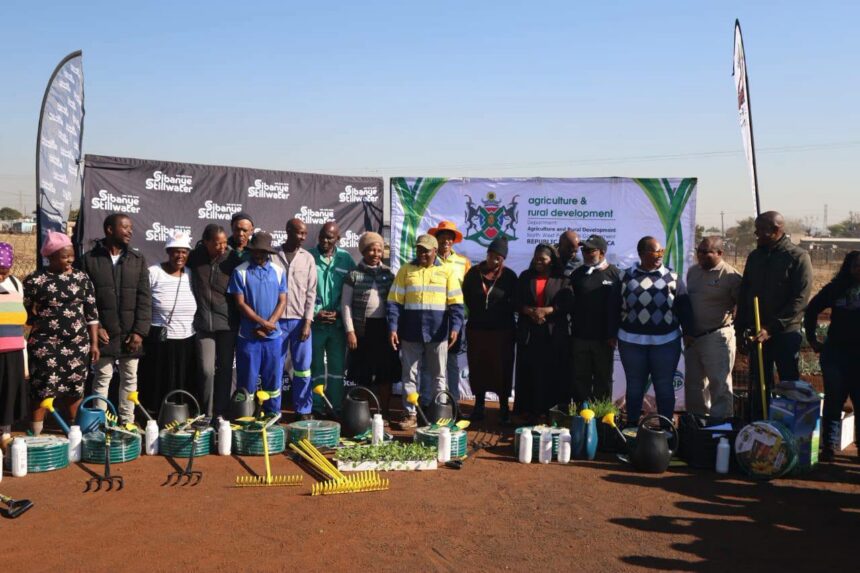
A total of 150 beneficiaries received production inputs to help establish and expand their food gardens. These inputs included gardening tools, seeds, seedlings and other essential resources needed to begin successful food production. In addition to providing equipment, the Department committed to offering ongoing technical support through its agricultural extension officers to ensure that beneficiaries receive guidance throughout the growing process. This continued mentorship is designed to help participants overcome production challenges, improve crop yields and adopt sustainable farming practices. The combination of practical resources and professional support gives beneficiaries a stronger foundation for producing healthy crops while developing valuable agricultural skills that can benefit them for years to come.
The initiative places a strong emphasis on improving household and community food production as a way of addressing food insecurity across the province. By encouraging residents to grow their own vegetables and other crops, families can reduce their dependence on purchased food while improving access to fresh and nutritious produce. Food gardens also provide opportunities for communities to become more self-sufficient by producing a reliable supply of healthy food throughout the year. Beyond improving nutrition, the project creates opportunities for beneficiaries to generate additional income by selling surplus produce within their local communities. This dual focus on food security and income generation supports both social wellbeing and economic development, making the initiative an important investment in sustainable rural livelihoods.
One of the most significant aspects of the project was the hands-on involvement of leaders and officials throughout the day. MEC Madoda Sambatha, together with representatives from the Mineworkers Development Agency, Sibanye-Stillwater and the Department’s extension officers, worked directly alongside beneficiaries instead of simply distributing production inputs. Participants received practical demonstrations and valuable knowledge on planting techniques, garden maintenance and sustainable food production methods. This collaborative approach encouraged learning through experience while building confidence among community members who are new to food gardening. By working side by side with beneficiaries, the partners demonstrated that lasting success depends on ongoing support, shared knowledge and active community participation.
The Department also expanded the initiative beyond individual households by establishing food gardens at schools and community backyard gardens as part of its Mandela Month activities. Learners and residents participated in practical training sessions where they gained valuable knowledge about sustainable agriculture and proper garden management. School food gardens play an especially important role because they provide educational opportunities while contributing to improved nutrition for learners. Introducing young people to agriculture at an early age also helps develop an appreciation for food production, environmental stewardship and entrepreneurship. These school-based projects have the potential to inspire future agricultural professionals while strengthening food security within local communities.
Marikana II Primary School Principal, Mr. Dikgang Andrew Phuza, welcomed the support provided by the Department, Sibanye-Stillwater and the Mineworkers Development Agency. He expressed gratitude for the investment in expanding the school’s food garden, noting that the additional resources would strengthen food production and continue supporting learners. His comments highlighted the importance of partnerships that directly benefit schools and surrounding communities through practical development initiatives. The ongoing support provided by the MDA and Sibanye-Stillwater has also helped establish vital infrastructure and equipment that enable beneficiaries to expand their gardening projects. These contributions create stronger foundations for long-term sustainability while increasing opportunities for communities to improve their livelihoods through agriculture.
Sibanye-Stillwater Executive Vice President for Stakeholder Relations, Ms. Thabisile Phumo, described the initiative as an important step toward building self-sustaining communities capable of producing their own food. She emphasized that partnerships between government, private industry and development organizations can make meaningful contributions to food security and sustainable development. Her remarks reflected the growing recognition that solving complex social challenges requires collaboration across different sectors. By combining expertise, financial support and community engagement, these partnerships create greater opportunities for long-term success than isolated interventions. The Marikana initiative demonstrates how cooperative efforts can produce measurable benefits for communities while supporting broader development objectives.
Addressing beneficiaries during the event, MEC Madoda Sambatha praised the partnership with Sibanye-Stillwater and the Mineworkers Development Agency as a model for delivering tangible benefits to local communities. He explained that the primary goal is to empower families, schools and communities to produce food for themselves while also creating opportunities to earn income from surplus harvests. The MEC further emphasized the importance of strengthening partnerships to expand similar food security programmes throughout the North West Province. He noted that by working together, more communities can establish productive food gardens that not only feed households but also contribute to local economic growth and support vulnerable residents. Sambatha also called for closer collaboration with the Mineworkers Development Agency to replicate similar initiatives in other districts, particularly in schools where young people can develop practical agricultural skills and contribute to future food production.
The Marikana food garden initiative represents far more than a Mandela Month project. It embodies the values of service, dignity, empowerment and community development that Nelson Mandela championed throughout his life. By providing production inputs, practical training, technical support and opportunities for income generation, the North West Department of Agriculture and Rural Development, together with Sibanye-Stillwater and the Mineworkers Development Agency, has planted the foundations for lasting change. The initiative demonstrates that sustainable food security is achieved through partnership, education and active community involvement rather than short-term assistance alone. As these food gardens continue to grow, they will provide nutritious food, create economic opportunities and strengthen communities, ensuring that the spirit of Mandela Month continues to make a meaningful difference for many years to come.
Join 'Farmers Mag' WhatsApp Channel
Get the latest Farming news and tips delivered straight to your WhatsApp
CLICK HERE TO JOIN