

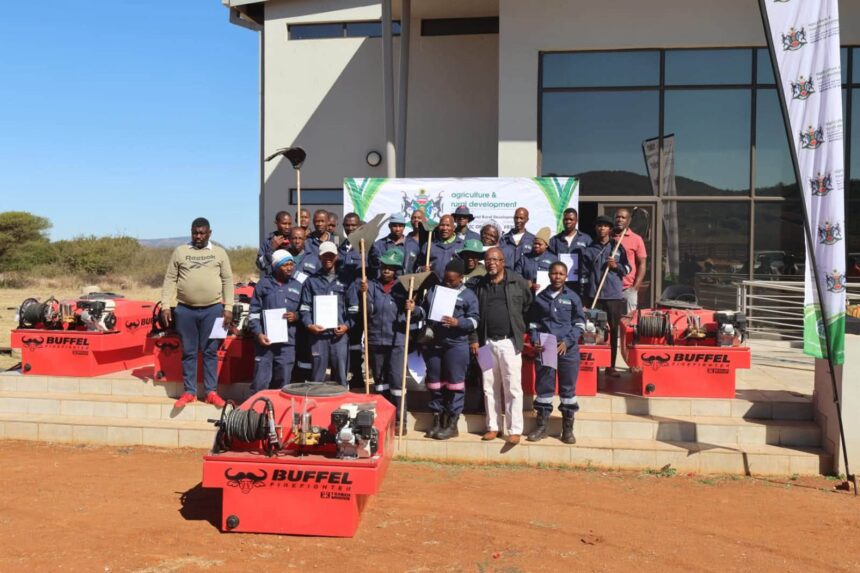
As South Africa continues to face an increased risk of veld and wildland fires during the dry winter months, disaster preparedness has become a vital priority for farming communities. Farmers and farm workers are often the first to respond when fires threaten crops, livestock, homes and natural resources, making proper training an essential part of reducing disaster risks. Recognizing this need, the Disaster Risk Reduction Programme under the Sustainable Resources Use and Management Directorate recently conducted a Basic Wildland Firefighting Skills Training in Mabeskraal, located within the Moses Kotane Local Municipality. The initiative was designed to equip participants with the practical knowledge and confidence needed to prevent, manage and respond effectively to wildland fires. By strengthening local firefighting capacity, the programme is helping communities become more resilient while protecting agricultural livelihoods and the environment.
The four day training programme was delivered in partnership with the Kishugu Training Academy, an organization recognized for its expertise in wildfire management and emergency response training. A total of 59 farmers and farm workers participated in the programme, representing communities from Pella, Ramotlhajwe, David Katnagel, Seshibitswe, Pitsedisulejang, Tlokweng, Mabeskraal, Koffiekraal and Uitkyk. Bringing together participants from multiple farming areas created an opportunity to share experiences, discuss local challenges and build stronger networks for future emergency response efforts. The practical nature of the training ensured that every participant gained hands on experience rather than relying solely on classroom instruction. This approach helps build confidence and prepares individuals to respond quickly when fire emergencies occur.
One of the key focus areas of the training was understanding fire behaviour and the techniques used to suppress veld and wildland fires safely. Participants learned how weather conditions, wind direction, vegetation types and terrain influence the speed and intensity of a fire. This knowledge enables firefighters and farmers to make informed decisions while minimizing unnecessary risks during emergency operations. Understanding how fires spread is critical for selecting the most effective suppression methods and protecting both people and property. With this foundation, participants are better equipped to respond strategically rather than reacting under pressure without a clear plan.
Safety remained a central component throughout the training programme because firefighting can expose responders to significant risks if proper procedures are not followed. Participants received instruction on identifying hazards commonly encountered during wildfire incidents, including changing weather conditions, smoke exposure and dangerous terrain. They also learned how to use personal protective equipment correctly and how to work safely as part of a coordinated firefighting team. Effective safety practices reduce the likelihood of injuries while improving the overall success of firefighting operations. These skills are especially valuable in rural communities where emergency services may take time to reach remote farming areas.
Emergency communication was another important topic covered during the training. Clear communication allows firefighting teams to coordinate their actions, report changing fire conditions and request additional assistance when necessary. Participants learned how to relay critical information accurately while maintaining contact with fellow responders and emergency services. Good communication helps prevent confusion during fast moving wildfire incidents where every decision can affect the safety of people and property. By improving communication skills, the programme strengthens the overall effectiveness of local emergency response efforts.
The training also provided participants with practical experience in handling firefighting equipment used during veld fire suppression. Learning how to operate equipment correctly improves both efficiency and safety during emergency situations. Participants practiced using various tools designed to control and extinguish fires while understanding the importance of regular equipment maintenance. Hands on experience ensures that farmers and farm workers can respond confidently when fires break out on their own properties or in neighboring communities. Practical training of this nature significantly improves preparedness compared with theoretical instruction alone.
Another valuable component of the programme focused on post fire mop up operations. Many fires can reignite if hidden embers are not properly extinguished after the main flames have been controlled. Participants learned techniques for identifying remaining hot spots, securing burned areas and preventing fires from spreading again. These procedures play an important role in protecting communities from secondary outbreaks that can occur hours or even days after the initial fire has been contained. Proper mop up operations also reduce long term environmental damage and improve overall fire management outcomes.
To further strengthen community preparedness, the Department supplied valuable firefighting equipment to the beneficiaries after completing the training. The 59 participants received a total of 60 fire beaters and 20 skid units to support future fire suppression efforts within their communities. These resources provide farmers with immediate access to essential equipment that can be used during emergency situations before professional firefighting teams arrive. Having the right equipment readily available allows communities to respond more quickly and limit the spread of destructive fires. This practical investment complements the knowledge gained during training and increases local firefighting capacity.
The programme delivers benefits that extend well beyond individual participants by strengthening disaster preparedness across entire farming communities. Well trained farmers are able to share their knowledge with neighbors, family members and fellow agricultural workers, creating a wider network of people capable of responding safely to fire emergencies. Improved preparedness helps protect livestock, crops, grazing land, infrastructure and valuable natural ecosystems from the devastating effects of uncontrolled fires. It also reduces financial losses for farming households while supporting environmental conservation efforts. Building community resilience through education and practical resources creates lasting value that continues long after the training has ended.
The Basic Wildland Firefighting Skills Training conducted in Mabeskraal demonstrates the Department’s commitment to investing in disaster risk reduction and community resilience. By partnering with the Kishugu Training Academy and providing practical instruction alongside essential firefighting equipment, the programme equips farmers and farm workers with the tools they need to protect their livelihoods and communities. The combination of technical knowledge, safety awareness, emergency communication skills and hands on experience strengthens local capacity to respond effectively during the high risk winter fire season. As climate challenges continue to increase the threat of veld and wildland fires, initiatives such as this play a critical role in safeguarding lives, livestock, property and the environment. Through continued investment in skills development and community preparedness, farming communities across the region will be better positioned to prevent disasters and respond confidently whenever fire emergencies arise.
Join 'Farmers Mag' WhatsApp Channel
Get the latest Farming news and tips delivered straight to your WhatsApp
CLICK HERE TO JOIN




