

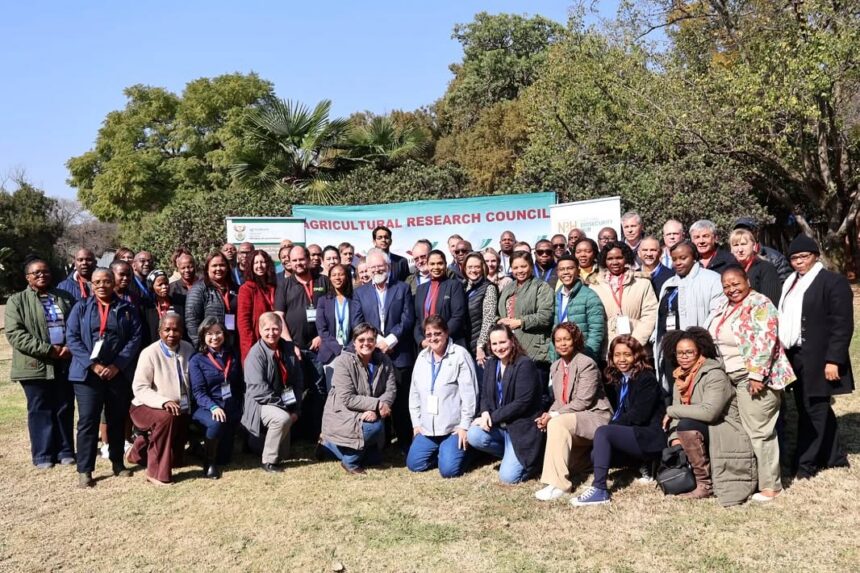
Plant pests and diseases remain one of the greatest threats to agriculture around the world, and South Africa is no exception. Outbreaks can spread rapidly across farming regions, reducing crop yields, damaging ecosystems and causing significant economic losses for producers and the wider agricultural value chain. As global trade and climate change continue to increase the movement and survival of harmful pests, countries must strengthen their ability to detect, respond to and contain potential outbreaks before they become widespread. Recognizing these growing risks, the Agricultural Research Council (ARC), in collaboration with the Department of Agriculture and the National Biosecurity Hub, hosted a National Plant Pest Outbreak Simulation Exercise from 8 to 10 July 2026. Facilitated by Professor Andrew Robinson, the exercise brought together key stakeholders to improve South Africa’s readiness to respond effectively to plant health emergencies.
The simulation exercise provided a realistic platform for government departments, researchers, technical experts and industry representatives to work together under carefully designed emergency scenarios. Rather than responding to an actual pest outbreak, participants practiced how different institutions would coordinate their actions if a serious plant pest threatened South African agriculture. The controlled environment allowed participants to evaluate existing response plans, identify operational strengths and uncover areas requiring improvement before a real emergency occurs. By simulating increasingly complex situations, the exercise encouraged participants to think critically and make informed decisions under pressure. Such preparedness activities are an essential part of building a resilient agricultural sector capable of responding quickly to emerging biological threats.
Plant pests and diseases have the potential to cause devastating consequences if they are not detected and managed early. Invasive insects, fungi, bacteria, viruses and other harmful organisms can destroy crops, reduce harvest quality and increase production costs for farmers. Some pests spread rapidly across provincial or national borders, making coordinated responses essential to limit their impact. Outbreaks can also disrupt exports if trading partners impose restrictions on agricultural products originating from affected regions. Strengthening national preparedness therefore protects not only farmers and food production but also South Africa’s international agricultural competitiveness and economic stability.
Food security remains closely linked to effective plant health management. Healthy crops provide reliable supplies of fruits, vegetables, grains and other essential food products that support millions of households across the country. When major pest outbreaks occur, food production can decline significantly, leading to shortages, higher prices and increased pressure on vulnerable communities. Protecting crops against pests and diseases helps ensure that consumers continue to have access to safe, nutritious and affordable food throughout the year. Investing in prevention and preparedness is often far more effective and less expensive than managing widespread outbreaks after they have already caused significant damage.
The simulation also highlighted the importance of protecting biodiversity and natural ecosystems from invasive plant pests. Many harmful organisms do not limit themselves to cultivated crops and may spread into forests, grasslands and indigenous vegetation. Once established, invasive pests can disrupt ecological balance by damaging native plant species and altering habitats that support wildlife. Effective biosecurity measures therefore contribute to environmental conservation alongside agricultural production. By preparing coordinated responses before outbreaks occur, South Africa can better protect both commercial farming and its valuable natural resources.
One of the primary objectives of the National Plant Pest Outbreak Simulation Exercise was to create a safe and collaborative environment where participants could openly discuss operational response strategies. Stakeholders examined how different agencies would respond as emergency situations became more severe, allowing them to test procedures without the pressure of a real crisis. These discussions covered practical aspects such as surveillance, sample collection, laboratory diagnostics, movement controls and field operations. Participants also explored how available resources could be deployed efficiently while maintaining clear communication between all organizations involved. Such exercises improve confidence in existing systems while encouraging continuous improvement through shared learning.
Coordination between multiple organizations formed a central part of the simulation. Successful responses to plant pest emergencies require cooperation between government departments, research institutions, regulatory authorities, industry organizations and agricultural producers. During the exercise, participants examined how responsibilities should be allocated and how information should be shared between agencies to avoid duplication or delays. Effective coordination helps ensure that decisions are made quickly while maintaining consistency across national, provincial and local response teams. Strong partnerships established before emergencies occur often determine how successfully outbreaks are contained when real incidents arise.
Communication pathways were another major focus throughout the three-day exercise. During any agricultural emergency, accurate and timely communication is essential for informing decision-makers, farmers, exporters, researchers and the public. Participants evaluated how information should flow between technical experts and operational teams while ensuring that messages remain clear, accurate and consistent. Effective communication reduces confusion, supports evidence-based decision-making and helps maintain public confidence throughout an outbreak response. The simulation reinforced the importance of having well-defined communication plans that can be activated immediately when new threats emerge.
Strategic decision-making was carefully tested as the simulated outbreak scenarios became progressively more complex. Participants were required to assess changing conditions, evaluate available evidence and determine the most appropriate response measures based on evolving information. This process reflected the reality of managing biological emergencies, where decisions often need to be made despite incomplete or rapidly changing data. Exercises of this nature help decision-makers become more familiar with emergency protocols while strengthening their ability to balance scientific evidence, operational needs and economic considerations. Practicing these skills before real outbreaks occur significantly improves national preparedness.
Professor Andrew Robinson’s facilitation ensured that participants remained focused on practical learning, collaboration and continuous improvement throughout the exercise. His guidance encouraged open discussion, critical thinking and constructive evaluation of existing preparedness systems. Rather than simply testing procedures, the exercise promoted a culture of learning where participants could identify gaps and recommend improvements without the consequences associated with an actual emergency. This approach supports long-term capacity building across South Africa’s plant health and biosecurity systems. The knowledge gained during the exercise will help strengthen future preparedness planning and operational readiness.
The National Plant Pest Outbreak Simulation Exercise demonstrates South Africa’s commitment to protecting its agricultural sector through proactive planning and strong biosecurity systems. By bringing together the Agricultural Research Council, the Department of Agriculture, the National Biosecurity Hub and a wide range of stakeholders, the initiative strengthened national preparedness against future plant pest and disease threats. The exercise reinforced the importance of coordinated response actions, effective communication, strategic decision-making and collaboration in managing agricultural emergencies. As global biosecurity risks continue to evolve, regular simulation exercises will remain an essential tool for improving readiness, protecting food security, preserving biodiversity and supporting international agricultural trade. Through continued investment in preparedness and partnership, South Africa is building a stronger and more resilient agricultural sector capable of responding confidently to future plant health challenges.
Join 'Farmers Mag' WhatsApp Channel
Get the latest Farming news and tips delivered straight to your WhatsApp
CLICK HERE TO JOIN




