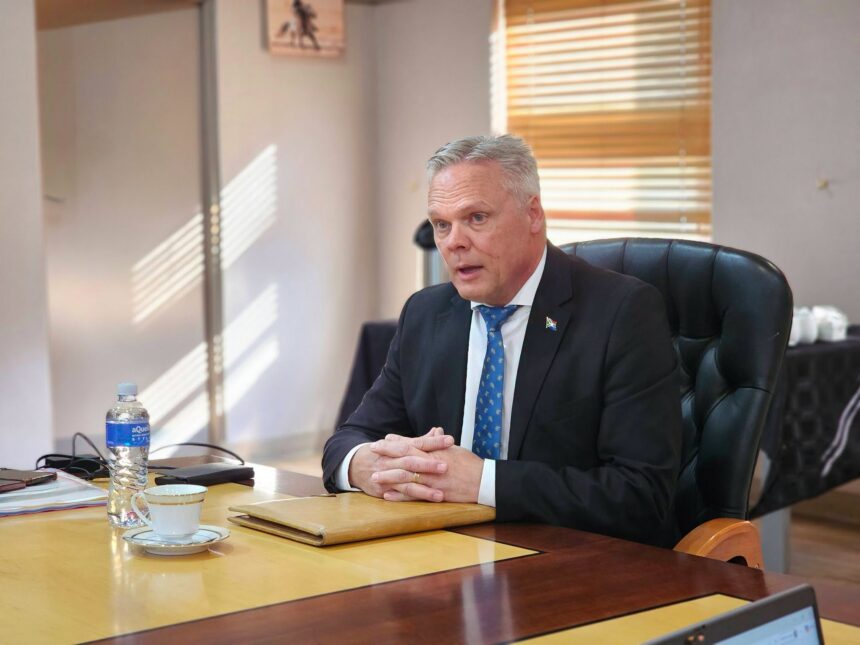
South Africa’s agricultural sector has entered a new phase of leadership as Minister Willie Aucamp held his inaugural meeting with the National Department of Agriculture’s Executive Committee (EXCO). The engagement marked an important milestone in establishing the Minister’s working relationship with the department’s senior leadership while providing a comprehensive overview of the department’s responsibilities and strategic priorities. During the meeting, Minister Aucamp received a detailed briefing on the department’s mandate, key programmes and the challenges currently facing the country’s agricultural sector. The discussions also focused on identifying opportunities to strengthen service delivery and improve support for farmers, producers and rural communities. By bringing together the department’s executive leadership, the meeting laid the groundwork for coordinated action aimed at advancing South Africa’s agricultural development.
The Executive Committee plays a critical role in guiding the operations and strategic direction of the National Department of Agriculture. As the department’s senior management structure, EXCO is responsible for overseeing policy implementation, managing national programmes and ensuring that government initiatives achieve their intended outcomes. Through this inaugural engagement, Minister Aucamp gained valuable insight into the department’s ongoing projects, institutional priorities and operational challenges. Such briefings are essential for new leadership because they provide a clear understanding of the department’s strengths as well as areas requiring greater attention. Effective collaboration between political leadership and senior officials is fundamental to delivering meaningful results across the agricultural sector.
Agriculture remains one of South Africa’s most important economic sectors, contributing significantly to food production, employment and export earnings. Millions of people depend directly or indirectly on farming, agro-processing and related industries for their livelihoods. The sector also supports rural development by creating jobs, generating income and stimulating economic activity in communities across the country. However, agriculture continues to face a range of challenges including climate change, animal and plant diseases, infrastructure constraints, rising production costs and fluctuating global markets. Addressing these issues requires strong leadership, effective planning and close cooperation between government, industry stakeholders and farming communities.
A central focus of the meeting was the department’s mandate and the strategic programmes designed to support sustainable agricultural development. These programmes include initiatives aimed at improving food security, supporting emerging farmers, strengthening biosecurity systems, expanding market access and promoting agricultural research and innovation. The department also works to enhance rural development by providing extension services, facilitating agricultural training and encouraging investment in farming enterprises. Ensuring that these programmes operate efficiently is essential for improving productivity and creating opportunities throughout the agricultural value chain. Minister Aucamp’s engagement with EXCO provided an opportunity to assess how these priorities can be strengthened under his leadership.
Minister Willie Aucamp used the meeting to reaffirm his commitment to building a resilient, competitive and inclusive agricultural sector that serves the interests of all South Africans. He emphasised that agriculture has the potential to drive economic growth while strengthening food security and creating employment opportunities across both urban and rural areas. A resilient agricultural sector is better equipped to respond to challenges such as drought, disease outbreaks and changing market conditions. Competitiveness enables South African producers to maintain strong positions in domestic and international markets, while inclusivity ensures that emerging farmers and historically disadvantaged communities benefit from agricultural development. These priorities reflect a long-term vision for a stronger and more sustainable farming industry.
The Minister also outlined the leadership values that will guide his work within the department. He stated that honesty, integrity, accountability, teamwork, service excellence, open communication and mutual respect will form the foundation of his leadership approach. These principles are important for building trust within government institutions while strengthening relationships with farmers, agricultural organisations and industry partners. Accountability encourages responsible management of public resources, while teamwork promotes cooperation across departments and sectors. Open communication allows stakeholders to participate in decision-making and ensures that challenges are addressed through constructive dialogue. A leadership approach built on these values creates a positive environment for implementing effective agricultural policies.
Strengthening service delivery was another key objective discussed during the engagement. Farmers depend on efficient government services for veterinary support, extension advice, regulatory compliance, market access assistance and various development programmes. Delays or inefficiencies in these services can affect farm productivity and increase operating costs. Improving administrative systems and strengthening coordination across the department can enhance the quality of support provided to producers. Better service delivery also contributes to greater confidence among investors and agricultural stakeholders, encouraging further growth within the sector.
The meeting also recognised the importance of building stronger partnerships across the agricultural industry. Government cannot address every challenge alone, making collaboration with producer organisations, agribusinesses, research institutions, financial organisations and rural communities essential for long-term success. Partnerships encourage knowledge sharing, innovation and coordinated responses to emerging issues affecting agriculture. They also create opportunities to develop practical solutions that reflect the needs of farmers operating under different production systems. Minister Aucamp’s commitment to ongoing engagement with stakeholders demonstrates the importance of inclusive decision-making in shaping the future of South African agriculture.
Innovation and sustainability remain central to the future of agriculture in South Africa. Modern farming increasingly relies on improved technologies, climate-smart production methods and efficient resource management to maintain productivity while protecting natural resources. Government support for research, skills development and technology adoption can help farmers adapt to changing environmental and economic conditions. Sustainable agricultural practices also strengthen food security by ensuring that farming systems remain productive for future generations. Continued investment in innovation will support the competitiveness of South African agriculture both locally and internationally.
The inaugural meeting forms part of Minister Aucamp’s broader programme of engagements with the department’s leadership, public entities and key stakeholders throughout the agricultural sector. These consultations are intended to strengthen institutional cooperation, improve policy implementation and build lasting partnerships that support national agricultural objectives. Regular engagement with industry leaders and farming communities enables government to respond more effectively to evolving challenges while identifying new opportunities for growth. Such collaborative leadership strengthens confidence in the department’s ability to deliver meaningful improvements across the sector. Ongoing dialogue will remain important as South Africa works to expand agricultural production, increase exports and promote inclusive rural development.
Minister Willie Aucamp’s inaugural meeting with the National Department of Agriculture’s Executive Committee marks an important step in shaping the future direction of South African agriculture. By receiving a comprehensive strategic briefing on the department’s mandate, priorities, programmes and sector challenges, the Minister has established a strong foundation for collaborative leadership and informed decision-making. His commitment to resilience, competitiveness, inclusivity and ethical leadership reflects a clear vision for strengthening agriculture while supporting farmers, producers and rural communities. Continued engagement with departmental leadership, public entities and industry stakeholders will help improve service delivery, encourage innovation and build stronger partnerships across the agricultural value chain. As South Africa continues to address both opportunities and challenges within agriculture, this leadership approach has the potential to promote sustainable growth, strengthen food security and create lasting economic opportunities for communities throughout the country.
Join 'Farmers Mag' WhatsApp Channel
Get the latest Farming news and tips delivered straight to your WhatsApp
CLICK HERE TO JOIN