

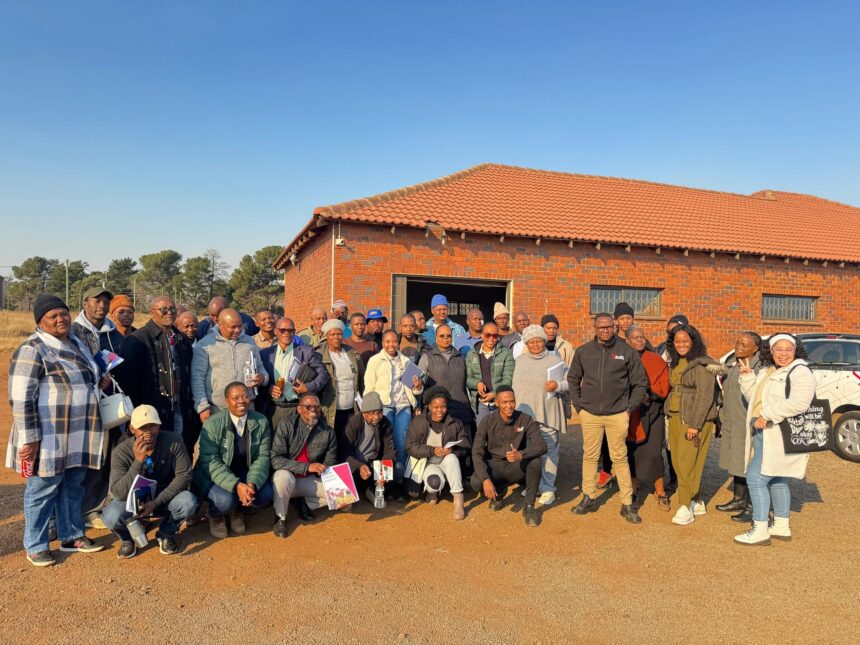
Developing practical farming skills is essential for building a productive and sustainable livestock sector in South Africa. As farmers face rising production costs, changing market demands and increasing pressure to improve efficiency, access to quality agricultural training has become more important than ever. Well-structured training programmes provide livestock producers with the technical knowledge and confidence needed to improve animal health, increase productivity and strengthen their farming businesses. Recognising this need, Lima partnered with South Deep Mine, the Gauteng Department of Agriculture and Rural Development and Red Meat Industry Services to host a two-day Livestock Production Training Programme at the Bekkersdal Agri-Park. The initiative reflects a shared commitment to empowering emerging farmers while supporting sustainable agricultural development within local communities.
The training programme brought together 33 farmers from South Deep Mine’s host communities, creating an opportunity for participants to strengthen their livestock production knowledge through practical learning and expert guidance. Farmers representing different levels of experience attended the sessions, allowing them to exchange ideas, discuss common challenges and learn from one another’s experiences. Bringing producers together in this way encourages collaboration and strengthens local agricultural networks that continue long after the training has ended. The programme was carefully designed to provide practical solutions that farmers could apply immediately on their own farms. This hands-on approach helps ensure that the knowledge gained translates into measurable improvements in livestock production.
Livestock farming remains one of the most important agricultural activities in South Africa, supporting household incomes, food security and rural employment. Successful livestock enterprises depend on effective management practices that improve animal health, reproductive performance and overall productivity. During the training programme, participants engaged with experienced industry specialists who shared practical knowledge on modern livestock production techniques. Farmers learned about best practices that help improve efficiency while reducing production losses caused by disease, poor nutrition and inadequate management. These practical skills are essential for producers who want to build profitable and resilient farming businesses.
Animal nutrition formed an important part of the training because healthy livestock depend on balanced feeding programmes throughout every stage of production. Farmers were introduced to feeding strategies that support animal growth, improve reproductive performance and increase overall productivity. Understanding nutritional requirements also helps producers use feed resources more efficiently while controlling one of the largest costs associated with livestock farming. Proper nutrition strengthens animals’ natural resistance to disease and improves their ability to perform under different environmental conditions. Applying these principles can significantly improve both production results and farm profitability.
The programme also highlighted the importance of animal health management and disease prevention. Healthy livestock produce better results, whether farmers focus on meat production, breeding or mixed farming enterprises. Participants gained valuable knowledge about recognising early signs of illness, implementing preventative health programmes and maintaining effective biosecurity measures on their farms. Preventing disease outbreaks through vaccination programmes, regular health monitoring and proper sanitation is often more cost-effective than treating sick animals. Strong animal health practices protect farm productivity while supporting the broader livestock industry’s disease control efforts.
Another valuable aspect of the training was the opportunity for farmers to interact directly with industry experts. Access to experienced professionals allows emerging farmers to ask questions, seek practical advice and receive guidance tailored to their individual farming operations. These interactions help bridge the gap between agricultural research and practical farming by translating technical knowledge into everyday farm management decisions. Participants were able to discuss real challenges affecting their businesses and explore practical solutions with specialists who understand the livestock industry. Such engagement strengthens farmers’ confidence and encourages continuous learning.
Knowledge sharing among participants was equally important throughout the two-day programme. Farmers often develop practical solutions based on years of experience working under different farming conditions. By exchanging ideas and discussing successful management practices, participants gained valuable insights that complemented the formal training sessions. Learning from fellow farmers also builds stronger agricultural communities where producers continue supporting one another through shared experiences and collaboration. These relationships can become valuable networks for future learning, marketing opportunities and problem-solving.
A key feature of the programme was its focus on practical competency rather than theoretical knowledge alone. At the conclusion of the training, participants completed a competency assessment designed to evaluate their understanding of the concepts and skills covered during the sessions. Assessments encourage participants to apply what they have learned while demonstrating their readiness to implement improved farming practices. Successful candidates will receive certificates issued by Red Meat Industry Services, recognising the knowledge and practical skills they have acquired. These certificates provide formal recognition of their achievement while enhancing their professional development within the livestock sector.
Partnerships between agricultural organisations, government departments, industry bodies and the private sector play an essential role in expanding opportunities for emerging farmers. The collaboration between Lima, South Deep Mine, the Gauteng Department of Agriculture and Rural Development and Red Meat Industry Services demonstrates how shared resources and expertise can produce meaningful results for rural communities. Each partner contributes specialised knowledge and support that strengthens the overall impact of the programme. Working together also ensures that training initiatives remain practical, relevant and aligned with the needs of local farmers. Such partnerships create a stronger foundation for long-term agricultural development and economic growth.
The Livestock Production Training Programme at Bekkersdal Agri-Park represents a valuable investment in the future of South Africa’s livestock industry. By equipping 33 farmers with practical production skills, encouraging knowledge sharing and providing recognised competency certification, the programme has strengthened participants’ ability to improve their farming enterprises. The collaboration between Lima, South Deep Mine, the Gauteng Department of Agriculture and Rural Development and Red Meat Industry Services highlights the importance of partnerships in supporting sustainable agriculture and rural development. As farmers apply the knowledge gained during the training, they will be better positioned to improve livestock productivity, increase profitability and contribute to stronger local food systems. Initiatives such as this continue to demonstrate that practical agricultural education is one of the most effective tools for building resilient farming businesses and thriving rural communities.
Join 'Farmers Mag' WhatsApp Channel
Get the latest Farming news and tips delivered straight to your WhatsApp
CLICK HERE TO JOIN




