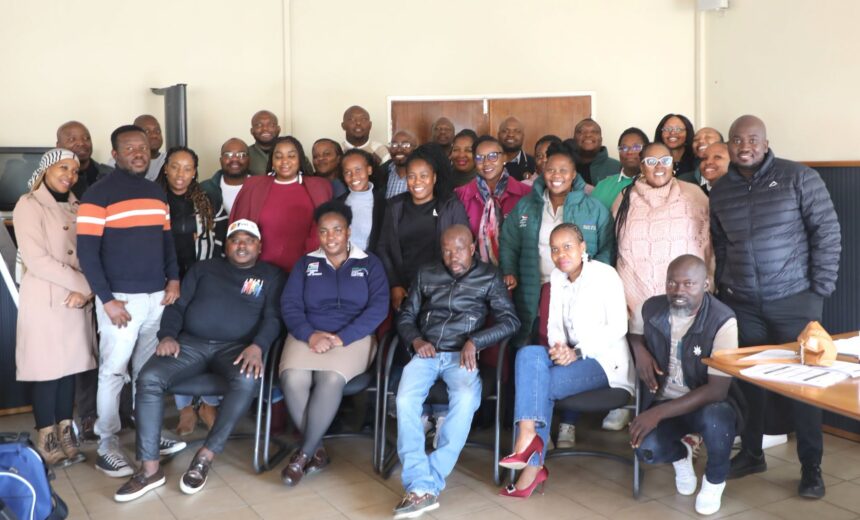
Mid July marked an important milestone for agricultural development in Gauteng as officials from the Gauteng Department of Agriculture and Rural Development (GDARD) gathered at the Themba GDARD offices for an intensive Smallholder Empowerment Promotion (SHEP) training programme. Held from 14 to 16 July 2026, the three day capacity building initiative focused on strengthening the knowledge and skills of Extension and Advisory Services officials who work directly with smallholder farmers across the province. The training formed part of GDARD’s ongoing commitment to improving agricultural productivity, strengthening food security and expanding market opportunities for emerging farmers. By investing in extension officers, the department is creating a stronger support system that can deliver practical guidance to farming communities. The programme also reflects a growing recognition that successful agriculture depends not only on production but also on sound business planning and market readiness.
The primary objective of the SHEP training was to equip extension officers with the specialized expertise needed to mentor, train and support smallholder farmers in becoming competitive participants in the agricultural value chain. Extension officers play a critical role in connecting farmers with modern farming practices, technical advice and government support programmes. Their ability to transfer knowledge effectively can significantly improve farm productivity and profitability. Through this intensive training, participants gained practical tools that will enable them to guide farmers in making informed production decisions based on market demand rather than tradition or guesswork. This approach strengthens the relationship between agricultural extension services and farming communities while improving the long term sustainability of rural enterprises.
One of the most significant concepts introduced during the training was the market driven philosophy known as “grow to sell.” This approach represents a major shift from the traditional practice of producing crops first and searching for buyers later. Instead, farmers are encouraged to identify reliable markets, understand customer expectations and secure potential buyers before planting begins. By planning production around confirmed market demand, farmers reduce the risk of unsold produce, post harvest losses and unnecessary financial strain. This strategy helps smallholders make better decisions about crop selection, production volumes and harvest timing, ultimately improving profitability and reducing waste.
Understanding market requirements forms the foundation of successful commercial farming, and the SHEP methodology places considerable emphasis on this principle. Farmers are taught to study consumer preferences, quality standards, packaging requirements and delivery schedules before committing resources to production. They also learn how to build relationships with buyers, retailers, wholesalers and institutional markets that can provide consistent demand throughout the season. This knowledge allows farmers to produce crops that meet specific customer expectations instead of relying on uncertain local markets. As a result, smallholder farmers become better positioned to compete alongside established commercial producers while increasing their income potential.
The SHEP programme extends beyond improving crop production by developing strong entrepreneurial and business management skills among farmers. Modern agriculture requires producers to think like business owners who carefully manage costs, assess market opportunities and plan for future growth. Farmers participating in the programme are encouraged to develop budgeting skills, maintain financial records and evaluate the profitability of different enterprises. These business skills help create financially sustainable farming operations that are less dependent on external financial support. By encouraging entrepreneurship, SHEP enables farmers to build resilient agricultural businesses capable of adapting to changing economic conditions.
Another important aspect of the programme is improving crop quality through targeted production training. Farmers receive guidance on best agricultural practices that increase productivity while meeting the quality expectations of buyers. Topics such as soil preparation, seed selection, irrigation management, pest control and harvesting techniques all contribute to producing higher quality crops. Better quality produce often attracts premium prices, improves customer satisfaction and increases the likelihood of securing repeat business from buyers. When combined with effective market planning, improved production practices create a strong foundation for long term agricultural success.
The training also highlights the importance of resilience in agriculture, particularly as farmers face challenges such as climate variability, rising production costs and changing market conditions. Farmers who understand risk management and business planning are better prepared to respond to unexpected events while maintaining stable operations. The SHEP approach encourages continuous learning, innovation and adaptability, allowing farmers to identify new market opportunities and diversify their production where appropriate. Building resilience strengthens both individual farming businesses and the wider agricultural sector. This contributes to stronger rural economies and more reliable food production across Gauteng.
The formula promoted through the SHEP programme is both practical and effective. Targeted production training combined with improved crop quality leads to higher yields and greater profitability for farmers. Rather than focusing solely on increasing production volumes, the programme emphasizes producing crops that customers actively want to buy and are willing to pay premium prices for. This balanced approach improves efficiency while reducing unnecessary waste throughout the production process. Farmers who adopt these principles are more likely to achieve sustainable financial growth and long term business success.
Equipping GDARD Extension and Advisory Services officials with advanced knowledge ensures that the benefits of the SHEP programme will reach farming communities across Gauteng. Extension officers serve as trusted advisors who provide ongoing technical support, monitor farmer progress and encourage the adoption of improved agricultural practices. Their enhanced skills will help accelerate the transition of smallholder farmers from subsistence production to commercially viable farming enterprises. This investment in human capacity strengthens the agricultural support network and creates lasting benefits that extend beyond the duration of the training programme. As more farmers adopt market oriented production methods, the province’s agricultural sector becomes more competitive and economically resilient.
The SHEP training held at the Themba GDARD offices represents an important investment in the future of Gauteng agriculture. By empowering extension officers with practical knowledge, business focused strategies and market driven approaches, GDARD is laying the foundation for stronger and more sustainable farming communities. The emphasis on growing for identified markets, improving crop quality and developing entrepreneurial skills provides smallholder farmers with the tools needed to compete successfully in today’s agricultural economy. As these trained officials share their expertise across the province, more farmers will have the opportunity to increase productivity, improve profitability and build resilient agricultural enterprises. Through initiatives such as SHEP, GDARD is ensuring that Gauteng’s farmers are not only producing food but are also driving economic growth, creating employment opportunities and strengthening the province’s agricultural future.
Join 'Farmers Mag' WhatsApp Channel
Get the latest Farming news and tips delivered straight to your WhatsApp
CLICK HERE TO JOIN