

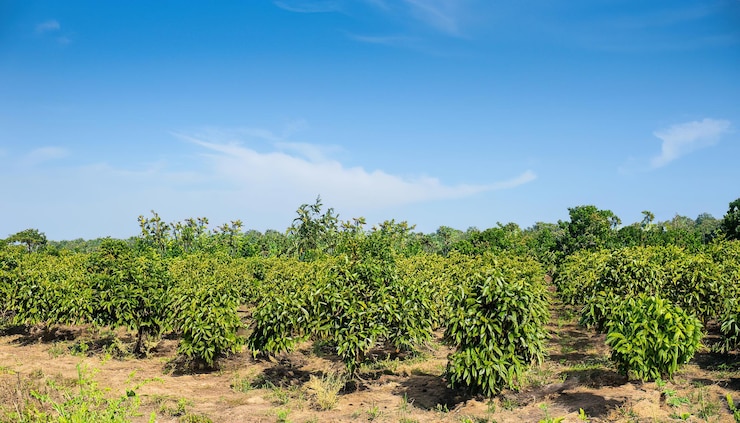
Establishing a subtropical fruit orchard in South Africa offers farmers an opportunity to enter one of the country’s fastest-growing and most valuable agricultural industries. Mangoes and avocados are highly sought after in local and international markets because of their nutritional value, versatility and increasing consumer demand. South Africa has developed a strong reputation for producing premium-quality subtropical fruit, particularly for export markets that require consistent quality and strict food safety standards. While establishing an orchard requires careful planning, substantial investment and patience, well-managed trees can remain productive for several decades. Success depends on selecting suitable land, choosing the right cultivars, maintaining healthy trees and applying sound orchard management practices throughout the life of the farm.
The first step in establishing a successful subtropical orchard is selecting a suitable location. Mangoes and avocados thrive in warm climates with mild winters and are best suited to regions such as Limpopo, Mpumalanga, KwaZulu-Natal and parts of the Eastern Cape. These crops are sensitive to frost, particularly during their early growth stages, making frost-free areas the preferred choice for commercial production. Altitude, rainfall patterns and temperature all influence tree growth, flowering and fruit quality. Farmers should evaluate long-term climate data before planting to ensure that the selected area provides the environmental conditions needed for sustainable production. Choosing the correct location significantly reduces production risks and improves long-term profitability.
Soil quality is another critical factor that influences orchard success. Mangoes and avocados perform best in deep, fertile and well-drained soils that allow healthy root development. Waterlogged soils increase the risk of root diseases, particularly in avocados, which are highly sensitive to poor drainage. Before planting, comprehensive soil testing should be carried out to determine nutrient levels, pH and soil texture. Farmers may need to improve soil conditions by incorporating organic matter, correcting soil acidity or improving drainage through land preparation. Investing in proper soil preparation before planting creates favourable conditions for healthy tree growth and long-term productivity.
Selecting the appropriate cultivars is essential for meeting market requirements and achieving consistent yields. Different mango and avocado varieties mature at different times, allowing growers to extend their harvesting season and supply markets over a longer period. Popular mango cultivars in South Africa include Tommy Atkins, Kent, Keitt and Sensation, while well-known avocado varieties include Hass, Fuerte, Pinkerton and Ryan. Farmers should consider factors such as consumer demand, export requirements, disease tolerance and climatic suitability when selecting varieties. Working with reputable nurseries ensures access to certified, disease-free planting material that performs well under local conditions. Choosing suitable cultivars from the beginning helps maximise both productivity and market value.
Orchard design plays an important role in ensuring efficient farm operations. Tree spacing should allow adequate sunlight penetration, air circulation and access for machinery used during spraying, pruning and harvesting. Overcrowded orchards can increase disease pressure while reducing fruit quality and making management more difficult. Many modern orchards are designed to improve labour efficiency and simplify irrigation management. Windbreaks may also be established where strong winds threaten flowers, developing fruit or young trees. A carefully planned orchard layout supports healthy tree development while reducing operational challenges throughout the life of the orchard.
Reliable irrigation is essential because subtropical fruit trees require consistent moisture to produce high-quality fruit. Although some growing regions receive seasonal rainfall, supplementary irrigation is necessary during dry periods and critical stages of fruit development. Drip irrigation systems are widely used because they apply water directly to the root zone while reducing evaporation and improving water use efficiency. Soil moisture should be monitored regularly to avoid both drought stress and excessive irrigation, which can damage roots. Efficient irrigation management contributes to improved fruit size, higher yields and better overall fruit quality. Responsible water use also supports sustainable farming practices in regions facing increasing water scarcity.
Proper nutrition is fundamental to maintaining healthy orchards and achieving strong yields. Mango and avocado trees require balanced supplies of nitrogen, phosphorus, potassium, calcium and various micronutrients throughout different stages of growth. Fertiliser programmes should be based on soil and leaf analysis to ensure that nutrients are applied according to the trees’ actual requirements. Organic compost and mulch can improve soil health while conserving moisture and reducing weed growth. Balanced nutrition supports vigorous growth, healthy flowering, successful fruit development and improved fruit quality. Regular monitoring allows farmers to adjust fertiliser applications as orchard conditions change over time.
Pruning and canopy management are important annual practices that improve productivity and fruit quality. Proper pruning encourages strong branch development, improves air circulation and allows sunlight to reach all parts of the tree. Well-managed canopies reduce the risk of fungal diseases while producing fruit with better colour and quality. Pruning also makes spraying, monitoring and harvesting more efficient by maintaining manageable tree sizes. Young trees require formative pruning to establish a strong structure, while mature orchards benefit from regular maintenance pruning. Consistent canopy management contributes to long-term orchard health and sustained production.
Pest and disease management requires ongoing attention throughout the growing season. Mangoes may be affected by fruit flies, anthracnose and powdery mildew, while avocados face challenges from pests such as thrips and diseases including Phytophthora root rot. Integrated Pest Management combines regular orchard scouting, biological control methods, cultural practices and responsible pesticide use to minimise crop losses. Good orchard sanitation, proper pruning and effective irrigation management also reduce disease pressure. Early detection of problems allows farmers to implement control measures before significant damage occurs. Maintaining healthy orchards protects both yields and fruit quality.
Pollination plays an important role in achieving good fruit production, particularly in avocado orchards. Many commercial avocado growers plant complementary flowering types to improve pollination efficiency and increase fruit set. Bees and other pollinating insects contribute significantly to successful pollination, making pollinator conservation an important consideration for orchard managers. Farmers may introduce managed beehives during flowering periods to enhance pollination where necessary. Healthy pollinator populations contribute to improved yields and more uniform fruit development. Protecting pollinating insects through responsible farming practices supports both agricultural productivity and environmental sustainability.
Harvesting requires careful timing to ensure that fruit reaches consumers in excellent condition. Mangoes and avocados should be harvested at the correct maturity stage to maximise flavour, shelf life and market value. Harvesting too early can reduce eating quality, while delayed harvesting increases the risk of fruit damage and post-harvest losses. Workers should handle fruit carefully to prevent bruising and mechanical injuries that affect marketability. Proper harvesting techniques preserve fruit quality while supporting premium prices in local and export markets. Well-trained harvesting teams are essential for maintaining high standards throughout the production process.
Post-harvest handling is equally important because mangoes and avocados are valuable export commodities. Fruits are cleaned, sorted, graded and packed according to strict quality standards before entering cold storage or transport systems. Maintaining the cold chain helps preserve freshness while reducing spoilage during distribution. Export markets require compliance with food safety regulations, traceability systems and phytosanitary standards that protect product quality. Farmers who invest in efficient post-harvest infrastructure improve their competitiveness while reducing losses. Strong post-harvest management adds value throughout the supply chain and enhances customer satisfaction.
Marketing should form part of orchard planning long before the first harvest. Farmers need to identify target markets, establish relationships with buyers and understand consumer preferences for different fruit varieties. Opportunities exist within fresh produce markets, supermarkets, processors and export channels, each with specific quality and packaging requirements. Participation in producer organisations and export associations can provide valuable market information and networking opportunities. Careful market planning allows growers to align production with demand while maximising profitability. Diversifying market channels also reduces business risk by avoiding dependence on a single buyer.
Establishing a subtropical fruit orchard producing mangoes and avocados in South Africa requires careful planning, technical knowledge and a long-term commitment to excellence. Every stage, from selecting suitable land and cultivars to managing irrigation, nutrition, pest control and post-harvest handling, contributes to the overall success of the enterprise. Although orchards require significant investment before reaching full production, they have the potential to generate reliable income for many years when managed effectively. South Africa’s favourable climate, established export industry and growing global demand for premium subtropical fruit continue to create attractive opportunities for producers. Farmers who invest in sustainable orchard management, continuous learning and high-quality production practices will be well positioned to build profitable businesses that contribute to food security, rural employment and the continued growth of the country’s horticultural sector.
Join 'Farmers Mag' WhatsApp Channel
Get the latest Farming news and tips delivered straight to your WhatsApp
CLICK HERE TO JOIN




