

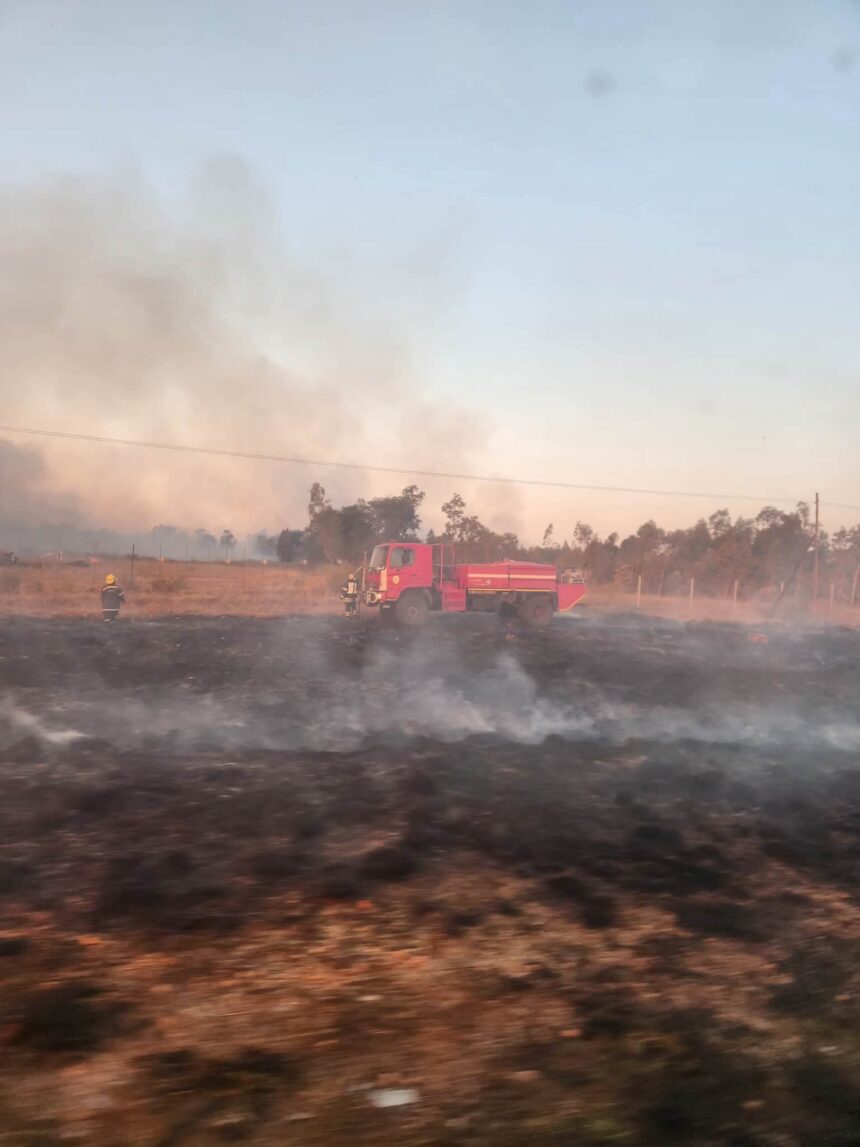
The fight against veld fires remains a top priority as government departments and emergency response partners continue working together to protect communities, farms and natural resources across South Africa. On Wednesday, 29 July 2026, officials from the Department’s Sustainable Resource Use and Management unit joined forces with North-West University and the North West Umbrella Fire Protection Association to respond to a wildfire at Matsapola Farm in Doornkop, near Potchefstroom. Their coordinated efforts resulted in the successful extinguishing of the fire before it could spread even further across the surrounding area. The incident once again highlighted the importance of rapid emergency response, effective partnerships and community awareness in reducing the devastating impact of veld fires. It also served as a reminder that prevention remains the most effective way to protect lives, property and agricultural resources.
The wildfire caused considerable damage despite the successful firefighting operation. Large areas of valuable grazing land were destroyed, reducing the availability of feed for livestock and placing additional pressure on farmers who depend on healthy pastures for their operations. The blaze also destroyed a shanty house, resulting in the loss of property and affecting the people who relied on the structure. In addition, a vehicle was completely damaged by the fire, adding to the financial losses caused by the incident. These losses demonstrate how quickly veld fires can escalate and how destructive they become when dry vegetation, strong winds and high temperatures combine. Recovering from such damage often requires significant time and financial resources, making prevention an essential part of responsible land management.
The successful response at Matsapola Farm was made possible through close cooperation between multiple organisations with expertise in fire management and environmental protection. Officials from the Department’s Sustainable Resource Use and Management division worked alongside specialists from North-West University and members of the North West Umbrella Fire Protection Association to contain and extinguish the wildfire. Collaborative emergency responses allow organisations to combine equipment, technical knowledge and trained personnel to improve the effectiveness of firefighting operations. Such partnerships also strengthen communication and coordination during emergencies, helping teams respond more quickly to changing fire conditions. The incident demonstrated the value of maintaining strong working relationships between government institutions, academic partners and fire protection organisations.
Veld fires continue to pose a serious threat to South Africa’s agricultural sector, particularly during the dry season when vegetation becomes highly combustible. Farmers face the risk of losing grazing land, crops, fencing, livestock and infrastructure when fires spread across rural landscapes. Wildfires also threaten biodiversity by destroying natural habitats and damaging ecosystems that require many years to recover. Beyond the environmental impact, fires often disrupt farming activities and reduce agricultural productivity, placing additional financial pressure on producers. Effective wildfire management therefore plays a critical role in supporting food security, protecting rural livelihoods and preserving the country’s natural resources.
The Department has urged both farmers and members of the public to remain vigilant and actively participate in preventing veld fires. One of the most important recommendations is to avoid the unnecessary starting of fires, especially during periods of dry weather and strong winds when flames can spread rapidly. Even a small fire that appears manageable can quickly become uncontrollable under the right conditions. Individuals are also encouraged to take all necessary precautionary and preventative measures to reduce the risk of wildfires on their properties and within surrounding communities. Responsible behaviour by every member of the public contributes significantly to reducing the number of preventable fire incidents each year.
Preventative measures can make a substantial difference in limiting wildfire risks before they become emergencies. Farmers are encouraged to maintain firebreaks, remove excessive dry vegetation where appropriate and regularly inspect equipment that could accidentally ignite fires. Having emergency response plans in place allows farming communities to react quickly if a wildfire threatens nearby land or infrastructure. Community cooperation is equally important because fires often spread across multiple properties, making coordinated action more effective than isolated efforts. Ongoing education and awareness campaigns help ensure that people understand both their responsibilities and the practical steps they can take to reduce fire risks.
The Department has also reminded the public to immediately contact emergency services whenever a fire is spotted. Early reporting provides firefighters with valuable time to respond before flames spread over large areas. Quick action often reduces damage, protects neighbouring properties and improves the chances of containing fires while they remain manageable. Every minute counts during a wildfire emergency, particularly when weather conditions favour rapid fire movement. Prompt communication between the public and emergency responders remains one of the most important tools in preventing widespread destruction.
The wildfire at Matsapola Farm serves as a powerful reminder of the importance of preparedness, cooperation and responsible fire management across South Africa. Although emergency teams successfully extinguished the blaze, the destruction of grazing land, a shanty house and a vehicle illustrates the serious consequences that veld fires can have on farming communities and rural livelihoods. The coordinated response by the Department’s Sustainable Resource Use and Management officials, North-West University and the North West Umbrella Fire Protection Association demonstrated the value of strong partnerships during emergencies. Continued public awareness, preventative action and rapid reporting of fires will remain essential in reducing future wildfire incidents. By working together and adopting responsible fire prevention practices, communities can help protect lives, livestock, property and the environment from the growing threat of veld fires.
Join 'Farmers Mag' WhatsApp Channel
Get the latest Farming news and tips delivered straight to your WhatsApp
CLICK HERE TO JOIN




