African swine fever continues to pose one of the biggest threats to South Africa’s pig industry, challenging farmers to rethink how they protect their herds against a highly contagious and devastating disease. For decades, the country’s approach to controlling African swine fever, commonly known as ASF, relied on legislated geographic control zones established under the Animal Diseases Act, Act No. 35 of 1984. These controlled areas were designed to contain the disease within specific northern regions where the virus naturally circulated among wild animals. However, recent outbreaks have shown that relying on geographical boundaries alone is no longer enough to protect commercial and small-scale pig producers. As the disease spreads beyond its traditional range, biosecurity at farm level has become the most effective defense against infection and economic loss.
Historically, African swine fever remained largely confined to designated control areas where the virus was maintained through a natural cycle involving warthogs and soft ticks of the Ornithodoros species. These wild animals can carry the virus without showing signs of illness, allowing it to persist in the environment for long periods. According to animal health technician Kenneth Malatji, the situation has changed dramatically since 2019, with outbreaks extending far beyond the traditional control zone into Gauteng, Mpumalanga, Free State, North West, Eastern Cape, Western Cape and Northern Cape. This expansion reflects a changing disease landscape that requires new strategies for prevention and control. Farmers across the country must now assume that ASF can reach any region and prepare accordingly.
The changing pattern of African swine fever in South Africa mirrors a wider global challenge facing the pork industry. The World Organisation for Animal Health has identified ASF as one of the most serious threats to global pork production because there is currently no widely available commercial vaccine capable of eliminating the disease in livestock populations. While the natural movement of wildlife contributes to the spread of the virus, experts agree that human activity is the primary driver behind many recent outbreaks. The illegal movement of infected pigs, poor biosecurity practices, contaminated equipment and the feeding of untreated swill all allow the virus to travel far beyond traditional control areas. As Kenneth Malatji explains, the virus itself does not move on its own. Instead, people unknowingly transport it through contaminated animals, vehicles, clothing, equipment and animal products.
The economic consequences of African swine fever can be devastating for producers of every size. In the commercial sector, outbreaks often result in the destruction of thousands of pigs and the loss of millions of rand in production value. According to the South African Pork Producers’ Organisation, one recent outbreak affected approximately 66,000 pigs across five commercial farms, resulting in an estimated loss of around R500 million. Beyond the immediate financial losses, producers face lengthy recovery periods because disease control measures require large-scale culling, cleaning and strict movement restrictions. Local pork supplies may remain constrained for 12 to 18 months following major outbreaks, affecting processors, retailers and consumers throughout the value chain.
The impact is equally severe for smallholder and communal farmers who often depend on pigs as an important source of household income and financial security. In many rural communities, pigs serve as a form of savings that can be sold to pay school fees, medical expenses, household bills or farming inputs when needed. When African swine fever strikes, these valuable assets can disappear within days, leaving families without an important financial safety net. The disease therefore affects not only agricultural production but also household resilience and rural livelihoods. Protecting small-scale pig producers has become an important part of strengthening South Africa’s broader agricultural economy.
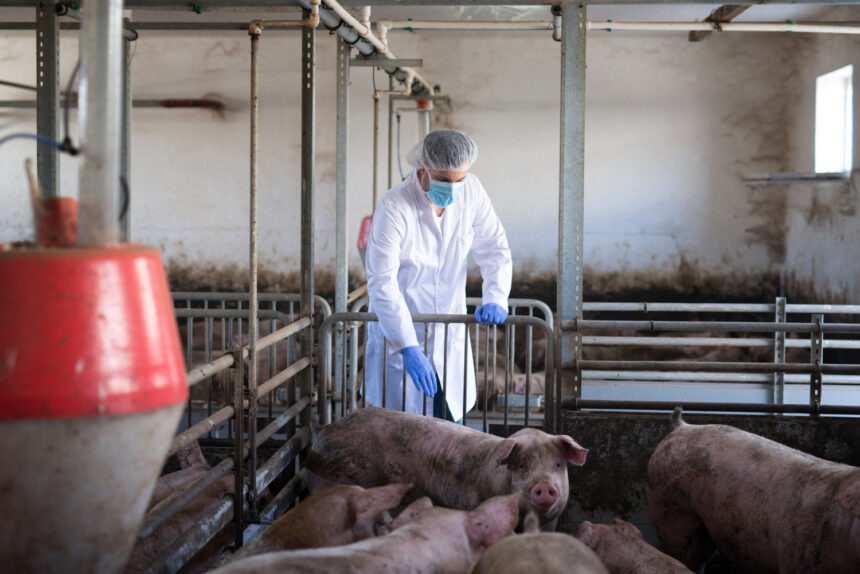
With the traditional control line no longer providing sufficient protection, farm-level biosecurity has become the cornerstone of African swine fever prevention. Farmers are encouraged to keep domestic pigs securely separated from warthogs, stray animals and other potential disease carriers through strong fencing and controlled access points. Strict hygiene measures are equally important, beginning with the physical removal of mud, manure and organic material before applying approved disinfectants. As Dr. Thandi Chiappero of the South African Pork Producers’ Organisation explains, disinfectants cannot destroy the virus when it is protected by dirt or organic matter. Thorough cleaning followed by proper disinfection, correct chemical concentrations and adequate drying time significantly reduces the risk of disease entering a farm.
Feeding practices also play a critical role in preventing outbreaks. South African regulations prohibit feeding untreated kitchen waste or animal products to pigs unless the material has been boiled for at least 60 minutes or otherwise effectively sterilized. Farmers should also purchase replacement pigs only from reputable suppliers with verified health records and quarantine newly introduced animals for at least 28 days before mixing them with the main herd. Daily monitoring of animals for unusual illness or unexplained deaths allows farmers to identify potential problems quickly and respond before the disease spreads. These practical measures can make the difference between protecting a healthy herd and suffering devastating losses.
Rapid reporting remains one of the most important responsibilities of every pig producer. Farmers who suspect African swine fever should immediately contact their local state veterinarian, isolate affected animals and stop all movement of pigs, equipment and people between production areas. Quick action helps reduce the spread of infection while protecting neighboring farms and preserving economic value within the industry. Producers can also strengthen their long-term resilience by participating in officially recognized biosecure pig compartment programs under Veterinary Procedural Notice 39. These programs help demonstrate disease-free production systems and support continued market access even when outbreaks occur in surrounding regions.
Government policy has increasingly shifted toward prevention, education and targeted disease management rather than relying solely on widespread culling and compensation. The Department of Agriculture recognizes that compensation alone cannot rebuild farming businesses or create lasting resilience against future outbreaks. Instead, investment in farmer education, stronger biosecurity systems and coordinated disease surveillance provides a more sustainable approach to protecting the pig industry. During outbreaks, state veterinary services work alongside municipalities and the South African Police Service to implement movement controls, enforce quarantine measures and oversee the safe disposal of infected carcasses. These coordinated responses help limit the spread of the virus while protecting the wider livestock sector.
African swine fever has fundamentally changed the way South Africa approaches disease control in pig farming. The expansion of outbreaks beyond traditional control zones has shown that every producer, regardless of location, must prioritize biosecurity as an essential part of daily farm management. By implementing strict hygiene practices, sourcing healthy animals, complying with feeding regulations and reporting suspected cases immediately, farmers can significantly reduce the risk of infection. Continued cooperation between producers, veterinarians, government agencies and industry organizations will be essential to containing future outbreaks and protecting the country’s pork industry. As the battle against African swine fever continues, strong farm biosecurity remains the most effective tool for safeguarding pig herds, supporting rural livelihoods and securing the future of South Africa’s pork sector.
Join 'Farmers Mag' WhatsApp Channel
Get the latest Farming news and tips delivered straight to your WhatsApp
CLICK HERE TO JOIN