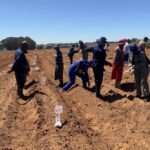
The Youth Agricultural Trade Fair hosted at the University of Limpopo in the Capricorn District marks an important moment in South Africa’s ongoing efforts to empower young people in agriculture. As the country continues to observe Youth Month after Youth Day on 16 June, the event brings attention to the role of agriculture in shaping youth employment and economic participation. The initiative is hosted by the University of Limpopo in partnership with key stakeholders, including the Limpopo Department of Agriculture and Rural Development. The gathering focuses on creating real opportunities for young people to enter and succeed in the agricultural sector. It also highlights agriculture as a practical and scalable path for entrepreneurship, food production, and rural development.
The trade fair provides a structured platform where young people can engage directly with experts, institutions, and industry players who shape the agricultural value chain. The programme includes presentations that cover essential topics such as product research and development, which helps young agripreneurs understand how to improve and innovate their agricultural products for better market performance. It also explores farmer development financing models that explain how young farmers can access funding and manage financial resources in a sustainable way. Compliance requirements in agribusiness are also discussed, ensuring that participants understand the legal and regulatory standards needed to operate successfully in formal markets. Support services from sister departments are also highlighted, giving participants a clearer view of available institutional assistance that can help them grow their agricultural ventures.
The event plays a critical role in equipping young farmers and aspiring agripreneurs with practical knowledge and skills that are necessary for long term success. Many young people face barriers such as limited access to capital, lack of technical training, and limited exposure to formal market systems. The trade fair helps address these challenges by creating direct learning opportunities and linking youth to relevant support structures. It also strengthens collaboration between government, educational institutions, and private sector partners who all play a role in agricultural development. Through this approach, the initiative supports innovation and encourages young people to see agriculture as a viable and profitable career path rather than a subsistence activity.
A key feature of the programme is its focus on building networks that can support youth beyond the event itself. The trade fair concludes with a networking and exhibition session where participants can engage with one another, industry experts, and potential business partners. This environment allows young entrepreneurs to showcase their agricultural products and services while also exploring partnerships that can help them scale their businesses. It also promotes idea exchange, which is essential for driving innovation and improving productivity within the agricultural sector. These interactions help strengthen value chain connections and create pathways for market access, which is often one of the biggest challenges for young farmers.
The Youth Agricultural Trade Fair demonstrates how targeted interventions can make a meaningful difference in youth empowerment and agricultural development. By combining knowledge sharing, practical exposure, and networking opportunities, the event supports the development of a new generation of skilled and confident agricultural entrepreneurs. It reinforces the importance of collaboration between institutions like the University of Limpopo and the Limpopo Department of Agriculture and Rural Development in building a sustainable agricultural ecosystem. Most importantly, it shows that when young people are given access to information, resources, and networks, they can actively contribute to food security, economic growth, and job creation. The initiative stands as a strong example of how agriculture can be used as a powerful tool for youth empowerment and long term national development.
Join 'Farmers Mag' WhatsApp Channel
Get the latest Farming news and tips delivered straight to your WhatsApp
CLICK HERE TO JOIN