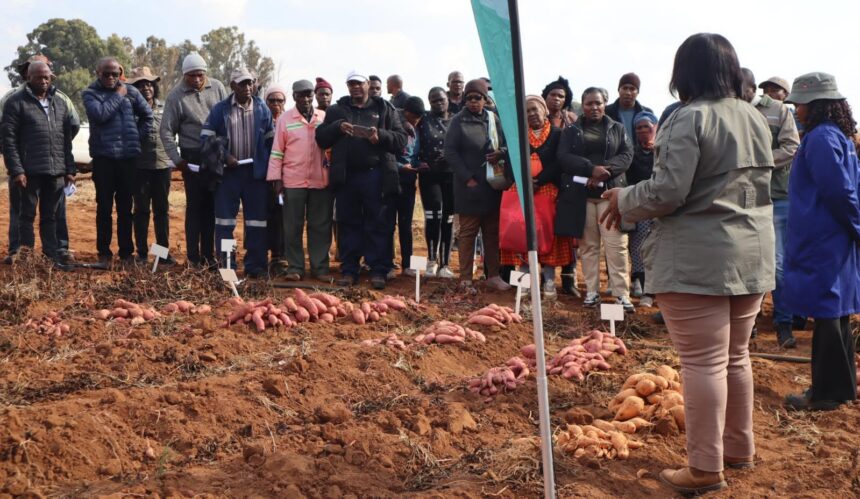
The Agricultural Research Council continues to play a central role in advancing agricultural innovation and supporting farmers across South Africa through research driven knowledge transfer. A recent Sweet Potato Farmer’s Day hosted by the Agricultural Research Council’s Vegetable, Industrial and Medicinal Plants campus at the Nooitgedacht Research Farm in Ermelo demonstrated how science and practical farming can work together to strengthen food systems. The event brought local producers and experts into one space where agricultural research was translated into real world farming solutions. It focused on the full lifecycle of food systems, from production and processing to distribution, consumption and waste management. This holistic approach reflects the growing need for agriculture that is not only productive but also sustainable and resource efficient. The initiative highlighted how root crops like sweet potatoes can play a significant role in improving nutrition and food security in South Africa.
One of the key goals of the Sweet Potato Farmer’s Day was to bridge the gap between research institutions and everyday farming practices. Farmers attending the event received practical insights into improved production methods that can increase yield while maintaining soil health. Experts from the Agricultural Research Council’s Vegetable, Industrial and Medicinal Plants campus demonstrated how scientific research is being used to develop better farming techniques suited to local conditions. These sessions helped farmers understand how innovation can be applied directly to their fields without requiring complex or expensive systems. The focus on accessibility ensured that both small scale and emerging farmers could benefit from the knowledge shared. By linking research with practical application, the event strengthened the capacity of farmers to improve productivity in a sustainable way.
A major highlight of the event was the demonstration of sweet potato’s zero waste potential, which showed how different parts of the crop can be used for multiple purposes. Farmers learned that sweet potato roots can be prepared as a nutritious food source for households and markets, while the leaves can be used as morogo, a traditional leafy vegetable rich in nutrients. This approach reduces agricultural waste and increases the economic value of each harvest. It also supports household nutrition by providing both energy rich carbohydrates and nutrient dense leafy greens from a single crop. The concept of zero waste farming was presented as a practical solution for improving food security while maximizing farm efficiency. This demonstration encouraged farmers to rethink how they utilize their harvests and explore new market opportunities.
Health benefits associated with sweet potatoes were also a key focus of the discussions during the event. Experts highlighted that sweet potatoes contain low glycaemic index carbohydrates, which provide sustained energy release and can support better blood sugar management. They also discussed the anti inflammatory properties of the crop, which contribute to improved overall health outcomes when included in regular diets. In addition, sweet potatoes were presented as a valuable food source for weight management due to their nutrient density and ability to promote satiety. These health related insights reinforced the importance of diversifying food production to include crops that support both nutrition and wellness. Farmers were encouraged to consider these benefits when marketing their produce to health conscious consumers and institutional buyers.
Another critical message shared during the Sweet Potato Farmer’s Day was the importance of strong and reliable seed systems in achieving resilient food production. Experts emphasized that successful farming begins with the use of clean and certified propagation material, which ensures healthy plant growth and higher yields. Poor quality planting material can lead to disease spread, reduced productivity and financial losses for farmers. The Agricultural Research Council highlighted ongoing efforts to improve seed quality and make certified planting materials more accessible to farmers across different regions. This focus on seed systems is essential for building long term agricultural resilience, especially in the face of climate variability and changing environmental conditions. Farmers were encouraged to prioritize certified inputs as the foundation of sustainable production systems.
The event also encouraged farmers to think beyond production and consider the entire value chain of sweet potato farming. Discussions covered how processing, distribution and consumption all contribute to the overall success of agricultural enterprises. Farmers were introduced to opportunities for adding value through processing sweet potatoes into products such as flour, snacks and cooked meals. These value addition strategies can significantly increase income potential while reducing post harvest losses. The inclusion of waste management discussions also highlighted the importance of responsible farming practices that minimize environmental impact. This comprehensive approach ensured that participants understood agriculture as a complete system rather than just crop cultivation.
The Sweet Potato Farmer’s Day at the Nooitgedacht Research Farm in Ermelo demonstrated the powerful impact of combining scientific research with practical agricultural training. By showcasing the full lifecycle of sweet potato production and emphasizing sustainability, nutrition and innovation, the Agricultural Research Council provided farmers with valuable tools to improve their operations. The focus on zero waste utilization, health benefits and certified seed systems reinforced the importance of adopting modern, efficient and environmentally responsible farming practices. Farmers left the event with deeper knowledge and practical ideas that can be applied directly to their fields and communities. As South Africa continues to prioritize food security and sustainable agriculture, initiatives like this play a vital role in building resilient farming systems and supporting long term rural development.
Join 'Farmers Mag' WhatsApp Channel
Get the latest Farming news and tips delivered straight to your WhatsApp
CLICK HERE TO JOIN