A targeted agricultural investment from the Eastern Cape Development Corporation (ECDC) is transforming the growth trajectory of a youth-owned farming enterprise in Vaalbank, Lady Frere. The R399,796 support, managed through the Imvaba Cooperative Fund, has enabled the Feeda Nathi Primary Agricultural Cooperative to implement a modern irrigation scheme that is reshaping its production capacity and market reach. This intervention highlights how structured financial support can move emerging farmers from subsistence operations into commercial agriculture. The cooperative, owned by five young farmers, has become a strong example of rural entrepreneurship driven by innovation and resilience. Their progress demonstrates how access to infrastructure and funding can unlock meaningful economic participation in the agricultural sector.
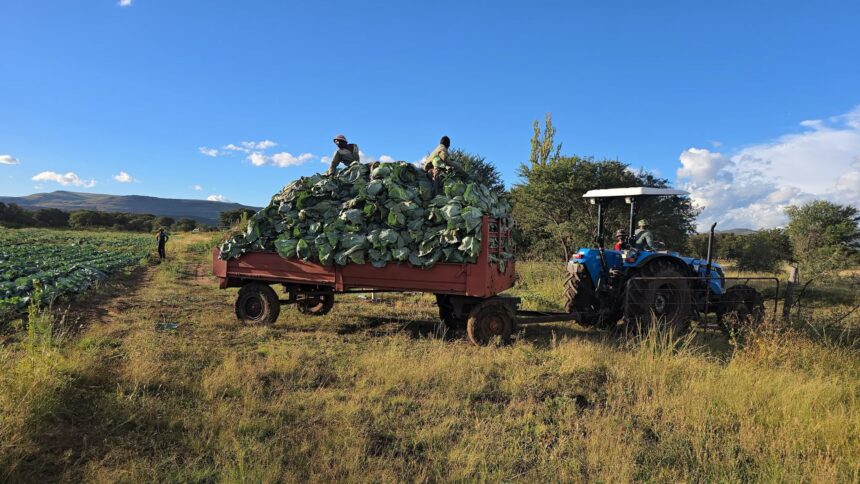
Feeda Nathi operates on a 50-hectare farm, although only about six hectares are currently under active production. Despite the limited cultivated area, the cooperative produces a variety of vegetables including cabbage, butternut, beetroot, large white pumpkins and green squash. Their produce already supplies established markets such as Pick n Pay in Komani, SPAR Dordrecht, Umfundisi in Queenstown and the East London Fresh Produce Market. This level of market access reflects a significant shift from their early beginnings in 2018, when the group relied on small backyard gardens to grow basic crops. By 2020, the cooperative had formalised its operations, marking the start of a structured business journey focused on long term agricultural growth.
The youth-led team behind Feeda Nathi consists of five farmers aged between 26 and 33, namely Siyamthanda Gatyeni, Lumanyano Magxala, Sandiso Magxala, Zimi Gatyeni and Thabiso Magxala. Together, they have built more than just a farming business, they have created employment and stimulated economic activity within their rural community. The cooperative currently employs 12 permanent workers and 18 seasonal workers, providing income opportunities in an area where formal employment is often limited. Their journey reflects a broader trend of young people entering agriculture with a strong focus on commercialisation and sustainability. By combining leadership, teamwork and practical farming knowledge, they have positioned themselves as contributors to local economic development rather than passive participants.
The turning point for the cooperative came with the introduction of the irrigation scheme funded through the ECDC Imvaba Cooperative Fund. According to ECDC Acting Manager for Financial Incentives and Business Support, Fikile Mzinyati, the R399,796 investment did more than improve water access, it fundamentally strengthened production capacity. Reliable irrigation has allowed the cooperative to shift away from dependency on unpredictable rainfall patterns, which previously limited crop consistency and output. With controlled water supply, crop planning has become more stable and yields have improved significantly. This transition has supported the cooperative’s move from survival farming toward structured commercial agriculture. It also demonstrates how targeted infrastructure investment can directly influence productivity and market competitiveness.
Feeda Nathi Chairperson Siyamthanda Gatyeni has described irrigation as a critical factor in their growth and stability. He explained that farming in an environment where rainfall cannot be guaranteed creates uncertainty and financial risk. The introduction of irrigation has changed operational planning by allowing consistent watering schedules and improved crop management. This has reduced crop losses and improved overall efficiency in production cycles. The cooperative now has greater confidence in meeting market demand because output is more predictable. For the team, irrigation is not just a technical improvement but a foundational shift in how they manage their entire farming operation.
Beyond irrigation, Feeda Nathi has achieved South African Good Agricultural Practices (SA-GAP) certification, which strengthens its position in formal retail markets. This certification confirms that the cooperative meets required standards for food safety, production quality and farm management. It has enabled them to compete more effectively and secure long term supply relationships with established buyers. However, the team acknowledges that their growth journey is far from complete and continues to identify areas for expansion. Their future plans include expanding irrigation infrastructure, acquiring a larger tractor, investing in advanced planting equipment and securing a fine-seed planter to improve efficiency. They also recognise cold storage facilities and alternative energy solutions such as solar power or backup generators as essential for reducing post-harvest losses and maintaining market readiness.
The cooperative also plays a broader role in challenging perceptions about youth involvement in agriculture. Gatyeni has highlighted that young people are actively engaged in farming and are proving that agriculture can be a viable and profitable career path. Their experience in Vaalbank demonstrates that youth participation in agriculture can drive innovation, job creation and rural development. In addition to farming, the cooperative has diversified into logistics by transporting iron ore, further expanding its income streams. This diversification reflects a strategic approach to business growth that reduces dependency on a single sector. It also shows how rural enterprises can evolve into multi sector operations when supported with the right resources.
ECDC Acting Manager Fikile Mzinyati emphasises that investing in youth owned agricultural businesses is essential for building a more inclusive and resilient economy. Such investments help preserve agricultural knowledge while introducing new skills and modern business practices. They also create pathways for skills transfer, allowing young farmers to develop expertise in production, management and value chain development. Over time, this contributes to stronger agricultural systems capable of supporting future generations. The success of Feeda Nathi illustrates how targeted funding, infrastructure development and youth entrepreneurship can work together to transform rural economies. As the cooperative continues to expand, it stands as a clear example of how strategic agricultural investment can turn small beginnings into sustainable commercial success.
Join 'Farmers Mag' WhatsApp Channel
Get the latest Farming news and tips delivered straight to your WhatsApp
CLICK HERE TO JOIN