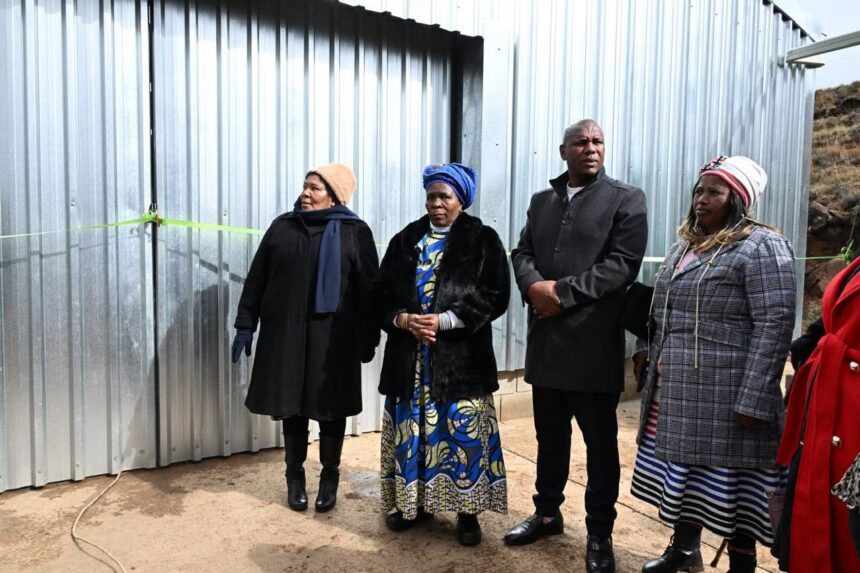
Agriculture remains one of the most important economic activities in many rural communities across South Africa, providing livelihoods, food security and opportunities for income generation. However, the sector faces a growing challenge as many farmers are ageing, creating concerns about the future sustainability of agricultural production. Recognising the importance of attracting younger generations into farming, Eastern Cape MEC for Rural Development and Agrarian Reform, Nonceba Kontsiwe, used the handover of a new shearing shed at Phelandaba Administrative Area (A/A) on 6 June 2026 as an opportunity to encourage greater youth involvement in agriculture. Her message highlighted the need for succession planning within farming communities and underscored the role young people can play in ensuring the continued growth and success of the wool industry.
The handover of the shearing shed represents a significant investment in agricultural infrastructure that is expected to benefit wool producers in the area. Access to proper shearing facilities is essential for maintaining wool quality, improving efficiency and helping farmers meet market standards. By providing such infrastructure, the department aims to create an environment where farmers can improve production and increase the value of their wool. The facility also demonstrates government’s commitment to supporting rural agricultural enterprises through practical interventions that directly impact productivity. For many farmers in communal areas, improved infrastructure can make a substantial difference in the profitability and sustainability of their operations.
During the event, MEC Kontsiwe stressed the importance of bringing young people into the agricultural sector. She pointed out that South Africa’s farming population is ageing and warned that the long-term future of agriculture depends on active youth participation. Encouraging young people to engage in farming is increasingly viewed as a national priority, particularly in sectors such as livestock and wool production where experience and knowledge need to be passed down to future generations. The MEC urged established farmers to mentor and involve young family members and community residents in agricultural activities. Such efforts can help ensure that farming knowledge, skills and resources remain within rural communities for years to come.
The MEC also praised wool growers throughout the province for making responsible marketing decisions that protect the value of their produce. She commended farmers for resisting the temptation to sell their wool to informal buyers commonly known as “boya boya bakkies”. These informal traders often purchase wool at prices that do not reflect its true market value, leaving farmers with reduced earnings. By choosing to market their wool through accredited wool markets, producers are able to access more transparent pricing systems and benefit from formal trading structures. Government support in facilitating access to these markets has played a key role in helping farmers secure better returns on their investment and hard work.
The success of accredited wool marketing systems has helped strengthen confidence among wool producers and contributed to the growth of the industry in many rural areas. Farmers who participate in formal markets gain access to competitive pricing mechanisms and broader buyer networks. This allows them to maximise the value of their wool while maintaining quality standards demanded by international and domestic markets. The MEC’s recognition of these efforts highlights the importance of market access in agricultural development. Sustainable profitability remains one of the strongest incentives for farmers to continue investing in their enterprises and expanding production.
Another key point raised by MEC Kontsiwe was her admiration for the belief held by many communal farmers that wool represents their wealth. This perspective reflects the significant role wool production plays in supporting household incomes and local economies. For many rural families, sheep farming and wool sales provide an important source of financial stability and economic resilience. The wool industry contributes not only to individual livelihoods but also to broader community development through employment opportunities and economic activity. By recognising the value that farmers place on their wool, the department acknowledges the deep connection between agricultural production and rural prosperity.
To further strengthen the sector, MEC Kontsiwe reaffirmed the department’s commitment to supporting wool producers through targeted interventions. These include the provision of infrastructure such as shearing sheds and the distribution of quality breeding stock aimed at improving flock performance. Better genetics can enhance wool quality, increase productivity and improve overall profitability for farmers. Combined with improved facilities and access to formal markets, these measures form part of a broader strategy to expand and strengthen wool enterprises across the province. Such support demonstrates a long-term commitment to ensuring that wool farming remains a viable and competitive agricultural activity.
The department’s vision extends beyond individual farming operations to the broader development of rural communities. Improved productivity and stronger market access can generate increased income for farming households, which in turn supports local economic growth. Investment in the wool industry has the potential to create employment opportunities, encourage entrepreneurship and reduce poverty in rural areas. By focusing on both production and market development, government seeks to build a more resilient and sustainable agricultural sector. These efforts are particularly important in communal farming areas where agriculture often serves as a cornerstone of economic activity.
The handover of the shearing shed at Phelandaba Administrative Area stands as a clear example of government’s commitment to supporting farmers and strengthening the wool industry. MEC Nonceba Kontsiwe’s call for greater youth participation highlighted one of the most important challenges facing agriculture today, while her praise for responsible wool marketing practices reinforced the value of formal market participation. Her commitment to providing infrastructure and quality breeding stock signals continued support for wool producers across the province. As the department works alongside farmers to improve productivity, strengthen market access and expand opportunities within the wool sector, these initiatives are expected to contribute significantly to the growth of rural communities and the long-term success of South Africa’s agricultural industry.
Join 'Farmers Mag' WhatsApp Channel
Get the latest Farming news and tips delivered straight to your WhatsApp
CLICK HERE TO JOIN