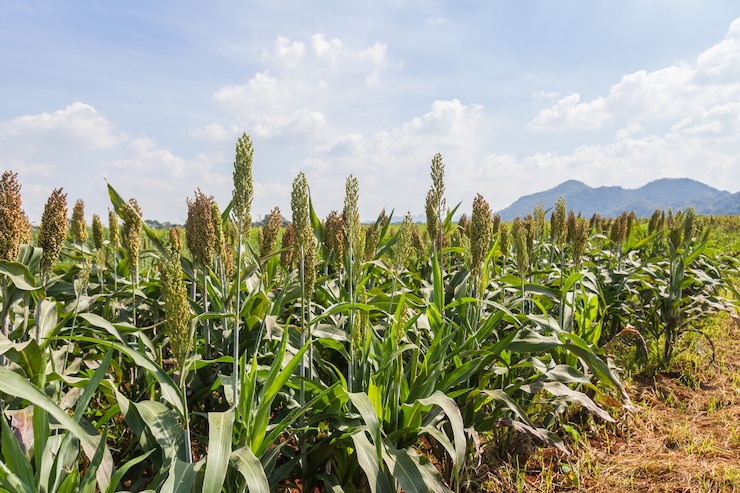
Sorghum farming offers a strong option for farmers in dry regions of South Africa where rainfall is low and inconsistent. The crop known as Sorghum is well suited to hot climates and can survive in conditions where maize often fails. It plays an important role in food security and livestock feed supply across rural communities. In many parts of South Africa, farmers depend on sorghum because it handles drought stress better than most staple crops. This makes it a practical choice for smallholder farmers and commercial growers operating in semi arid zones. With proper planning and good farming practices, sorghum can deliver stable yields even under harsh conditions.
Successful sorghum production starts with selecting the right variety for dry areas. Farmers should choose drought tolerant varieties that match local rainfall patterns and soil types. Early maturing varieties work best in regions with short and unpredictable rainy seasons. Land preparation is also important and should begin before the first rains to ensure proper soil structure and moisture retention. Sorghum grows well in well drained soils with moderate fertility, but it can tolerate poorer soils better than many other grains. Good seedbed preparation improves germination rates and helps seedlings establish strong roots early in the season.
Planting time plays a major role in yield success for sorghum farming in dry regions. Farmers should plant at the start of the rainy season to maximize soil moisture use during germination and early growth. Seed spacing should allow enough room for airflow and nutrient access, usually around 60 to 75 centimeters between rows. Planting depth should not be too deep, as this can delay emergence, especially in dry soils. Weed control is critical during the early growth stage because weeds compete heavily for water and nutrients. Manual weeding or herbicide use should be done early to prevent yield losses.
Water management is a key factor in sorghum production in dry areas. Although sorghum is drought tolerant, it still requires moisture during germination and flowering stages. Farmers should conserve soil moisture using practices such as mulching and minimum tillage. These methods help reduce evaporation and keep the soil cooler during hot periods. Fertilizer use should be balanced, with an emphasis on nitrogen and phosphorus depending on soil test results. Over fertilization should be avoided because it can lead to excessive leaf growth instead of grain production.
Pest and disease control is another important part of sorghum farming. Common pests include birds, stem borers, and aphids, which can reduce yields if not managed early. Bird damage is especially common during the grain filling stage and may require protective measures such as netting or scare tactics. Regular field monitoring helps farmers identify problems before they spread widely. Harvesting should take place when grains are fully mature and dry to reduce post harvest losses. Proper drying and storage are essential to maintain grain quality and prevent mold or insect damage.
Sorghum remains one of the most reliable crops for dry farming systems in South Africa. It provides food, income, and livestock feed while requiring fewer inputs than many other cereal crops. With correct variety selection, timely planting, and effective field management, farmers can achieve consistent production even under challenging climate conditions. The crop supports rural livelihoods and strengthens resilience in areas affected by drought and water scarcity. By adopting good agricultural practices, farmers can turn sorghum into a dependable and sustainable source of production and income.
Join 'Farmers Mag' WhatsApp Channel
Get the latest Farming news and tips delivered straight to your WhatsApp
CLICK HERE TO JOIN