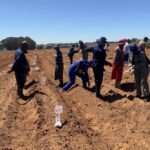
A major agricultural development in the Nkandla Local Municipality has seen 125.5 hectares of arable land successfully cultivated and harvested with maize under the Multi-Planting Season programme. The initiative forms part of a broader allocation of 309 hectares aimed at strengthening food production and rural livelihoods across communal areas managed under the Ingonyama Trust. The programme operates within a large communal land system overseen by Amakhosi, who manage more than 2.8 million hectares of land across traditional areas. The project has been designed to improve food security, create local economic activity, and support emerging farmers in rural communities. It also reflects ongoing efforts by government to unlock productive use of underutilised land in KwaZulu-Natal.
The 125.5 hectares planted in Nkandla were developed through a coordinated support package valued at approximately R400 000, which directly benefited three cooperatives and surrounding communities. The cultivated areas include Mpotholo, Ntatshana, and Chithimpuphu, where fencing materials were provided to protect crops and improve long term land management. These interventions ensured that smallholder farmers could plant and harvest maize under more secure and controlled conditions. The support package also strengthened cooperation between local farmers, traditional leadership, and government structures. By focusing on practical inputs, the programme helped increase productivity while reducing risks such as livestock damage and crop loss.
A broader assessment conducted in Nkandla identified the need for further investment of about R23 million to expand agricultural support and infrastructure. The proposed funding will be used for mechanisation services, construction of two new dipping tanks, rehabilitation of three existing dipping tanks, and fencing of additional crop fields. These upgrades are intended to improve livestock health management and protect cultivated land from damage, which remains a major challenge in communal farming areas. The planned mechanisation support will also help farmers reduce manual labour costs and improve planting efficiency. These interventions are expected to significantly increase agricultural output in future planting seasons.
The project has also had a strong social impact, with 42 women, 12 youth-led initiatives, and three persons with disabilities benefiting directly from agricultural support. Assistance included access to indigenous chickens and goats, which provide both food security and income generating opportunities for rural households. This inclusive approach ensures that vulnerable groups are not left behind in agricultural development programmes. It also supports broader national goals of empowering women and young people in the agricultural sector. The distribution of livestock and farming inputs has helped diversify rural livelihoods beyond crop production alone.
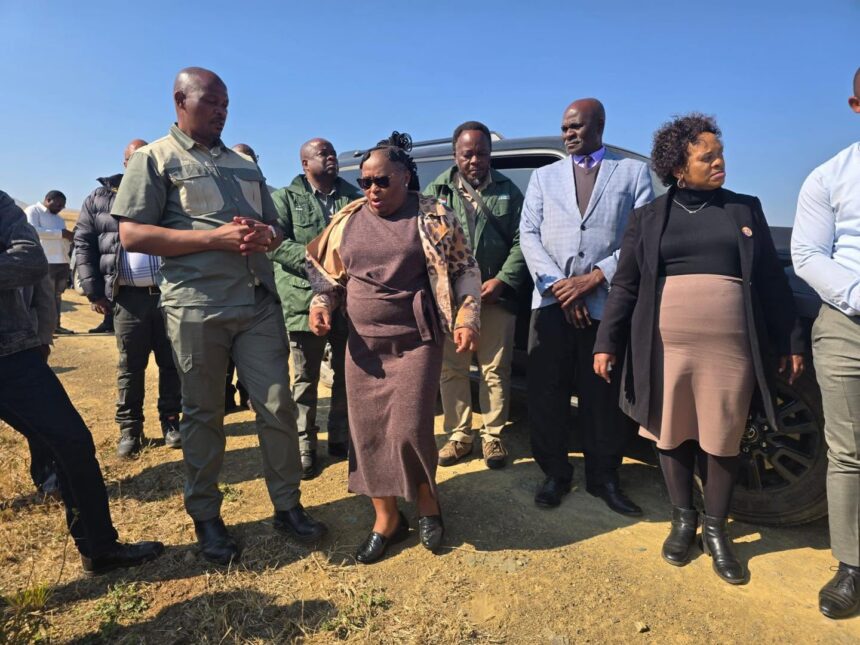
During an oversight visit, the MEC for Agriculture, Thembeni kaMadlopha-Mthethwa, confirmed that the projects in the Zondi, Mchunu, and Dlomo traditional areas are showing strong progress. She highlighted that the initiative reflects commitments made in the previous year to support rural communities through fencing, mechanisation, and seed provision. She noted that the successful maize harvest demonstrates real progress in turning commitments into tangible outcomes for local farmers. Her remarks emphasized that women and youth remain central to the department’s agricultural development strategy. She also confirmed that approximately R400 000 has already been invested in these traditional areas, resulting in visible improvements in production.
The Nkandla maize harvest marks a significant step in strengthening food security and rural economic participation in the region. By converting communal land into productive agricultural space, the programme is helping communities move toward self sufficiency and income generation. The involvement of traditional leadership through Amakhosi has also ensured smoother coordination and local ownership of the projects. With continued investment and infrastructure development, the agricultural potential of Nkandla’s communal land can be further unlocked. The initiative demonstrates how targeted support, combined with community participation, can transform rural agriculture into a sustainable engine for development and empowerment.
Join 'Farmers Mag' WhatsApp Channel
Get the latest Farming news and tips delivered straight to your WhatsApp
CLICK HERE TO JOIN