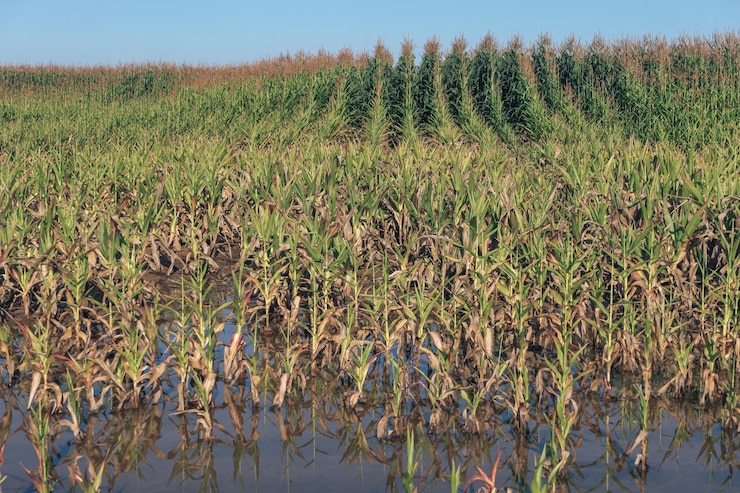
South Africa’s farmers are once again confronting the harsh realities of a changing climate. Recent heavy rainfalls and hail events have devastated crops, damaged infrastructure and disrupted production across several regions. For many producers, the emotional and financial toll has been severe, and Land Bank Insurance extends its deepest sympathy to every farmer affected during this difficult period.
These events reveal a truth that can no longer be ignored: that in today’s farming environment, insurance is not optional, but rather essential to protecting livelihoods, sustaining production and enabling faster recovery after climate disasters.
Land Bank Insurance plays a critical role in helping farmers manage this uncertainty. Through its farming insurance solutions, the Bank provides cover for a wide range of agricultural risks. This includes protection against losses caused by hailstorms, frost, wind and fire, as well as asset insurance for essential infrastructure, machinery, irrigation systems, livestock and farming property damaged by natural disasters.
“Farmers are carrying a heavy burden as climate shocks become more unpredictable and more severe. We stand with every producer who has suffered losses in recent times. These events confirm why farming insurance must be viewed as a fundamental part of responsible farming, and we encourage farmers to approach their brokers or contact us for advice on what insurance protection to obtain” says Land Bank Insurance Managing Director, Pascal Siphugu.
To strengthen resilience across the sector, Land Bank Insurance continues to explore different products, including innovative solutions that provide faster, more transparent payouts based on measurable weather conditions or regional crop performance. This helps farmers recover more quickly after extreme weather events, where a single storm can undo months of investment and labour.
Integrated finance and insurance solutions are also becoming increasingly important. By pairing lending with appropriate risk cover, farmers are better protected from climate shocks, and the financial system that supports them becomes more resilient.
Smallholder and emerging farmers remain the most vulnerable. With limited financial buffers and historically lower access to insurance, they often face disproportionate losses during extreme weather events.
Land Bank Insurance is committed to addressing these gaps by developing more affordable, accessible and simplified insurance offerings tailored to smaller‑scale operations. This includes exploring micro‑insurance models, strengthening product education, and improving outreach to rural communities.
“Inclusive climate protection is essential for safeguarding livelihoods and ensuring long‑term food security. We are working to ensure that emerging farmers are not left behind as climate risks intensify,” Siphugu adds.
Building resilience also requires innovation and strong partnerships. Land Bank Insurance is collaborating with insurers, government departments, commodity organisations and the broader farming value chain to develop scalable climate‑risk solutions. Advances in satellite monitoring, weather‑data systems and predictive analytics are creating new opportunities to improve risk assessment and support better decision‑making at farm level.
As climate volatility continues to reshape South Africa’s farming landscape, Land Bank Insurance remains committed to supporting farmers with practical, forward‑looking and accessible solutions. By ensuring that farmers have the protection they need, the Bank is helping to build a more resilient sector capable of withstanding the challenges of a rapidly changing climate.
Join 'Farmers Mag' WhatsApp Channel
Get the latest Farming news and tips delivered straight to your WhatsApp
CLICK HERE TO JOIN