Mango farming in South Africa offers strong opportunities for growers who want a reliable fruit crop with steady market demand. Mangoes grow well in warm regions with long sunny seasons and mild winters, which makes parts of Limpopo, Mpumalanga, KwaZulu-Natal and the Northern Cape suitable for production. The crop supports both small scale farmers and commercial orchards because it can produce high yields when managed correctly. Farmers also benefit from local and export demand, especially during peak harvesting months. Success in mango farming depends on choosing the right location, good orchard planning and consistent farm management practices.
The first step in mango farming is selecting a suitable climate and soil type. Mango trees need warm temperatures and do not tolerate frost well, especially when young. Ideal soil is deep, well drained and slightly acidic to neutral, because waterlogged soil can damage roots and reduce yields. Farmers should avoid heavy clay soils unless proper drainage systems are installed. Wind protection is also important because strong winds can damage flowers and young fruit. Proper site selection directly affects tree health and long term productivity.
Choosing the right mango variety is another important factor for success in South Africa. Popular varieties include Tommy Atkins, Kent, Keitt and Heidi, each with different growth patterns, taste profiles and harvest times. Tommy Atkins is widely grown because it is hardy and suitable for export markets, while Kent and Keitt are preferred for their sweetness and lower fibre content. Farmers should match varieties to their climate and target market to maximise profit. Using a mix of varieties can also extend the harvest season and reduce market risk. Healthy certified seedlings should always be sourced from reputable nurseries to prevent disease problems.
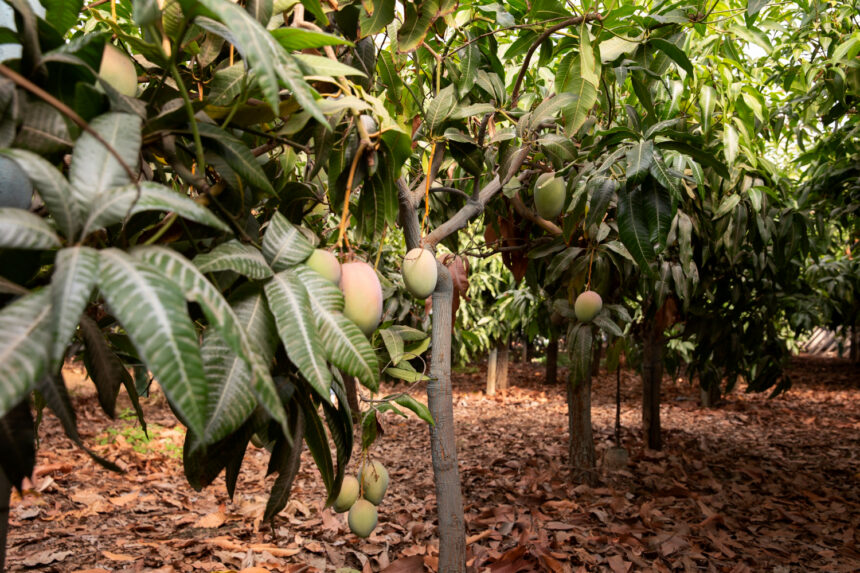
Land preparation and planting play a major role in orchard establishment. Farmers should clear weeds, plough the land and ensure proper spacing between trees to allow airflow and sunlight penetration. Typical spacing ranges from 8 by 8 metres to 10 by 10 metres depending on the variety and farming system. Holes should be prepared well in advance and enriched with compost or organic matter to support early root development. Young trees need regular watering during their first two years to help them establish strong root systems. Proper mulching also helps retain soil moisture and control weeds.
Water management and fertilisation are critical for healthy mango production. Mango trees require consistent watering during flowering and fruit development stages, but excessive irrigation should be avoided to prevent root diseases. Drip irrigation systems are often recommended because they provide controlled water delivery and reduce wastage. Fertiliser programmes should be based on soil tests to ensure trees receive the right balance of nutrients such as nitrogen, phosphorus and potassium. Organic fertilisers can also improve soil structure and long term fertility. Regular monitoring helps farmers adjust feeding schedules according to tree performance.
Pest and disease control is essential in maintaining high quality yields. Common pests include fruit flies, mango weevils and scale insects, which can damage fruit and reduce market value. Diseases such as anthracnose and powdery mildew can also affect leaves, flowers and fruit development. Farmers should use integrated pest management practices that combine chemical control, biological methods and good orchard hygiene. Regular pruning helps improve airflow and reduces disease pressure in the orchard. Harvesting at the right maturity stage also reduces post harvest losses and improves fruit quality.
Harvesting and marketing complete the mango production cycle and determine overall profitability. Mangoes are usually harvested by hand when they reach the correct colour and firmness depending on the variety. Careful handling is important to avoid bruising and damage that can reduce shelf life. After harvesting, fruits should be sorted, graded and stored in cool conditions before reaching the market. Farmers can sell directly to local markets, supermarkets or export channels depending on production scale. Strong marketing strategies and consistent quality standards help farmers build long term buyers and increase income stability.
Join 'Farmers Mag' WhatsApp Channel
Get the latest Farming news and tips delivered straight to your WhatsApp
CLICK HERE TO JOIN