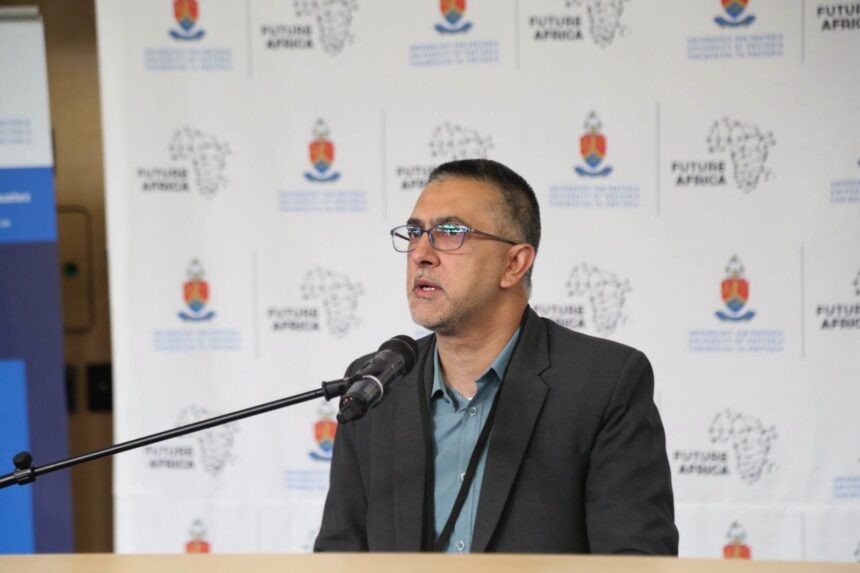
South Africa is taking proactive steps to strengthen its ability to respond to potential disease outbreaks through a major Avian Influenza Simulation Exercise currently being hosted at the University of Pretoria’s Future Africa campus. The three-day exercise has been organised by the National Department of Agriculture in collaboration with the Department of Health and the National Institute for Communicable Diseases. The initiative brings together experts from multiple sectors to assess the country’s readiness to manage and contain a simulated outbreak of H5N1 avian influenza. By creating a realistic scenario, participants can identify strengths, address gaps and improve coordination mechanisms before a real emergency occurs. The exercise reflects South Africa’s commitment to protecting public health, animal health and food security through effective preparedness planning.
Avian influenza, commonly known as bird flu, remains a significant concern for countries around the world because of its potential impact on poultry production, wildlife populations and human health. While many strains primarily affect birds, certain types such as H5N1 have attracted global attention due to their ability to spread rapidly and occasionally infect humans. For countries with large agricultural sectors, an outbreak can result in substantial economic losses, disruption of food supply chains and restrictions on trade. South Africa has previously faced challenges associated with avian influenza, making preparedness and rapid response essential priorities. The simulation exercise provides an opportunity to test existing systems and ensure that all relevant institutions can work together effectively when faced with a disease emergency. It also helps build confidence in national response capabilities and strengthens resilience across sectors.
A key objective of the exercise is to evaluate cross-sectoral coordination among the various organisations responsible for disease surveillance, outbreak response and public communication. Effective management of an avian influenza outbreak requires cooperation between agricultural authorities, public health officials, laboratories, veterinarians and other stakeholders. During the simulation, participants are required to respond to evolving scenarios that mimic real-world conditions, including disease detection, reporting procedures and containment measures. This approach allows teams to practice decision-making under pressure while improving communication channels between institutions. By testing these systems in a controlled environment, authorities can identify areas that require improvement and develop practical solutions before an actual outbreak occurs. Such exercises play an important role in ensuring that emergency response frameworks remain effective and up to date.
Disease surveillance and epidemiological investigations form another major focus of the simulation. Early detection is one of the most important factors in preventing the spread of infectious diseases, particularly those that can affect both animals and humans. Participants are examining how information is collected, analysed and shared during an outbreak situation. Epidemiologists and veterinary experts are working through simulated investigations to trace the source of infections, monitor disease movement and recommend appropriate control measures. These activities help improve the speed and accuracy of future outbreak responses. Strengthening surveillance systems also supports broader efforts to protect the agricultural sector and minimise disruptions to poultry production and trade.
Laboratory preparedness is equally important in managing infectious disease outbreaks, and the exercise includes extensive testing of laboratory response capabilities. Accurate and timely diagnostic testing allows authorities to confirm cases, assess risks and implement targeted interventions. Laboratories must be prepared to handle increased testing demands during an outbreak while maintaining high standards of accuracy and safety. The simulation enables laboratory personnel to review protocols, evaluate workflows and strengthen collaboration with field teams. Improved laboratory readiness contributes to faster response times and more effective disease control strategies. It also ensures that decision-makers have access to reliable scientific information when responding to emerging threats.
The exercise highlights the importance of the One Health approach, a framework that recognises the close connection between human health, animal health and environmental health. Infectious diseases do not operate within sector boundaries, making collaboration essential for effective prevention and response. By bringing together experts from agriculture, public health and scientific research, the simulation demonstrates how integrated approaches can improve national preparedness. The One Health model encourages information sharing, coordinated planning and joint action across disciplines. This collaborative strategy has become increasingly important as global health challenges continue to evolve. It provides a foundation for addressing complex threats that affect multiple sectors simultaneously.
The Avian Influenza Simulation Exercise at the Future Africa campus represents a significant investment in South Africa’s disease preparedness and response capacity. Through realistic outbreak scenarios, participants are strengthening coordination, surveillance systems, communication processes, epidemiological investigations and laboratory readiness. The collaboration between the National Department of Agriculture, the Department of Health and the National Institute for Communicable Diseases demonstrates the value of working together to address shared challenges. As the risk of emerging and re-emerging diseases continues to grow, exercises such as this play a critical role in protecting communities, livestock industries and national food security. The lessons learned during the simulation will help improve future responses and support stronger emergency preparedness frameworks. By embracing the One Health approach, South Africa is building a more resilient system that safeguards both animal and human health for the future.
Join 'Farmers Mag' WhatsApp Channel
Get the latest Farming news and tips delivered straight to your WhatsApp
CLICK HERE TO JOIN