The South African poultry industry has recorded one of its strongest periods of growth and transformation in recent history, marking a significant shift in both economic performance and sector stability. Recent developments highlighted during the first Economic Oversight Committee meeting between the Department of Trade, Industry and Competition, the Department of Agriculture, and Poultry Masterplan stakeholders confirmed that the industry is no longer in crisis but operating as a competitive and expanding agricultural powerhouse. Since the launch of the Poultry Masterplan in 2019, the sector has undergone structural improvements that have strengthened production, investment, and local participation. A total of 32 poultry projects have now achieved a 100% success rate, supported by investments exceeding R1 billion. This milestone reflects a coordinated national effort to rebuild the industry and secure its long-term sustainability.
A major highlight of the sector’s transformation is the successful establishment of large-scale poultry operations across multiple regions, driven by 32 recognised project leaders. Each of these projects represents an average investment of approximately R45 million, demonstrating strong confidence in the sector’s future. Among the standout developments is the KC Hatchery, which alone attracted investment exceeding R135 million, signalling the scale of private sector commitment. In addition, 20 broiler contract farmers have been integrated into the value chain, strengthening production capacity and market supply stability. The sector has also expanded infrastructure through the development of three new hatcheries and around eight egg-laying facilities, which further enhance national poultry output.
This transformation has not only improved production capacity but has also reshaped the structure of the industry through increased participation and inclusivity. The Poultry Masterplan has played a central role in enabling emerging and established farmers to access markets, funding, and technical support. The success of the 32 projects demonstrates that coordinated public and private sector collaboration can deliver measurable economic outcomes. By strengthening local production, the industry has reduced reliance on imports while creating opportunities for small and medium-sized producers. This inclusive growth model has positioned poultry farming as a key driver of rural development and agricultural empowerment.
The progress achieved since 2019 is particularly significant when viewed against the industry’s previous challenges. Before the implementation of the Poultry Masterplan, the sector experienced a prolonged decline due to the influx of dumped chicken imports that disrupted local production. Investigations conducted by the International Trade Administration Commission confirmed that nine countries were involved in dumping poultry products into South Africa, leading to unfair competition. In response, anti-dumping duties were introduced to protect domestic producers and stabilise the market. These policy interventions, combined with structured industry support, laid the foundation for recovery and renewed growth.
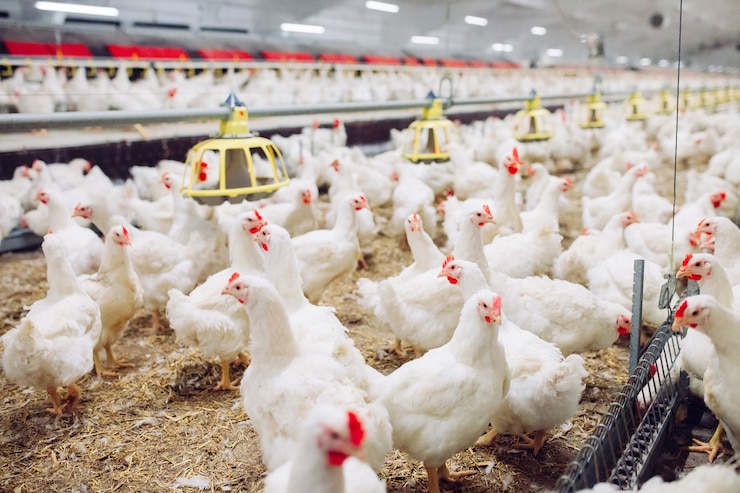
Between 2019 and 2025, the poultry sector has invested more than R2.1 billion, reflecting strong confidence in its long-term viability. During this period, production increased by 26 percent, rising from 19.7 million to 23 million birds slaughtered per week. Import replacement strategies have also gained momentum, reducing dependence on foreign supply while strengthening local production systems. At the same time, improved cost efficiencies have helped producers remain competitive in both domestic and international markets. This growth trajectory highlights the effectiveness of coordinated planning and investment in rebuilding the sector.
The industry’s progress has been achieved despite significant structural and environmental challenges that continue to affect agricultural production in South Africa. Rising raw material costs have placed pressure on profit margins, while the outbreak of Highly Pathogenic Avian Influenza in 2023 disrupted supply chains and production cycles. Infrastructure constraints, including issues related to ports, roads, water supply, and electricity, have further complicated operations for producers. Municipal inefficiencies have also added operational difficulties, particularly in rural farming areas where service delivery remains inconsistent. Despite these obstacles, the poultry sector has demonstrated resilience and maintained steady growth.
Today, the South African poultry industry stands as the largest agricultural sector in the country, valued at approximately R74 billion and supporting more than 110,000 jobs across the value chain. This includes employment in farming, processing, logistics, retail, and related support services, making it a critical contributor to national food security and economic stability. A 2025 competitiveness study conducted by Wageningen University confirmed that South Africa’s poultry industry is highly competitive on a global scale. For more than 13 years, the country has produced chicken at a lower cost than the European Union, and it has now surpassed the United States in production competitiveness. Only Brazil currently produces chicken at a lower cost, placing South Africa among the top global producers.
Another key indicator of efficiency is South Africa’s leading feed conversion ratio, which measures how effectively poultry converts feed into meat. The country currently holds the lowest feed conversion ratio globally, reflecting strong technical performance and advanced farming practices. This efficiency contributes directly to lower production costs and improved competitiveness in both local and export markets. It also highlights the role of innovation, genetics, and improved farm management systems in driving industry success. These achievements demonstrate that South Africa is not only producing more poultry but doing so more efficiently than many global competitors.
According to Izaak Breitenbach, CEO of the Broiler Organisation of SAPA, the industry has moved beyond crisis and is now firmly positioned as a growing and competitive sector. He emphasised that poultry production continues to provide affordable protein to South African consumers while supporting economic growth and job creation. His remarks reflect the broader sentiment within the industry that collaboration between government, private sector stakeholders, and producers has been central to its recovery. The Poultry Masterplan has provided a structured framework for addressing challenges and unlocking new opportunities across the value chain. This coordinated approach has helped reposition the sector as a key pillar of South Africa’s agricultural economy.
The achievements of the past five years highlight a clear transformation in the structure, performance, and global standing of the South African poultry industry. Strong investment growth, increased production capacity, and improved competitiveness have all contributed to a more resilient sector. While challenges remain, the progress achieved under the Poultry Masterplan demonstrates what can be accomplished through focused policy implementation and industry collaboration. The sector’s ability to recover from import pressures and external shocks shows its strength and adaptability. Moving forward, the poultry industry is expected to continue playing a vital role in food security, economic development, and agricultural innovation in South Africa.
Join 'Farmers Mag' WhatsApp Channel
Get the latest Farming news and tips delivered straight to your WhatsApp
CLICK HERE TO JOIN