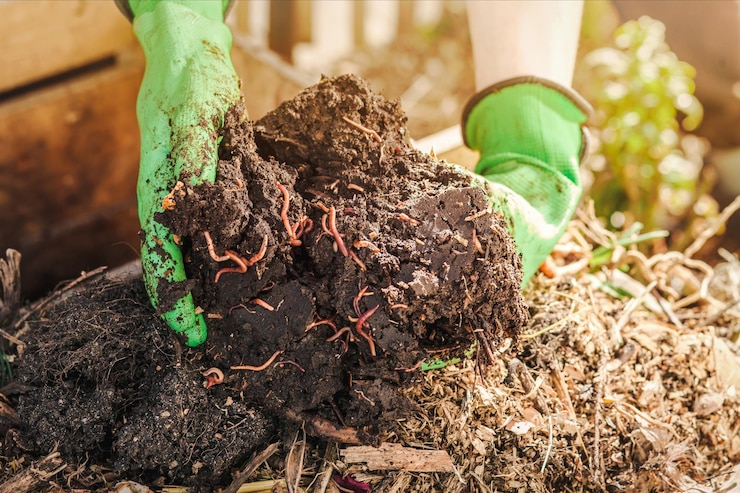
Making your own compost and organic fertiliser in South Africa is one of the most practical ways to improve soil health while reducing household and farm waste. Many households and small-scale farmers face rising input costs, and compost offers a low-cost alternative that supports long-term soil productivity. It also helps reduce the amount of organic waste that ends up in landfills, which is an ongoing environmental challenge in both urban and rural areas. By using simple materials found at home or on the farm, you can build a sustainable system that continuously feeds your soil. This approach supports food security, improves crop yields, and strengthens self-reliance for gardeners and farmers across the country.
The composting process is straightforward and does not require expensive equipment, only consistency and the right balance of materials. You need a mix of green materials such as vegetable scraps, grass clippings, and fresh plant waste, combined with brown materials like dry leaves, cardboard, and small branches. These elements work together to create the right conditions for decomposition. You should keep the pile moist but not soaked, and turn it regularly to allow air to circulate through the material. Over time, microorganisms break down the organic matter into dark, nutrient-rich compost that smells like soil. This process can take a few weeks to several months depending on temperature, moisture, and how often the pile is turned.
In South Africa, composting is especially useful because many regions experience poor soil quality and inconsistent rainfall. Farmers and gardeners can use locally available materials such as kraal manure, crop residues, and kitchen waste to build effective compost systems. Even in urban areas, households can collect food scraps and garden waste to produce fertiliser for home gardens or container planting. The country’s diverse climate also allows for year-round composting in many regions, especially where temperatures support microbial activity. By using what is already available, you reduce dependency on commercial fertilisers, which can be expensive and sometimes inaccessible for small-scale growers.
Once compost is ready, it can be used to improve soil structure, increase moisture retention, and supply essential nutrients to plants. It works well for vegetables, fruit trees, indigenous plants, and even lawn care. Organic fertiliser made from compost slowly releases nutrients into the soil, which helps plants grow steadily without the risk of chemical burn. Farmers can also mix compost into planting holes or spread it across fields before planting seasons begin. This improves soil fertility over time and helps restore degraded land, which is important in areas affected by overgrazing or intensive farming practices. The long-term result is healthier soil that produces stronger and more resilient crops.
Despite its benefits, successful composting requires attention and proper management to avoid common problems. Poor balance between green and brown materials can lead to bad odours or slow decomposition, while too much moisture can attract pests. It is important to place compost heaps in a well-drained area with partial shade to maintain stable conditions. Regular turning helps speed up the process and prevents the pile from becoming compacted. Patience is also important because composting is a natural process that cannot be rushed without affecting quality. With consistent care, even beginners can produce high-quality organic fertiliser.
Making your own compost and organic fertiliser in South Africa is a simple but powerful way to support sustainable agriculture and home gardening. It reduces waste, lowers input costs, and improves soil health in both small gardens and larger farming operations. By using natural materials and following basic composting principles, anyone can produce nutrient-rich fertiliser that supports long-term plant growth. This practice also contributes to environmental conservation by reducing reliance on synthetic products and promoting recycling of organic waste. Over time, composting becomes more than just a gardening method, it becomes a practical lifestyle choice that strengthens food production and environmental care across communities.
Join 'Farmers Mag' WhatsApp Channel
Get the latest Farming news and tips delivered straight to your WhatsApp
CLICK HERE TO JOIN