

On 1 May, Dipilo Grow Experience hosted the Nature Ventures Friday Knowledge Day at Mogro Lodge in Rustenburg under the initiative Venture Further, led by Mmadipilo Letlape. The event brought together emerging and established farmers, scientists, and agricultural industry specialists for a full day focused on practical learning, technical insight, and professional networking. The gathering created a platform where science and farming practice met in a direct and accessible way. Participants engaged in open discussions designed to improve decision making in agriculture and strengthen long term productivity. The core message throughout the day was clear, profitable farming starts with knowledge that is applied correctly on the ground.
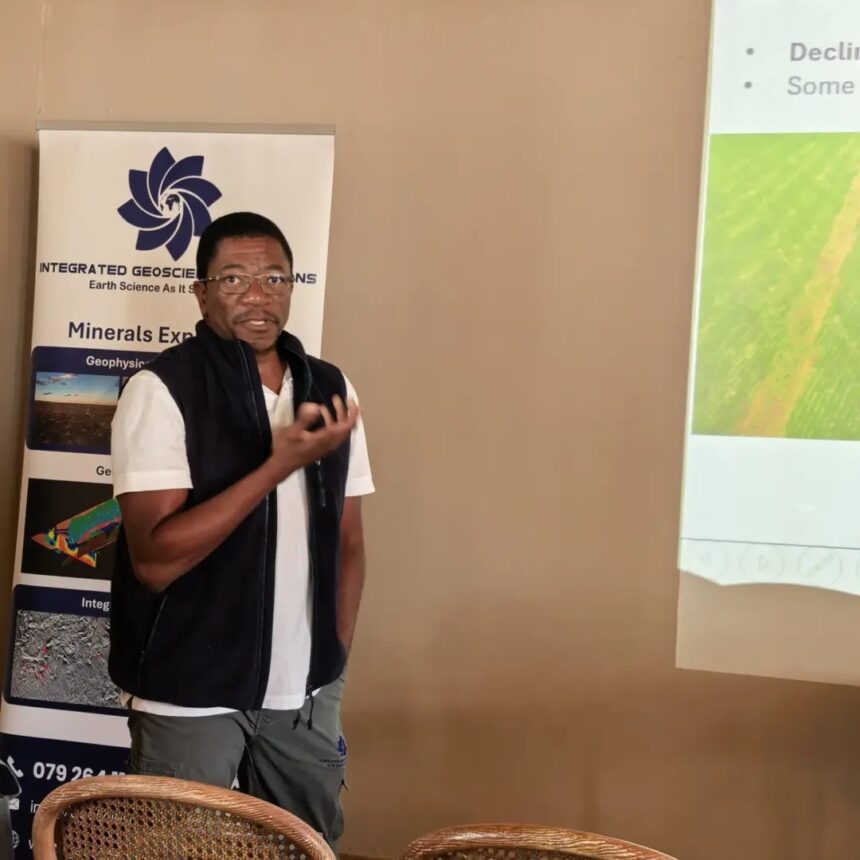
One of the strongest themes during the event was the importance of understanding land before making farming decisions. Geophysicist Dr David Khoza stressed that many farming failures, especially borehole drilling failures, are caused by a lack of scientific investigation rather than chance. He explained that underground fault lines and soil structures determine where water is located, and without proper geophysical mapping, farmers often drill blindly and waste resources. He shared a real example from the Northern Cape where repeated dry boreholes were replaced with successful water access after geophysical mapping identified the correct drilling point. This highlighted how science based decision making can transform farming outcomes and reduce costly mistakes.
Dr Khoza further explained that modern tools such as UAV drones, piloted aircraft, and electromagnetic sensors allow farmers to understand soil fertility, clay content, and groundwater distribution with precision. He noted that even small farms of about five hectares can have significant soil variation across short distances, meaning uniform treatment of land often leads to inefficiency and poor returns. By applying scientific mapping techniques, farmers can target inputs more accurately and improve productivity while reducing waste. He also pointed out that South Africa’s agricultural market, valued at an estimated US$21 billion, presents major opportunities for those who integrate data into their farming systems. His message encouraged farmers to see scientific analysis as a critical first investment rather than an optional extra.
Water management and irrigation efficiency formed another key focus of the programme, with irrigation engineer Martin Bahnemann presenting strong arguments in favour of drip irrigation systems. He referenced a KwaZulu-Natal sugarcane trial where traditional irrigation produced about 85 tonnes per hectare, while subsurface drip irrigation achieved up to 149 tonnes per hectare using significantly less water. He also highlighted the importance of system maintenance, particularly filtration, as blocked emitters cannot be effectively repaired once damaged. Bahnemann advised farmers to install a 130-micron red filter before drip lines and to clean it weekly using water only to avoid damage. He further explained that well maintained drip systems can last up to 20 to 25 years, making them a long term investment when properly managed.
Grazing management was also addressed in detail by agricultural advisor Neo Brian Rasehlo, who focused on the five pillars of sustainable grazing systems. These include carrying capacity, rotational grazing, strategic fencing, water point placement, and controlled burning. He warned that overgrazing removes the most productive grass species, weakens soil structure, and accelerates land degradation, which can take more than a decade to recover. He also linked grazing challenges to climate change, noting that irregular rainfall and rising temperatures are already reducing carrying capacity across South Africa. Rasehlo encouraged farmers to adopt flexible stocking rates and improve water harvesting systems to adapt to changing environmental conditions.
Livestock nutrition and herd health were also discussed, with emphasis on seasonal supplementation strategies. Rasehlo recommended phosphorus supplementation during the wet season to support bone development and protein supplementation during the dry season to maintain animal condition. He stressed that data and measurement are essential in livestock farming, stating that unmanaged systems lead to poor performance and reduced profitability. His closing message reinforced the idea that healthy animals are the foundation of sustainable and profitable farming systems. This practical approach connected animal health directly to management discipline and environmental awareness.
Cattle breeding insights were shared by Simmentaler stud breeder Gert Nienaber, who challenged common misconceptions about animal selection. He explained that appearance and show titles do not guarantee breeding success, and farmers should focus on proven genetics rather than visual appeal. He shared his experience with a champion bull that produced average offspring despite its show success, highlighting the importance of evaluating breeding value beyond performance awards. Nienaber emphasised the role of cow lines in determining genetic strength, stating that the female lineage often carries the most important traits for long term herd improvement. His guiding principle was to stabilise the system first before attempting to optimise performance.
The Nature Ventures Friday Knowledge Day concluded with a strong emphasis on integrated farming systems where science, management, and practical experience work together. The event demonstrated that agriculture is no longer driven by tradition alone but increasingly shaped by data, technology, and informed decision making. Farmers left with practical insights on soil analysis, irrigation efficiency, grazing management, and livestock genetics that can be applied directly to improve productivity. The discussions also reinforced the importance of collaboration between farmers, scientists, and technical experts in building a more resilient agricultural sector. Overall, the event highlighted that sustainable farming in South Africa depends on knowledge driven practices that strengthen both production and long term food security.
Join 'Farmers Mag' WhatsApp Channel
Get the latest Farming news and tips delivered straight to your WhatsApp
CLICK HERE TO JOIN




