

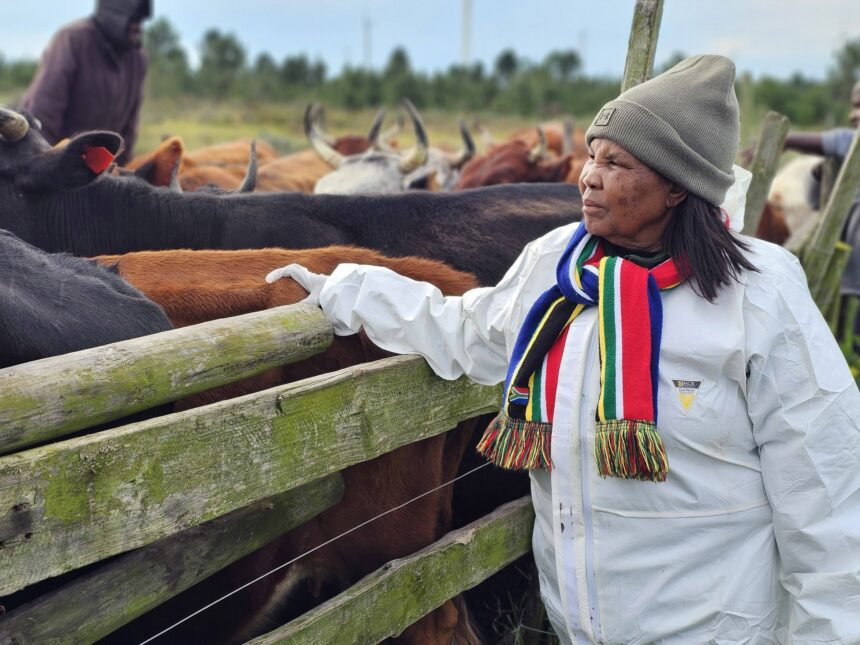
South Africa is intensifying its national response to Foot and Mouth Disease through coordinated vaccination, stronger field operations, and increased government investment. The disease continues to pose a serious risk to the livestock industry and rural economies across the country. In South Africa, the agricultural sector depends heavily on cattle farming for both domestic supply and export markets, which makes disease control a national priority. Recent government actions focus on limiting spread, protecting herd health, and securing long term food production stability. These interventions form part of a wider biosecurity strategy aimed at strengthening resilience in the livestock value chain.
Central to the current response is the expansion of vaccination programmes targeting high risk and affected areas. The disease Foot and Mouth Disease spreads quickly among cloven hoofed animals, which makes rapid vaccination essential. According to government figures, more than 4 million cattle have already been vaccinated as part of ongoing containment efforts. This large scale rollout reflects increased coordination between veterinary services, provincial departments, and field teams working directly with farmers. The objective is to build herd immunity while reducing the risk of new outbreaks in vulnerable farming regions.
Government has also confirmed additional vaccine procurement following commitments made during the 2026 Budget Vote, ensuring continuity in the national response programme. The Department of Agriculture is overseeing implementation and logistics, including vaccine distribution and monitoring of infected zones. These efforts are designed to support both commercial and communal farmers who depend on livestock for income and food security. The vaccination drive also forms part of a broader effort to restore confidence in livestock markets, particularly where movement restrictions have affected trade. Strengthening supply chains for vaccines and veterinary resources remains a key focus area.
Field operations are being reinforced through visible on the ground interventions, including vaccination campaigns led by senior government officials. Deputy Minister Zoleka Capa recently led a vaccination drive at Wittekleibosch, highlighting direct government involvement in disease control efforts. These field visits are intended to support local farmers, improve coordination, and ensure that vaccination targets are achieved efficiently. They also demonstrate the government’s commitment to engaging directly with affected communities rather than relying only on central administration. Such actions help build trust and improve compliance with disease control measures in rural areas.
The broader impact of the FMD response extends beyond animal health into food security and economic stability. Livestock losses or movement restrictions can disrupt supply chains, increase meat prices, and reduce export opportunities. Continued vaccination, surveillance, and rapid response mechanisms are therefore critical to maintaining stability in the agricultural sector. The government’s approach combines prevention, containment, and recovery planning to reduce long term risks. Sustained investment in biosecurity systems is expected to improve South Africa’s ability to manage future outbreaks more effectively while protecting farmer livelihoods and national food supply chains.
Join 'Farmers Mag' WhatsApp Channel
Get the latest Farming news and tips delivered straight to your WhatsApp
CLICK HERE TO JOIN




