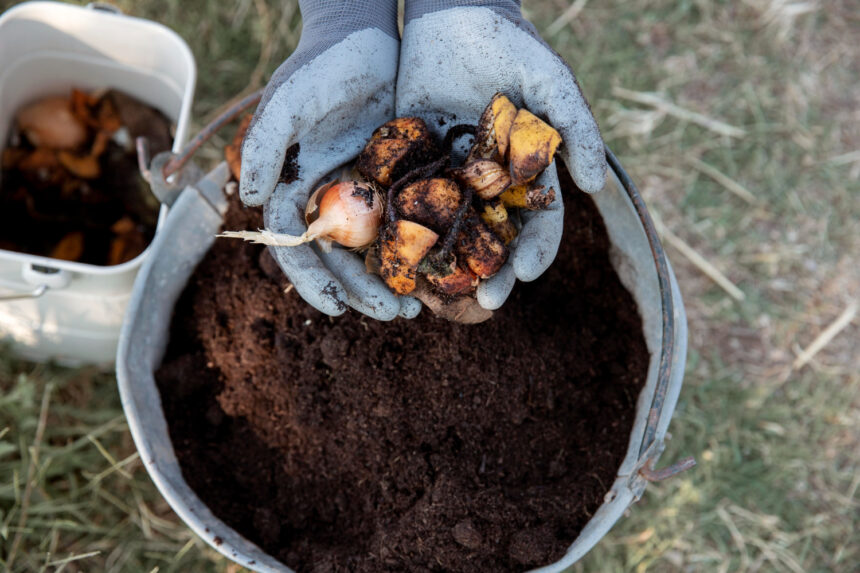
Compost production is becoming an essential practice for farmers in South Africa, offering a sustainable way to improve soil fertility and crop yields while reducing reliance on chemical fertilizers. With soil health under increasing pressure from intensive farming and climate variability, compost provides a natural solution that enriches the land, retains moisture, and supports beneficial microbial activity. Farmers of all scales can benefit from producing their own compost, turning organic waste from crops, livestock, and household sources into nutrient-rich soil amendments. By integrating composting into their operations, farmers can lower input costs, improve long-term productivity, and contribute to environmentally responsible farming practices. Understanding the process, ingredients, and management of compost production is key to maximizing its benefits.
The first step in compost production is selecting suitable organic materials. Plant residues, crop waste, manure, fruit and vegetable scraps, and other biodegradable materials serve as the primary components. It is important to balance “green” materials, which are high in nitrogen, with “brown” materials that are high in carbon, such as dry leaves, straw, and sawdust. This balance ensures proper decomposition, prevents foul odors, and produces nutrient-rich compost. Farmers must also avoid including materials contaminated with chemicals or pathogens to maintain the quality and safety of the final product. Proper material selection lays the foundation for effective composting and determines the nutrient value of the finished product.
Compost can be produced using various methods, with the most common being windrow, pit, and heap systems. Windrow composting involves piling organic material into long rows and turning them regularly to aerate the pile, which accelerates decomposition. Pit composting uses excavated trenches, often combined with layering of green and brown materials, and is suitable for smaller farms with limited space. Heap composting is a simple method of stacking materials in a mound, which can be covered to retain moisture. Each method requires careful management of moisture, aeration, and temperature to ensure microorganisms break down organic matter efficiently and produce high-quality compost.
Monitoring the composting process is critical to achieving optimal results. The ideal compost pile maintains a moisture level similar to a wrung-out sponge and a temperature between 55°C and 65°C during the active decomposition phase. Farmers should turn the pile periodically to ensure even decomposition and prevent anaerobic conditions, which can slow down the process and create unpleasant odors. The composting period varies depending on the materials and method used but typically ranges from six to twelve weeks. Regular monitoring and adjustments ensure the final compost is well-decomposed, dark, crumbly, and rich in nutrients suitable for application to fields.
Using compost effectively can significantly enhance farm productivity. Compost improves soil structure, increases water retention, and promotes healthy root development, which benefits crops during dry conditions. It provides essential nutrients such as nitrogen, phosphorus, and potassium, supporting sustainable crop growth without the environmental risks associated with synthetic fertilizers. Compost can also be applied as a top dressing, incorporated into planting beds, or used in nurseries to improve seedling health. By consistently applying compost, farmers can restore degraded soils, reduce erosion, and create a resilient farming system that supports long-term profitability.
Farmers in South Africa are increasingly recognizing compost production as both an economic and environmental strategy. Producing compost on-site reduces waste disposal costs and creates a valuable input for farm operations. It also strengthens resilience against rising fertilizer prices and fluctuating input markets. Community initiatives and cooperatives can further enhance compost production by pooling resources and sharing knowledge, making the process accessible to smallholder farmers. By adopting composting practices, farmers contribute to a circular agricultural system that recycles organic matter, improves soil health, and supports sustainable food production.
Compost production is a practical, low-cost, and environmentally responsible practice that offers multiple benefits for South African farmers. From improving soil fertility to reducing chemical dependence and enhancing crop yields, composting strengthens farm sustainability and profitability. By carefully selecting materials, managing the decomposition process, and applying compost strategically, farmers can transform organic waste into a valuable agricultural resource. Integrating compost production into daily farming operations ensures healthier soils, higher productivity, and long-term resilience against climate and market pressures. For farmers committed to sustainable agriculture, composting is not only a smart investment but a cornerstone of future-ready farming.
Join 'Farmers Mag' WhatsApp Channel
Get the latest Farming news and tips delivered straight to your WhatsApp
CLICK HERE TO JOIN