

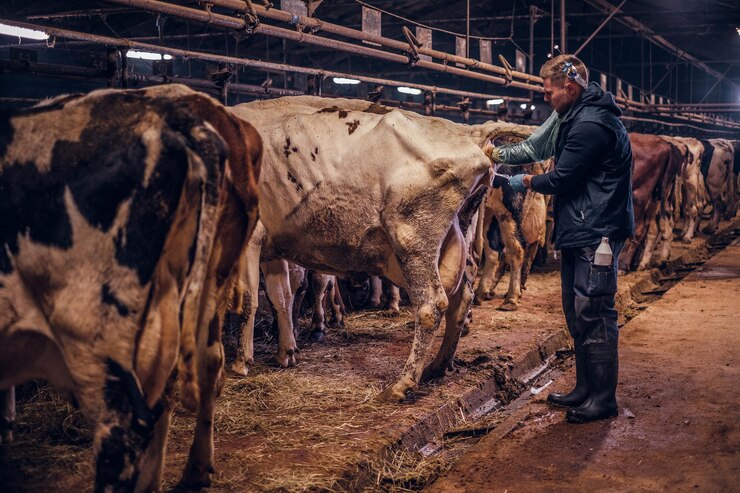
Artificial insemination (AI) in cattle is a reproductive technology that allows farmers to improve herd genetics without maintaining bulls on-site. For small-scale farmers, AI offers the opportunity to access high-quality genetics, increase productivity, and enhance herd performance. However, implementing AI requires careful planning, technical knowledge, and investment in infrastructure and veterinary services. Understanding the benefits, costs, and challenges is essential to determine if AI is suitable for small-scale operations.
One of the main advantages of AI is genetic improvement. Farmers can use semen from bulls with superior traits such as faster growth rates, disease resistance, and higher milk production. This improves herd quality over time, resulting in healthier animals and higher market value. AI also reduces the risk of spreading sexually transmitted diseases compared to natural mating, which is particularly important for maintaining herd health in small farms.
AI can also increase reproductive efficiency. With proper heat detection and timing, cows can conceive more reliably, reducing calving intervals. Farmers can plan breeding schedules more precisely, ensuring a steady supply of calves for meat or dairy production. AI allows for the use of multiple bulls’ genetics without the expense of keeping several bulls, which is often impractical for small-scale farms with limited space and resources.
Despite the advantages, AI comes with challenges for small-scale farmers. It requires skilled personnel, reliable semen storage, and proper handling techniques. Heat detection must be accurate, and cows need to be in good health to maximize conception rates. Initial costs for training, equipment, and veterinary services can be high, making careful budgeting essential. Farmers also need contingency plans if conception fails or animals develop reproductive health issues.
The decision to adopt AI should be based on farm goals, herd size, and available resources. For small-scale farmers aiming to gradually improve herd quality, increase productivity, and access high-value markets, AI can be a worthwhile investment. Combining AI with good nutrition, proper animal health management, and biosecurity practices increases the likelihood of success and return on investment.
Artificial insemination in cattle can be highly beneficial for small-scale farmers seeking genetic improvement and enhanced productivity. While it requires technical expertise, planning, and investment, the long-term benefits of healthier, high-performing cattle can outweigh the costs. For farmers committed to growth and efficiency, AI offers a practical tool to compete in South Africa’s commercial and emerging livestock sectors.
Join 'Farmers Mag' WhatsApp Channel
Get the latest Farming news and tips delivered straight to your WhatsApp
CLICK HERE TO JOIN




