

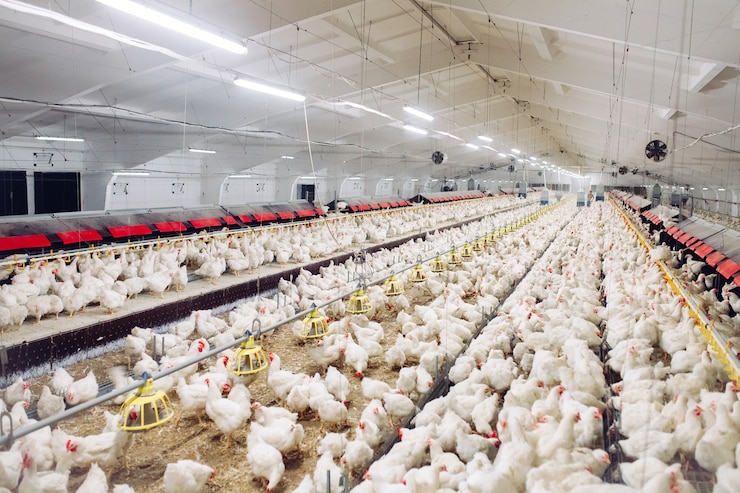
The poultry industry is undergoing a quiet revolution powered by smart lighting and automation. As producers seek to improve productivity, animal welfare, and energy efficiency, intelligent lighting systems and automated controls are proving to be game-changers in modern poultry farming. These technologies are not just futuristic upgrades—they’re rapidly becoming essential tools for achieving consistent performance in an increasingly competitive and climate-conscious industry.
The Role of Lighting in Poultry Production
Lighting is one of the most influential environmental factors in poultry farming. It affects birds’ behavior, growth rate, reproduction, and overall health. Traditional lighting systems, however, often fail to deliver the consistency and control needed to optimize these outcomes.
Smart lighting systems allow farmers to regulate:
- Light intensity
- Duration (photoperiod)
- Color spectrum (wavelength)
Each of these elements can be precisely adjusted to match the specific needs of broilers, layers, or breeders, resulting in improved feed conversion ratios, lower stress levels, and better flock uniformity.
Benefits of Smart Lighting in Poultry Houses
- Improved Growth and Feed Efficiency
Studies show that specific light spectrums (such as blue and green for broilers) can enhance muscle development and feed intake. Smart systems allow for tailored light programs that promote healthier, faster-growing birds. - Enhanced Reproductive Performance
For layer hens and breeders, carefully timed lighting schedules are critical for egg production and fertility. Automation ensures exact timing and reduces the risk of human error. - Reduced Bird Stress
Gradual dimming and brightening mimic natural sunrise and sunset, helping birds adapt to changes in their environment and reducing sudden stress responses. - Energy Savings
LED-based smart lighting systems consume significantly less electricity than conventional bulbs, lowering operating costs and carbon footprint. - Real-Time Monitoring and Control
Many systems are connected to mobile apps or cloud platforms, allowing farm managers to monitor and adjust lighting settings remotely, receive alerts, and analyze data for future improvements.
Automation Beyond Lighting
Smart lighting is just one component of broader poultry house automation. Today’s high-tech farms are integrating multiple systems to create fully controlled environments, including:
- Climate control systems for temperature, humidity, and ventilation
- Automated feeders and drinkers for precise nutrition and water supply
- Litter management and manure removal systems
- Sensor networks that track bird movement, weight gain, and health indicators
- AI-powered decision-making tools that optimize performance based on real-time data
By synchronizing lighting with other systems, farmers can create a stable and responsive environment that maximizes productivity and minimizes risk.
Implementing Smart Technology: What Farmers Should Consider
- Cost vs. ROI
While upfront investment may seem high, the return on investment through increased efficiency, lower mortality rates, and reduced energy bills often offsets the cost within a few production cycles. - Scalability
Choose systems that can grow with your operation. Modular solutions allow for easy expansion without overhauling the entire setup. - Technical Support and Training
Reliable supplier support and staff training are critical to ensure that systems are used effectively and maintained properly. - Data Integration
Opt for platforms that can integrate lighting data with other farm systems to provide a holistic view of farm performance.
The adoption of smart lighting and automation in poultry houses is expected to rise steadily as producers seek higher efficiency, traceability, and sustainability. With consumer demand leaning toward ethically raised and environmentally responsible poultry, these technologies not only improve farm performance but also align with market expectations.
As the poultry sector becomes more data-driven, smart technologies will play an increasingly vital role in ensuring profitability, biosecurity, and long-term resilience.
Smart lighting and automation are no longer optional luxuries—they are strategic investments in the future of poultry farming. By embracing these innovations, farmers can create healthier environments for their birds, achieve better production outcomes, and reduce their environmental impact. The smart poultry house is here—and it’s changing the way we produce food, one watt and one sensor at a time.
Join 'Farmers Mag' WhatsApp Channel
Get the latest Farming news and tips delivered straight to your WhatsApp
CLICK HERE TO JOIN




