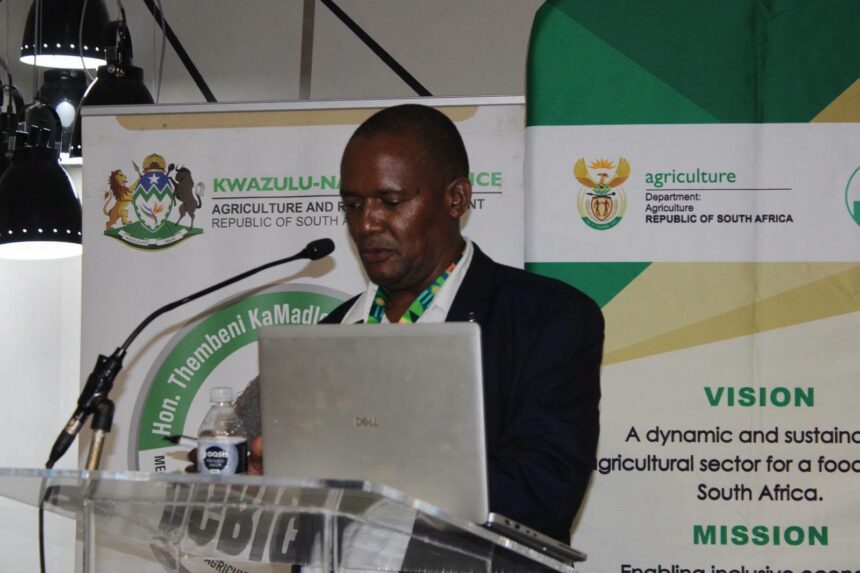
Building a more resilient agricultural sector is the focus of the Climate-Smart Agriculture Dialogue taking place in Empangeni, KwaZulu-Natal, from 23 to 24 November 2026. The engagement brings together agricultural stakeholders to discuss practical ways of helping farmers respond to climate change, protect agricultural production and safeguard their livelihoods. As changing weather conditions place increasing pressure on farming operations, the need for sustainable production methods and effective adaptation strategies has become an important priority for South Africa’s agricultural sector. Farmers must manage risks associated with changing rainfall patterns, water shortages, extreme temperatures and other climate-related pressures that can affect crop and livestock production. The dialogue provides an opportunity to share knowledge, examine practical interventions and strengthen cooperation around climate-smart agriculture. Its broader objective is to support agricultural systems that can continue producing food while adapting to changing environmental conditions.
The Empangeni engagement forms part of the National Department of Agriculture’s ongoing provincial Climate-Smart Agriculture Dialogues. These consultations are guided by the Climate Change Act, 2024 (Act No. 22 of 2024), and the department’s Climate-Smart Agriculture Strategic Framework. Together, these policy instruments provide an important foundation for addressing climate change and strengthening the agricultural sector’s ability to respond to its effects. The provincial dialogues create opportunities for stakeholders to discuss challenges affecting farmers and identify interventions suited to different agricultural regions. This approach recognises that climate risks and farming conditions differ across South Africa. Solutions that work in one province may need to be adapted to the soil, water availability, production systems and climatic conditions of another.
KwaZulu-Natal is the fifth province to host the dialogue and brings valuable experience in conservation agriculture to the discussions. Conservation agriculture focuses on maintaining soil health and reducing unnecessary disturbance to agricultural land. Its commonly recognised principles include minimal soil disturbance, maintaining soil cover and diversifying crop species. These practices can contribute to improved soil structure, reduced erosion and better soil moisture management when applied appropriately. They are particularly relevant in discussions about climate adaptation because healthy soils are an important foundation for sustainable agricultural production. Farmers in KwaZulu-Natal have an opportunity to share their experiences and consider how conservation-based approaches can contribute to more resilient farming systems.
Climate change presents different challenges to crop and livestock farmers. Changes in rainfall patterns can affect planting dates, crop establishment and the availability of grazing for livestock. Periods of intense rainfall can increase soil erosion, damage infrastructure and wash nutrients away from agricultural land. Extended dry periods can reduce water availability, affect crop yields and place additional pressure on livestock production. Higher temperatures can also influence crop development, livestock comfort and the spread of certain agricultural pests and diseases. These risks make it important for farmers to understand local climate conditions and incorporate adaptation measures into their production planning.
For crop farmers, climate-smart agriculture involves making production decisions that account for weather variability and changing environmental conditions. Selecting crop varieties suited to local conditions, adjusting planting dates and improving soil management can help reduce exposure to certain climate risks. Diversifying crops can also reduce dependence on a single commodity, although the most suitable approach depends on farm resources, markets and production objectives. Farmers can further improve their preparedness by monitoring weather information and using seasonal climate forecasts when planning agricultural activities. Access to reliable agricultural advice is important because climate-related decisions often need to be made before the start of a production season. These measures cannot eliminate climate risks, but they can help farmers make better-informed decisions.
Water management is another important part of climate-smart agriculture. Agriculture depends on reliable water supplies, and changes in rainfall can make water planning increasingly difficult for producers. Efficient irrigation systems, rainwater harvesting and improved soil moisture conservation can help farmers manage available water more effectively. Drip irrigation and other water-efficient technologies may be suitable for certain production systems, depending on their cost, design and water requirements. Farmers can also consider practices such as mulching and maintaining soil organic matter to reduce moisture losses. Effective water management requires an understanding of local water resources, infrastructure limitations and the specific needs of different crops and livestock operations.
Soil health also deserves attention in climate adaptation strategies. Healthy soils support root development, nutrient cycling and water movement, all of which influence agricultural productivity. Practices such as reduced tillage, crop rotation, cover cropping and the incorporation of organic matter can help improve soil conditions over time. Maintaining vegetation cover can reduce the exposure of soil to wind and water erosion. These measures are relevant to both commercial and small-scale farming, although implementation will depend on available equipment, labour, technical knowledge and production conditions. Conservation agriculture therefore offers an important area for discussion during the KwaZulu-Natal dialogue.
Livestock production also faces climate-related pressures. High temperatures can affect animal comfort, feed intake and productivity, while drought can reduce grazing availability and increase the cost of supplementary feed. Water shortages can create additional challenges for livestock farmers, particularly in areas that depend heavily on natural water sources. Appropriate grazing management, reliable water provision and suitable animal housing or shade can help reduce some of these pressures. Farmers may also need to review stocking rates and feed management in response to changing pasture conditions. Climate-smart livestock management should consider animal health, available resources and the long-term condition of grazing land.
The dialogue also highlights the importance of collaboration between government and agricultural stakeholders. Climate adaptation requires more than individual farm-level decisions because farmers often face challenges that depend on infrastructure, technical services, financial resources and access to information. Government departments, agricultural organisations, research institutions and farming communities all have roles to play in strengthening the sector’s response. Extension services can help translate agricultural research and climate information into practical guidance for producers. Partnerships can also support the sharing of successful farming practices and identify areas where additional investment is needed. Strong coordination will be important in turning policy objectives into interventions that farmers can apply in their operations.
Access to climate information is particularly important for agricultural decision-making. Seasonal forecasts, weather observations and early-warning information can help farmers prepare for conditions that may affect planting, irrigation, harvesting and livestock management. However, information must reach producers in a form they can understand and use. Agricultural advisory services can help farmers interpret forecasts and assess their relevance to specific crops, livestock and locations. Combining scientific climate information with farmers’ practical experience can also improve local understanding of changing conditions. Strengthening these information systems is therefore an important part of building agricultural resilience.
Smallholder and emerging farmers must also feature in climate-smart agriculture planning. These producers may face additional barriers when trying to access irrigation infrastructure, improved seed, agricultural equipment, finance and technical support. Climate-related production losses can have serious consequences for households that depend heavily on farming for food and income. Adaptation programmes should therefore consider the different financial and technical circumstances of producers. Practical training, accessible extension services and appropriately designed support programmes can help smaller farming operations adopt suitable climate-smart practices. Ensuring that these farmers participate in provincial dialogues can also help policymakers understand the challenges affecting different parts of the agricultural sector.
The relationship between climate-smart agriculture and food security is another important consideration. Agriculture supplies food, supports employment and contributes to economic activity in rural communities. When climate-related events disrupt production, the effects can extend beyond individual farms to influence food availability, prices and household livelihoods. Strengthening agricultural resilience can help reduce vulnerability to production shocks and support more stable food supply systems. However, climate adaptation must also consider environmental sustainability and the long-term management of natural resources. Protecting soil, water and biodiversity is important for maintaining the productive capacity of agricultural land.
The Climate-Smart Agriculture Dialogue in Empangeni provides an opportunity for KwaZulu-Natal stakeholders to contribute regional experience to South Africa’s wider climate adaptation efforts. The province’s experience with conservation agriculture offers a useful starting point for discussions about soil protection, sustainable production and resource management. The engagement also creates space to identify practical interventions that respond to the needs of farmers across different agricultural systems. As the provincial dialogue forms part of a wider national process, the knowledge shared can contribute to broader discussions about agricultural resilience. The effectiveness of these engagements will depend on whether the recommendations lead to practical support, stronger partnerships and meaningful implementation.
For farmers, climate-smart agriculture is not simply a policy concept. It involves everyday decisions about soil preparation, crop selection, water use, grazing management and the protection of productive resources. The most appropriate practices will differ according to farm size, location, available resources and the type of agricultural production. Farmers therefore need access to reliable information, relevant training and technologies that suit their circumstances. Government and agricultural partners also need to ensure that adaptation programmes address practical challenges rather than relying only on broad policy commitments. Continued knowledge-sharing can help producers learn from one another and identify approaches that have demonstrated value under local conditions.
The two-day dialogue in Empangeni, taking place on 23 and 24 November 2026, reinforces the importance of preparing South Africa’s agricultural sector for climate-related challenges. Through provincial engagement, conservation agriculture discussions and cooperation between stakeholders, the National Department of Agriculture aims to advance practical approaches to climate-smart farming. The priorities include protecting agricultural production, improving the management of natural resources and strengthening farmers’ ability to adapt to changing conditions. Long-term progress will require consistent implementation, accessible technical support and investment in appropriate agricultural infrastructure. Building climate-resilient farming systems is essential not only for protecting farmers’ livelihoods but also for supporting sustainable agricultural development and South Africa’s long-term food security.
Join 'Farmers Mag' WhatsApp Channel
Get the latest Farming news and tips delivered straight to your WhatsApp
CLICK HERE TO JOIN