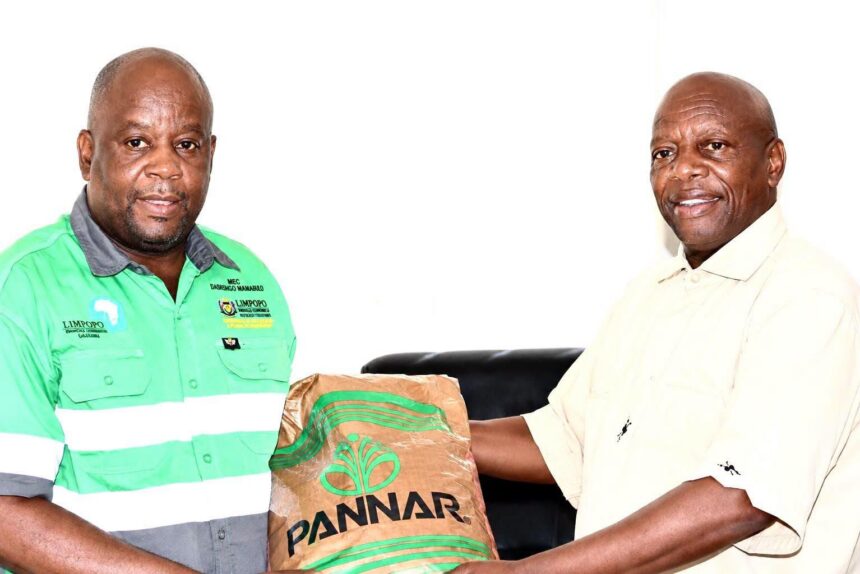
Agriculture remains central to food security, rural development and poverty reduction in Limpopo, where many households depend on farming for food, income and economic opportunities. As the province prepares for the 2026/2027 Provincial Summer Planting Season, the Limpopo Department of Agriculture and Rural Development is strengthening engagement with traditional leadership and preparing support interventions aimed at helping communities participate in agricultural production. Under the leadership of MEC Basikopo Makamu, the department recently paid a courtesy visit to Moshate Ga Kgosi Kgabo Moloto III, the Senior Traditional Leader at Moletjie. The visit forms part of preparations for the formal launch of the provincial summer planting season, which will take place at the Makgofe Balemi Project in the Capricorn North-Western Agro-ecological Zone. The initiative highlights the importance of cooperation between government, traditional institutions and farming communities in promoting agricultural development and ensuring that more households benefit from available farming opportunities.
The courtesy visit to Moshate Ga Kgosi Kgabo Moloto III represents an important step in building relationships with traditional leadership ahead of the provincial planting season launch. Traditional leaders play a significant role in many rural communities, particularly in supporting local development initiatives and engaging with residents on matters affecting their livelihoods. Their involvement can help strengthen communication between government departments and communities while encouraging greater participation in agricultural programmes. By engaging with traditional leadership before the official launch, the department recognises the importance of local partnerships in implementing agricultural interventions. This approach also creates an opportunity to build awareness around the planting season and the support available to farming households.
The formal launch of the 2026/2027 Provincial Summer Planting Season will take place at the Makgofe Balemi Project in the Capricorn North-Western Agro-ecological Zone. The launch will provide a platform to promote agricultural production and encourage communities to prepare for the summer growing season. Summer planting is an important period for many crop producers because it provides an opportunity to establish crops suited to seasonal rainfall and local agro-ecological conditions. Successful planting requires careful preparation, appropriate input selection and an understanding of the environmental conditions that influence crop performance. Through the launch, the department aims to encourage greater participation in agricultural activities and reinforce the importance of planning for productive farming seasons.
An important component of the event will be the distribution of agricultural production inputs to underprivileged households. This intervention is intended to help vulnerable households access essential resources that can support their participation in food production. Access to agricultural inputs is a major consideration for households that want to cultivate land but face financial limitations. Depending on the nature of the support provided, production inputs can help households establish crops and improve their ability to produce food for consumption or potential income generation. By directing assistance towards underprivileged households, the department is placing food security and poverty reduction at the centre of its agricultural development efforts.
Household food production can make an important contribution to improving food security, particularly in communities where families face financial pressure and limited access to affordable food. Growing vegetables and other suitable crops can help households supplement their food supplies and reduce some of their dependence on purchased produce. Where production exceeds household needs, surplus crops may also create opportunities for local trading and additional income. However, successful household farming requires more than access to inputs. Farmers and community members also need practical knowledge about planting, soil preparation, water management, pest control and harvesting. Continued agricultural extension support can help households use available resources effectively and improve the sustainability of their production activities.
The department’s engagement with traditional leadership also highlights the importance of community participation in rural agricultural development. Government programmes are more likely to respond effectively to local needs when communities understand their objectives and have opportunities to participate in their implementation. Traditional institutions can assist in communicating agricultural priorities and encouraging households to make use of available support. They can also help strengthen cooperation around community development initiatives, including food gardens and other local farming activities. By working with traditional leaders, the department can improve awareness of agricultural opportunities and strengthen the connection between provincial development programmes and the people they are intended to serve.
In addition to preparing for the summer planting season, the Limpopo Department of Agriculture and Rural Development has announced that applications for the 2027/2028 Farmer Support Programme are now open. Eligible farmers across the province are encouraged to submit their applications to access support for upcoming production cycles. This programme provides an important opportunity for farmers to seek assistance that can contribute to their agricultural activities and business development. For emerging and established producers alike, access to appropriate support can help address some of the challenges associated with maintaining and expanding farming operations. Interested applicants should familiarise themselves with the programme requirements and ensure that they follow the prescribed application process.
Farmers can access application forms online through the department’s official website at www.ldard.gov.za. Alternatively, applicants can collect the relevant forms from their nearest Limpopo Department of Agriculture and Rural Development service office. Using these official channels will allow farmers to obtain the appropriate application documents and information about the process. Applicants should pay close attention to the eligibility criteria, required supporting documents and submission instructions provided by the department. Submitting complete and accurate applications is important for ensuring that applications can be assessed according to the programme’s requirements. Farmers who are uncertain about any aspect of the process should approach their nearest departmental service office for guidance.
The opening of the 2027/2028 Farmer Support Programme application window is particularly relevant as producers prepare for future agricultural cycles. Farming requires forward planning because decisions about land preparation, inputs, equipment and production schedules often need to be made well before planting begins. Knowing what support is available allows farmers to assess their needs and plan their operations more effectively. It also creates an opportunity for producers to consider how additional resources could improve productivity, strengthen their businesses and support long-term sustainability. Farmers are therefore encouraged to take note of the application period and avoid leaving their submissions until the last minute.
Limpopo’s agricultural development priorities reflect the important role that farming plays in supporting rural livelihoods and strengthening local economies. The province has diverse agro-ecological conditions that provide opportunities for different agricultural activities, although production decisions must take local climate, soil and water availability into account. Government support programmes can help farmers and households make better use of these opportunities by improving access to production resources and agricultural services. However, lasting agricultural development also depends on responsible resource management, practical farming knowledge and access to markets. A coordinated approach involving government, traditional leadership and farming communities can help create an environment in which agricultural activities contribute more effectively to economic growth and food security.
The upcoming 2026/2027 Provincial Summer Planting Season launch and the opening of applications for the 2027/2028 Farmer Support Programme demonstrate the department’s continued focus on supporting agricultural production in Limpopo. The courtesy visit to Kgosi Kgabo Moloto III reinforces the importance of traditional leadership in building strong relationships with rural communities and advancing development priorities. Meanwhile, the planned distribution of agricultural production inputs offers practical assistance to underprivileged households seeking to improve their food production. Farmers are also encouraged to take advantage of the open application window and use the official departmental channels to apply for support. Through stronger partnerships, improved access to agricultural resources and active participation from farming communities, Limpopo can continue working towards greater food security, reduced rural poverty and a more sustainable agricultural sector.
Join 'Farmers Mag' WhatsApp Channel
Get the latest Farming news and tips delivered straight to your WhatsApp
CLICK HERE TO JOIN